

Nicholas A. Christakis
Sterling Professor of Social and Natural Science
Organization
Yale University

About Nicholas A. Christakis
Nicholas A. Christakis is leading the Microbiome Biology and Social Networks in the Developing World project. He is the Sterling Professor of Social and Natural Science at Yale University (New Haven, US) with appointments in the Departments of Sociology, Medicine, Biomedical Engineering, Evolutionary Biology, and Data Science.
Born in the US, Christakis obtained a BS in biology from Yale University in 1984. He received an MD from Harvard Medical School (Boston, US) and an MPH from the Harvard School of Public Health in 1989, winning the Bowdoin Prize on graduation. In 1991 Christakis completed a residency and fellowship in internal medicine at the University of Pennsylvania. He obtained a PhD in sociology from the University of Pennsylvania in 1995. He then joined the faculty of the University of Chicago as an assistant professor of sociology and medicine. From 2001-2013 he was professor of medical sociology in the Department of Health Care Policy at Harvard University; professor of medicine in the Department of Medicine at Harvard Medical School; and professor of sociology in the Department of Sociology in the Harvard Faculty of Arts and Sciences. In 2013 Christakis moved to Yale University, serving as the Sol Goldman Family Professor of Social and Natural Science until 2018. At Yale, he is the Director of the Human Nature Lab and Co-Director of the Yale Institute for Network Science. He is the author, in 2019, of Blueprint: The Evolutionary Origins of a Good Society.
Christakis’ laboratory investigates the social, mathematical, and biological rules governing how social networks form and the social and biological implications of how they operate to affect human lives. His laboratory exploits techniques from biosocial science, sociology, computer science, demography, statistics, behavior genetics, evolutionary biology, epidemiology and other fields. His NOMIS project seeks to answer fundamental questions about the two-way relationship of human social connections in the form of face-to-face networks and the many species of bacteria that colonize our own species.
‘s projects
Chemosignaling and Related Biology of Human Social Interactions
The Question The belief that humans have a poor sense of smell compared to other animals is false. Olfaction in humans serves important purposes. In addition to the assessment of the safety of the environment (e.g., the presence of toxins, fire or predators), olfaction is also used for social purposes, to identify romantic partners, offspring […]
NOMIS researcher
Project period
2026 – 2030

Using Social AI to Modify Collective Behavior in Realistic Networks
Machines and artificial intelligence agents are increasingly being added to the web of connections of people engaged in collective actions of diverse sorts. More and more, humans are interacting socially with software agents or physical machines. Here, there has been a lot of attention paid to the harm that can be done by artificial intelligence […]
NOMIS researcher
Project period
2019 – 2023

Microbiome Biology and Social Networks in the Developing World
When we humans interact with each other to create face-to-face social networks, we create a fertile world that bacteria need to live. The social forces that shape this world have profound implications for the biology of these bacteria, and vice-versa. Social networks provide a set of environmental niches (made up of groups of interacting humans) […]
NOMIS researcher
Project period
2019 – 2025

‘s publications
A semantic-based community model for high-fidelity tuning of olfactory mixture distances
A central goal in sensory science is to establish quantitative mappings between physical stimuli and perceptual experience. Although such mappings are well defined in vision and audition, they remain elusive in olfaction, particularly for complex odor mixtures. Here, we show that perceptual distances between odor mixtures can be predicted with high fidelity and are unexpectedly well captured by a compact semantic space derived from single-molecule representations. In the Dialogue for Reverse Engineering Assessment and Methods Olfactory Mixtures Prediction Challenge, we assembled a unified dataset of odor-mixture pairs, benchmarked predictions on a hidden test set of 46 pairs, and integrated the top-performing models into a postchallenge ensemble. This model outperformed existing state-of-the-art approaches on the hidden test set, reducing RMSE by about 33% to 0.08 and increasing Pearson correlation by 53% to 0.57, and maintained strong performance on an independent validation set of 50 newly designed mixture pairs. An ensemble, retaining only olfactory semantic features for each model included, further improved predictions, raising the Pearson correlation by 7% to 0.61 on the test set and by 15% to 0.54 on the validation set. Given that semantic features were extracted from pure molecules, it suggests that mixture perception may not require fundamentally different representational principles from single-molecule olfaction. Together, these results establish a reproducible quantitative framework for olfactory mixture perception and advance efforts to measure, model, and engineer smell.
Research Fields
Applied Sciences, Artificial Intelligence & Image Processing, Information & Communication Technologies
Measuring intellectual humility through situated behavior: An alternative to dispositional self-reports
Although psychological theory views behavior as an interaction between person and situation, the measurement of metacognition often relies on situation-free, abstract self-views. To align measurement with interactionist frameworks, we proposed a situated approach, using intellectual humility (IH)—recognizing one’s limits and fallibility—as a proof-of-concept. We validated this approach across diverse populations: English- and Spanish-speaking North Americans (N = 633) and adults from 136 rural Honduran villages (N = 2567). Rather than rating abstract tendencies, participants reconstructed three recent disagreements (freely chosen, wrong, and right) and reported specific behaviors via branching binary probes. This method demonstrated cross-cultural coherence of the IH construct while capturing substantial situational variability. Notably, 74–81% of variance occurred within persons: IH expression fluctuated significantly based on epistemic context (being wrong vs. right) and social dynamics (partner status). These situational effects also fully explained gender differences in the Honduran sample. The situated approach showed efficiency outside Western, educated contexts and helps overcome the humility paradox—wherein the least intellectually humble overclaim their humility. We discuss four principles for aligning measurement with theory—contextual specificity, sampling from actual experiences via event reconstruction, accessibility across diverse populations via branching probes, and modeling within-person variability—offering a framework for assessing metacognitive and self-regulatory constructs beyond the constraints of static dispositional measures.
Research Fields
Experimental Psychology, Health Sciences, Psychology & Cognitive Sciences
Published on
March 7, 2026
NOMIS Researcher
Nicholas A. ChristakisPublished in
Nature Communications
Modeling roles and trade-offs in multiplex networks
Multiplex social networks capture multiple types of relations among the same people. Their structure reflects how exchanges arise from individual attributes related to independence, the status or resources of others related to dependence, and mutual influence related to interdependence. Understanding these systems is challenging because layers can play distinct yet complementary roles. We introduce the Multiplex Latent Trade-off Model, MLT, a framework for identifying roles in multiplex networks that incorporates independence, dependence, and interdependence. MLT represents roles as trade-offs, requiring each node to distribute source and target roles across layers while allocating community memberships within hierarchical structures. Applying MLT to 176 multiplex networks, including social, health, and economic layers from villages in western Honduras, we identify core principles of social exchange and reveal multi-scale communities. Link-prediction analyses show that modeling interdependence most improves predictions for social ties, whereas health and economic ties are shaped more strongly by individual status and behavior.
Research Fields
Applied Sciences, Artificial Intelligence & Image Processing, Information & Communication Technologies
‘s news

February 27, 2025
Documentary explores how human biology shapes social connections
In a new documentary by the Human Nature Lab at Yale University, NOMIS researcher Nicholas Christakis and his team describe their fascinating research into the role biology plays in human relationships, setting the stage for the next phase of their work, which will explore human social chemosignaling — how humans evolved to produce and detect […]


June 18, 2024
Negative social ties can be constructive
Our social experience is influenced not only by our positive but also by our negative connections. NOMIS researcher Nicholas Christakis and Amir Ghasemian (Yale University) investigated how negative relationships impact the structure and function of our social networks. They showed that negative interactions have constructive roles in enhancing communication and unity within social networks. This […]
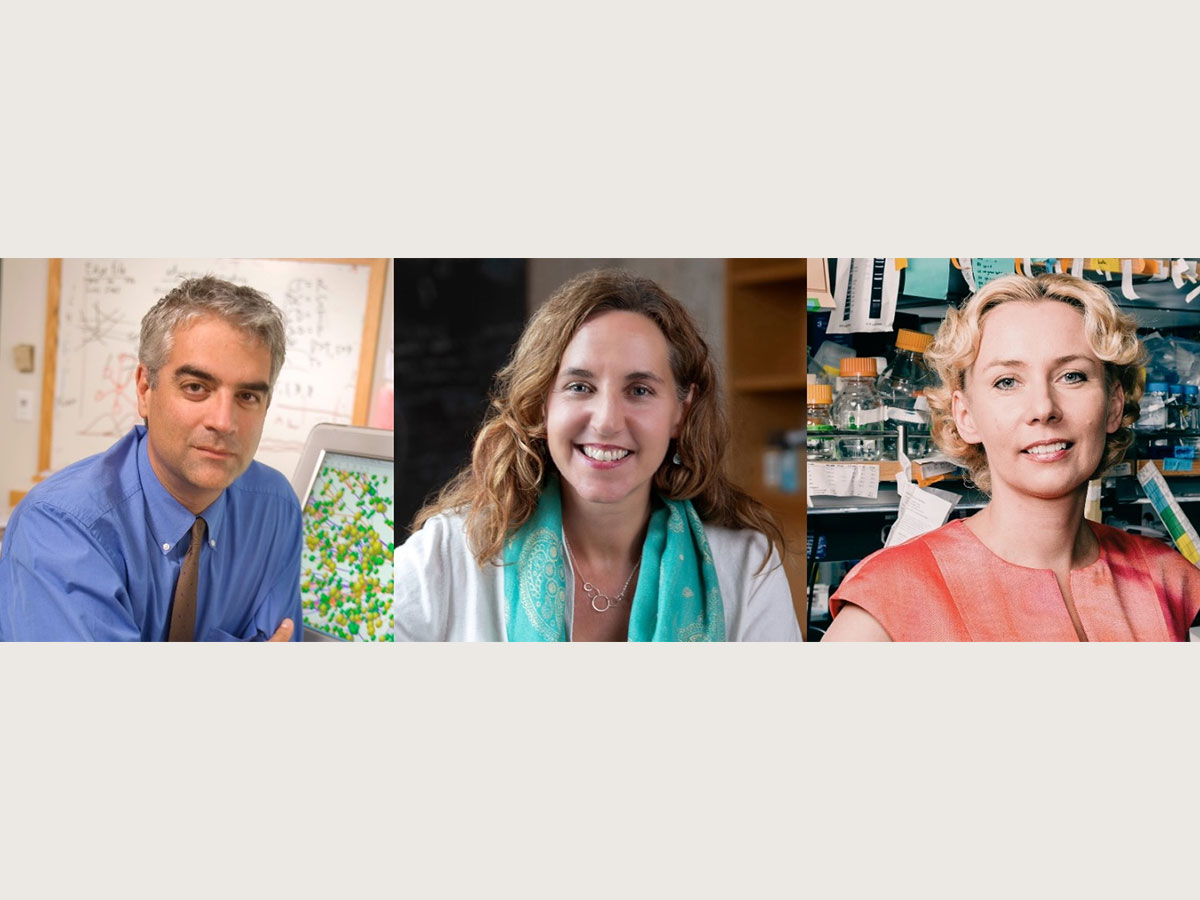

NOMIS Center for Immunobiology and Microbial Pathogenesis Director Susan Kaech and NOMIS researchers Nicholas Christakis and Joanna Wysocka have been elected to the US National Academy of Sciences. They are among 120 new members and 24 international members to be elected to the academy in recognition of their distinguished and continuing achievements in original research. The election […]
