
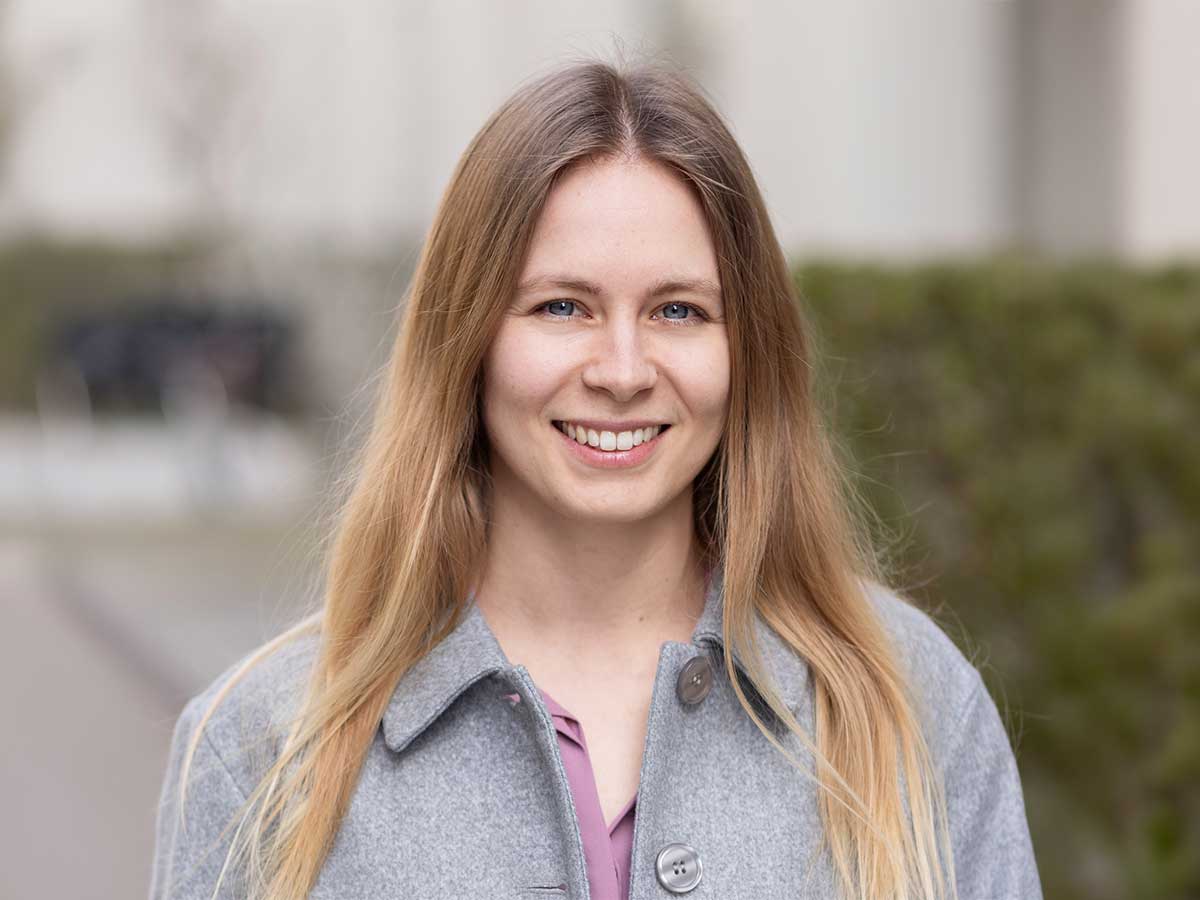
Emilie Skoog
NOMIS Fellow 2026-29
Organization
ETH Zurich

About Emilie Skoog
Emilie Skoog is a NOMIS–ETH Fellow at the Centre for Origin and Prevalence of Life at ETH Zurich (Switzerland). She is conducting her research under the mentorship of Marie Schölmerich.
Skoog is a microbial and viral ecologist interested in how microorganisms and their viruses interact with environmental chemistry and what these interactions can reveal about the evolution of life on Earth. She became interested in astrobiology and life in extreme environments during her undergraduate studies at the University of Southern California in Los Angeles, US, earning a BS in biological sciences and a BA in earth sciences. She completed her PhD in geobiology at the Massachusetts Institute of Technology (MIT) in Cambridge, US, where she studied microbial mat communities from Shark Bay, Western Australia — modern analogs of some of the most ancient ecosystems on Earth — and virus–host dynamics in deep-sea hydrothermal vents. She held a postdoctoral fellowship at Scripps Institution of Oceanography at the University of California, San Diego (UC San Diego), US.
Research focus
During her doctoral research, Skoog combined metagenomics, microscopy and biogeochemical analyses to investigate microbial metabolism, environmental adaptation, and evolutionary change. Her work explored how microbial communities cycle complex organic compounds and how horizontal gene transfer and other evolutionary processes shape microbial populations in extreme environments. Through these studies, she developed a strong interest in viral ecology and the role viruses play in influencing microbial metabolism, diversity and evolution.
More recently, Skoog has focused on integrating viral ecology into studies of environmental microbiology. Her research combines experimental approaches with large-scale bioinformatic analyses of metagenomes, viromes and metatranscriptomes to understand virus–host interactions and their ecological and evolutionary consequences. During her postdoctoral research at the UC San Diego, she studied how viral surface proteins adapt to environmental conditions, providing new insight into how environmental extremes shape viral ecology and microbial host–virus dynamics.
As a NOMIS–ETH Fellow, Skoog investigates how viruses associated with methanogens and acetogens — two microbial lineages with some of the most ancient microbial metabolisms on Earth — can reveal clues about the environmental conditions that supported early life. Her research explores how the surface charge of viral structural proteins reflects environmental factors such as pH and salinity and may preserve signatures of the geochemical environments in which these microbes evolved. By combining viral genomics, evolutionary analyses, and laboratory experiments that probe viral adaptation strategies, she aims to understand how viruses and their hosts co-evolve across changing environments and what these interactions can reveal about the origins and persistence of life on Earth and beyond.
Feature image: Portrait courtesy of Emilie Skoog. Right: Did life originate in acidic or alkaline hydrothermal vents? Brine pools? Geothermal springs? The surface charge of viral capsid proteins can retain signatures of the pH and salinity conditions in which viruses and their hosts persist. By analyzing viral capsid isoelectric points and reconstructing ancestral viral proteins, Skoog aims to identify the geochemical environments that may have given rise to and supported early life on Earth. (Image: Emilie Skoog, BioRender, and ChatGPT)
‘s news

April 7, 2026
2026 NOMIS–ETH Fellows are tracing life’s origins
Emilie Skoog and Sarah Joiret have joined the ranks of NOMIS–ETH Fellows at the Centre for Origin and Prevalence of Life at ETH Zurich. This 2026 cohort of fellows will explore viruses as both key drivers and "archives" of microbial evolution and the origin of the volatile inventory that sustains life, and particularly water.
