

Christian Haass
Member of the NOMIS Foundation Board of Directors
Organization
German Center for Neurodegenerative Diseases (DZNE)
NOMIS Foundation
About Christian Haass
Christian Haass is a NOMIS board member and has been professor of biochemistry and the head of the Department of Metabolic Biochemistry at the Biomedical Research Center at Ludwig Maximilian University (Munich, Germany) since 1999. He has also served as the spokesman of the German Center for Neurodegenerative Disorders (DZNE) in Munich since 2009.
Born in Germany, Haass received a PhD in biology at Ruprecht-Karls-University in Heidelberg and completed postdoctoral work at the Center for Neurologic Diseases at Harvard Medical School. He joined the Harvard Medical School faculty as assistant professor of neurology before being named professor of molecular biology at the Central Institute of Mental Health (University of Heidelberg) in Mannheim in 1995. Haass has received numerous prestigious awards, including the Gottfried Wilhelm Leibniz-Award of the Deutsche Forschungsgemeinschaft, the Potamkin Award of the American Academy of Neurology, an honorary degree from the University of Zürich, the 2015 MetLife Foundation Award for Medical Research, and the 2018 Brain Prize.
Haass’ research focuses on the cellular and molecular mechanisms of dementia, with special emphasis on Alzheimer’s and Frontotemporal Lobar Degeneration. His work led to the development of therapies to lower amyloid production in patients. He has demonstrated how amyloid is generated and how genetic mutations seen in families with very aggressive and rare forms of Alzheimer’s affect its production. Haass has generated mouse models to investigate inflammation in neurodegenerative disorders, which, according to his findings, may play a protective role. He found that genetic mutations alter the function of microglia in the brain that can lead to Alzheimer’s disease. This has stimulated a completely new approach to designing possible new therapies by modulating the activity of microglia.
‘s projects
Frontotemporal Lobar Degeneration
The German Center for Neurodegenerative Diseases (Deutsches Zentrum für Neurodegenerative Erkrankungen, DZNE) is committed to understanding commonalities and differences between various brain diseases in order to develop new preventive and therapeutic approaches. The Frontotemporal Lobar Degeneration – from the Basic Mechanism and Target Identification to Translational and Clinical Approaches project is based on a new, cross-cutting approach: clinical and […]
NOMIS researchers
Project period
2016 – 2022

‘s publications

Distinct molecular profiles of skull bone marrow in health and neurological disorders
The bone marrow in the skull is important for shaping immune responses in the brain and meninges, but its molecular makeup among bones and relevance in human diseases remain unclear. Here, we show that the mouse skull has the most distinct transcriptomic profile compared with other bones in states of health and injury, characterized by a late-stage neutrophil phenotype. In humans, proteome analysis reveals that the skull marrow is the most distinct, with differentially expressed neutrophil-related pathways and a unique synaptic protein signature. 3D imaging demonstrates the structural and cellular details of human skull-meninges connections (SMCs) compared with veins. Last, using translocator protein positron emission tomography (TSPO-PET) imaging, we show that the skull bone marrow reflects inflammatory brain responses with a disease-specific spatial distribution in patients with various neurological disorders. The unique molecular profile and anatomical and functional connections of the skull show its potential as a site for diagnosing, monitoring, and treating brain diseases. © 2023 The Author(s)
Research Fields
Health Sciences

Gel-like inclusions of C-terminal fragments of TDP-43 sequester stalled proteasomes in neurons
Aggregation of the multifunctional RNA-binding protein TDP-43 defines large subgroups of amyotrophic lateral sclerosis and frontotemporal dementia and correlates with neurodegeneration in both diseases. In disease, characteristic C-terminal fragments of ~25 kDa (“TDP-25”) accumulate in cytoplasmic inclusions. Here, we analyze gain-of-function mechanisms of TDP-25 combining cryo-electron tomography, proteomics, and functional assays. In neurons, cytoplasmic TDP-25 inclusions are amorphous, and photobleaching experiments reveal gel-like biophysical properties that are less dynamic than nuclear TDP-43. Compared with full-length TDP-43, the TDP-25 interactome is depleted of low-complexity domain proteins. TDP-25 inclusions are enriched in 26S proteasomes adopting exclusively substrate-processing conformations, suggesting that inclusions sequester proteasomes, which are largely stalled and no longer undergo the cyclic conformational changes required for proteolytic activity. Reporter assays confirm that TDP-25 impairs proteostasis, and this inhibitory function is enhanced by ALS-causing TDP-43 mutations. These findings support a patho-physiological relevance of proteasome dysfunction in ALS/FTD.
Research Fields
Biomedical Research, Developmental Biology, Health Sciences
The porphyrin TMPyP4 inhibits elongation during the noncanonical translation of the FTLD/ALS-associated GGGGCC repeat in the C9orf72 gene
GGGGCC (G4C2) repeat expansion in the C9orf72 gene has been shown to cause frontotemporal lobar degeneration and amyotrophic lateral sclerosis. Dipeptide repeat proteins produced through repeat-associated non-AUG (RAN) translation are recognized as potential drivers for neurodegeneration. Therefore, selective inhibition of RAN translation could be a therapeutic avenue to treat these neurodegenerative diseases. It was previously known that the porphyrin TMPyP4 binds to G4C2 repeat RNA. However, the consequences of this interaction have not been well characterized. Here, we confirmed that TMPyP4 inhibits C9orf72 G4C2 repeat translation in cellular and in in vitro translation systems. An artificial insertion of an AUG codon failed to cancel the translation inhibition, suggesting that TMPyP4 acts downstream of non-AUG translation initiation. Polysome profiling assays also revealed polysome retention on G4C2 repeat RNA, along with inhibition of translation, indicating that elongating ribosomes stall on G4C2 repeat RNA. Urea-resistant interaction between G4C2 repeat RNA and TMPyP4 likely contributes to this ribosome stalling and thus to selective inhibition of RAN translation. Taken together, our data reveal a novel mode of action of TMPyP4 as an inhibitor of G4C2 repeat translation elongation.
Research Fields
Biochemistry & Molecular Biology, Biomedical Research, Health Sciences
‘s news

February 8, 2023
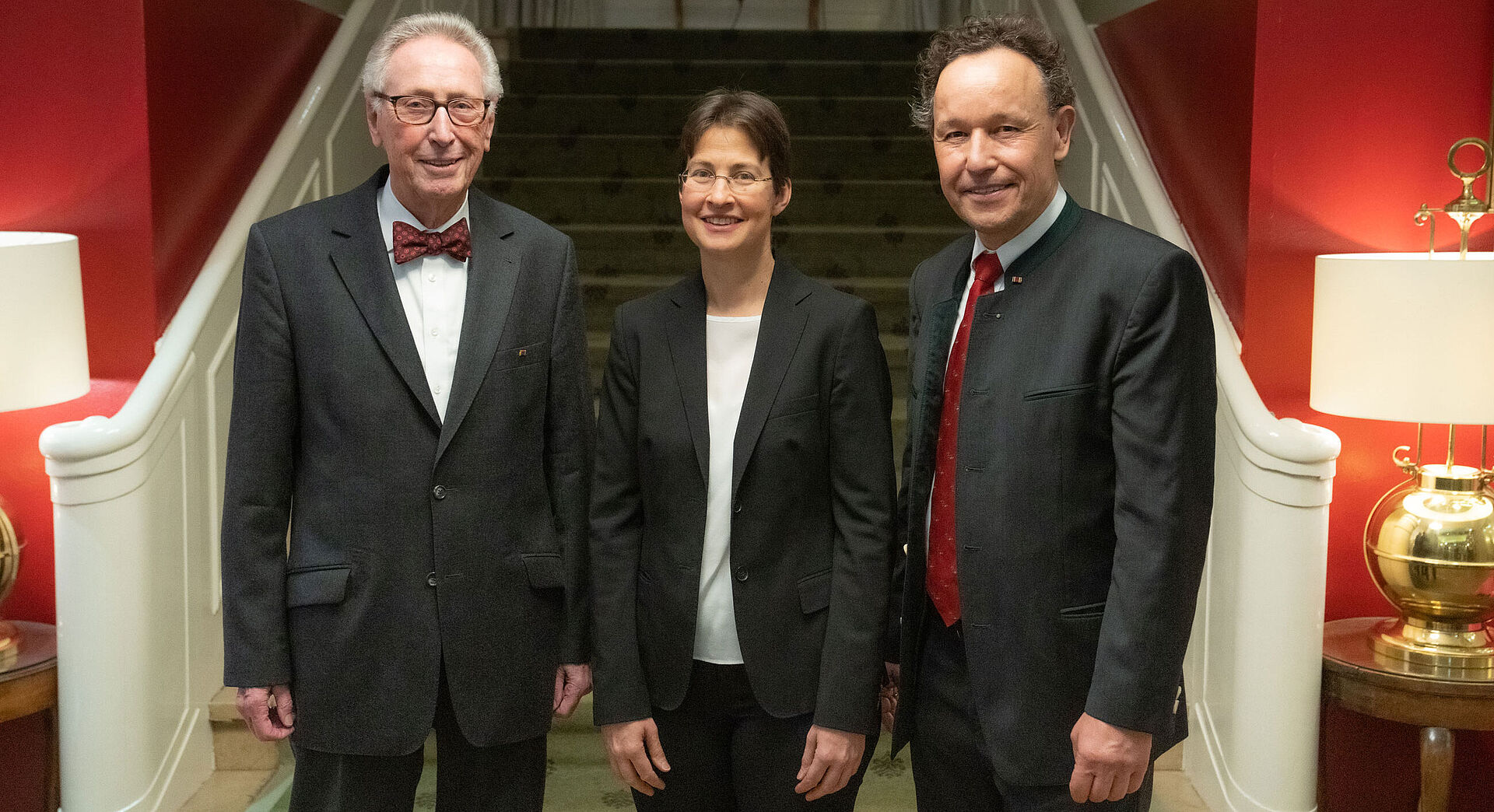
Christian Haass awarded Hector Wissenschaftspreis 2022
NOMIS Board Member and researcher Christian Haass has been awarded the 2022 Hector Wissenschaftspreis (science award) for his groundbreaking research on Alzheimer’s disease, his interdisciplinary approach as a university professor, and as an exemplary role model for students and young scientists. Haass led the NOMIS project Frontotemporal Lobar Degeneration, which ended last year. Christian Haass, professor […]

January 8, 2019
Christian Haass' research, "Loss of TREM2 function increases amyloid seeding but reduces plaque-associated ApoE," appears in Nature Neuroscience
Abstract Coding variants in the triggering receptor expressed on myeloid cells 2 (TREM2) are associated with late-onset Alzheimer’s disease (AD). We demonstrate that amyloid plaque seeding is increased in the absence of functional Trem2. Increased seeding is accompanied by decreased microglial clustering around newly seeded plaques and reduced plaque-associated apolipoprotein E (ApoE). Reduced ApoE deposition […]
NOMIS board member Christian Haass and three other neuroscientists — Bart De Strooper, Michel Goedert and John Hardy — are the recipients of the 2018 Brain Prize for their groundbreaking research on the genetic and molecular basis of Alzheimer’s disease. The research pioneered by these four European scientists has revolutionized our understanding of the changes in the brain that […]
