
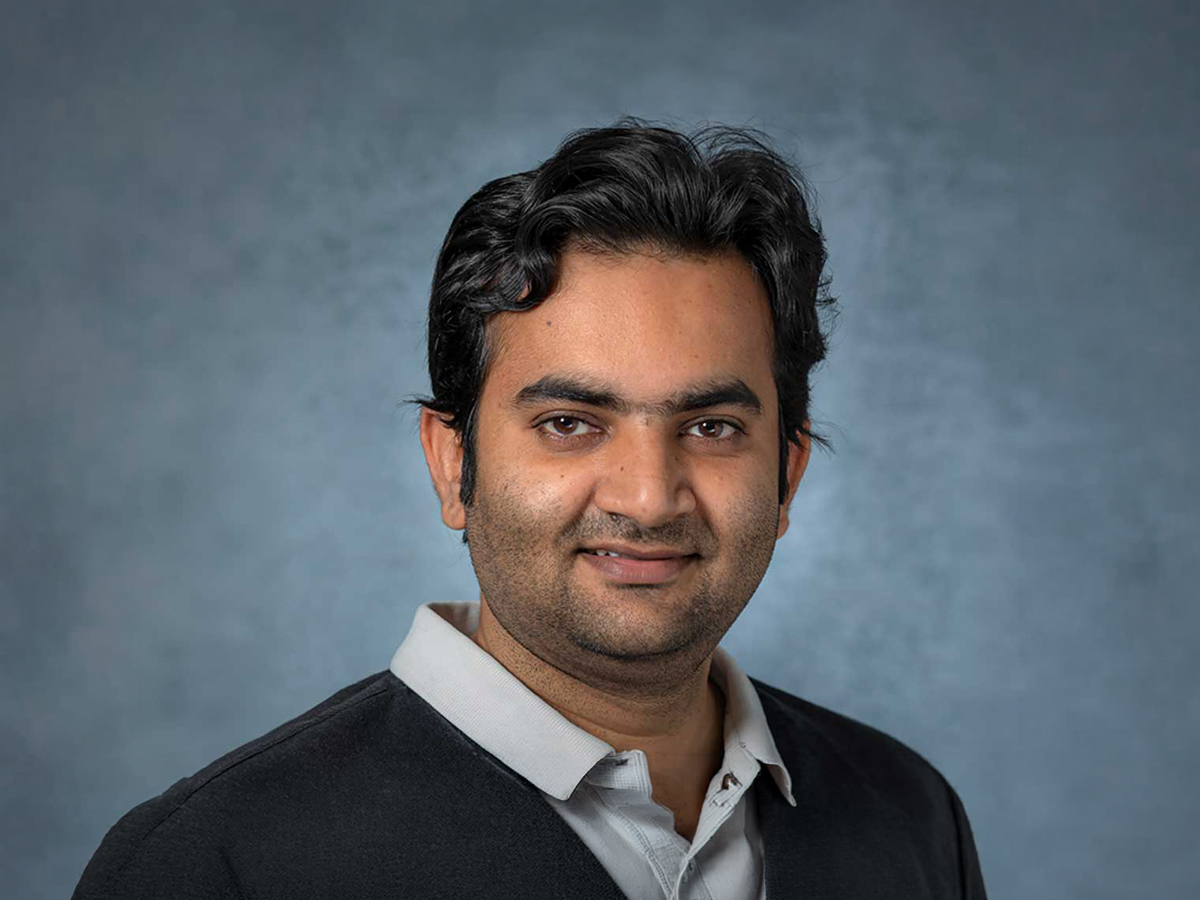
Danish Umar
NOMIS Fellow 2026-28
Organization
Salk Institute for Biological Studies

About Danish Umar
Danish Umar is a NOMIS–Salk Fellow at the Salk Institute for Biological Studies, where he conducts research in the laboratory of Deepshika Ramanan.
Born and raised in Nawada, Bihar, India, Umar completed his undergraduate studies at Jamia Millia Islamia in 2012 and earned his master’s degree from the Indian Institute of Technology (IIT) Bombay in 2014. He received his PhD in 2020 from the National Institute of Immunology, New Delhi. During his doctoral research in the laboratories of Satyajit Rath and Anna George, he discovered a novel temperature-dependent mechanism regulating CD4⁺ T cell differentiation. His work identified a TRPV1–Notch signaling axis through which febrile temperatures influence T cell fate and function, providing key insights into how physiological changes such as fever shape adaptive immunity. Following his PhD, Umar briefly pursued postdoctoral research in the laboratory of Sergey Grivennikov at Cedars-Sinai Medical Center in Los Angeles, US, where he studied preclinical models of colorectal cancer, focusing on the role of fungal microbiota in tumor development. He subsequently joined the Salk Institute in 2023 to continue his postdoctoral training.
Research Focus
In the Ramanan Lab, Umar investigates how maternal factors shape early-life mucosal immunity and influence susceptibility to intestinal diseases later in life. His research centers on understanding how breast milk–derived signals, particularly antibodies such as IgA, program the developing intestinal immune system during critical postnatal windows.
As a NOMIS–Salk Fellow, he is building on the previous discovery that maternal IgA regulates gut-resident RORγt⁺ regulatory T cells (Tregs). His current work aims to define the mechanisms by which early-life immune priming events shape Treg differentiation and the broader intestinal immune landscape. Using a cross-fostering model to isolate maternal effects, he integrates single-cell transcriptomics, microbial IgA-coating analyses, and multi-omics profiling of breast milk to uncover how maternal signals influence epithelial, immune and microbial interactions during development. He further investigates how these early-life immune programs impact disease outcomes, particularly susceptibility to colorectal cancer. His work tests the hypothesis that maternally imprinted immune states — such as altered Treg and intraepithelial lymphocyte responses — can enhance anti-tumor immunity.
Overall, Umar’s research seeks to uncover fundamental mechanisms by which maternal cues program long-term intestinal immunity and to identify early-life targets for preventing inflammatory diseases and colorectal cancer.
Feature image: Danish Umar (left); goblet cells (dark blue dots) in the small intestine of a 14-day-old mouse (right). (Photos courtesy of Danish Umar)
