
Elucidation of Selective Motor Neuron Death in Amyotrophic Lateral Sclerosis (ALS)

Amyotrophic lateral sclerosis (ALS) is the most common motor neuron disease in human adults, with an estimated five in 100,000 people worldwide affected at any moment. This devastating disease is characterized by progressive degeneration of the cells that enable voluntary muscle movement—the motor neurons—which evokes motor defects and ultimately leads to paralysis.
Although most ALS cases appear sporadic, the rare cases with clear family history allow researchers to hunt for genes that cause disease if individuals carry a defective version. One such gene is fused in sarcoma (FUS); it encodes the information to produce FUS protein. Mutations in the FUS gene only account for only about 3 percent of familial ALS cases but also some sporadic cases; however, they are often associated with a very aggressive course of the disease and early onset of symptoms. “Mutant” FUS proteins—in contrast to “normal” FUS proteins—enter the cell nucleus less efficiently and tend to form insoluble aggregates in the cytoplasm that are found in the brains and spinal cords of FUS-linked ALS patients. How exactly this leads to ALS is currently unknown. The Elucidation of Selective Motor Neuron Death in ALS project sought to identify the molecular processes responsible for the development of ALS, processes that could be therapeutically targeted to treat this devastating disease.
The project was initiated by Marc-David Ruepp and Oliver Mühlemann at the University of Bern and was subsequently led by Marc-David Ruepp at King’s College London, London, United Kingdom.
NOMIS researchers

About Oliver Mühlemann Oliver Mühlemann is professor of biochemistry at the University of Bern (Switzerland) and the director of the Swiss National Science Foundation National Center of Competence in Research (SNSF-NCCR) RNA & Disease. He co-initiated the Elucidation of Selective Motor Neuron Death in Amyotrophic Lateral Sclerosis (ALS) project and is co-leading the project Structure […]
Professor of biochemistry
University of Bern

About Marc-David Ruepp Marc-David Ruepp is professor of RNA biology and molecular neurodegeneration at King’s College London and a group leader at the UK Dementia Research Institute. He led the Elucidation of Selective Motor Neuron Death in Amyotrophic Lateral Sclerosis (ALS) project and is now co-leading the Elucidating the Mechanisms of FUS-Linked ALS project. Born […]
Professor
King’s College London
Project publications

Muscleblind acts as a modifier of FUS toxicity by modulating stress granule dynamics and SMN localization
Mutations in fused in sarcoma (FUS) lead to amyotrophic lateral sclerosis (ALS) with varying ages of onset, progression and severity. This suggests that unknown genetic factors contribute to disease pathogenesis. Here we show the identification of muscleblind as a novel modifier of FUS-mediated neurodegeneration in vivo. Muscleblind regulates cytoplasmic mislocalization of mutant FUS and subsequent accumulation in stress granules, dendritic morphology and toxicity in mammalian neuronal and human iPSC-derived neurons. Interestingly, genetic modulation of endogenous muscleblind was sufficient to restore survival motor neuron (SMN) protein localization in neurons expressing pathogenic mutations in FUS, suggesting a potential mode of suppression of FUS toxicity. Upregulation of SMN suppressed FUS toxicity in Drosophila and primary cortical neurons, indicating a link between FUS and SMN. Our data provide in vivo evidence that muscleblind is a dominant modifier of FUS-mediated neurodegeneration by regulating FUS-mediated ALS pathogenesis.
Research Fields
Clinical Medicine, Health Sciences, Neurology & Neurosurgery

FUS-dependent liquid-liquid phase separation is important for DNA repair initiation
RNA-binding proteins (RBPs) are emerging as important effectors of the cellular DNA damage response (DDR). The RBP FUS is implicated in RNA metabolism and DNA repair, and it undergoes reversible liquid-liquid phase separation (LLPS) in vitro. Here, we demonstrate that FUS-dependent LLPS is necessary for the initiation of the DDR. Using laser microirradiation in FUS-knockout cells, we show that FUS is required for the recruitment to DNA damage sites of the DDR factors KU80, NBS1, and 53BP1 and of SFPQ, another RBP implicated in the DDR. The relocation of KU80, NBS1, and SFPQ is similarly impaired by LLPS inhibitors, or LLPS-deficient FUS variants. We also show that LLPS is necessary for efficient γH2AX foci formation. Finally, using superresolution structured illumination microscopy, we demonstrate that the absence of FUS impairs the proper arrangement of γH2AX nanofoci into higher-order clusters. These findings demonstrate the early requirement for FUS-dependent LLPS in the activation of the DDR and the proper assembly of DSB repair complexes.
Research Fields
Biomedical Research, Developmental Biology, Health Sciences
The emerging role of minor intron splicing in neurological disorders
Pre-mRNA splicing is an essential step in eukaryotic gene expression. Mutations in cis-acting sequence elements within pre-mRNA molecules or trans-acting factors involved in pre-mRNA processing have both been linked to splicing dysfunction that give rise to a large number of human diseases. These mutations typically affect the major splicing pathway, which excises more than 99% of all introns in humans. However, approximately 700-800 human introns feature divergent intron consensus sequences at their 5′ and 3′ ends and are recognized by a separate pre-mRNA processing machinery denoted as the minor spliceosome. This spliceosome has been studied less than its major counterpart, but has received increasing attention during the last few years as a novel pathomechanistic player on the stage in neurodevelopmental and neurodegenerative diseases. Here, we review the current knowledge on minor spliceosome function and discuss its potential pathomechanistic role and impact in neurodegeneration.
Research Fields
Biomedical Research, Developmental Biology, Health Sciences
Project news

July 13, 2021
Phase separation-dependent FUS interactome reveals nuclear and cytoplasmic function of liquid–liquid phase separation
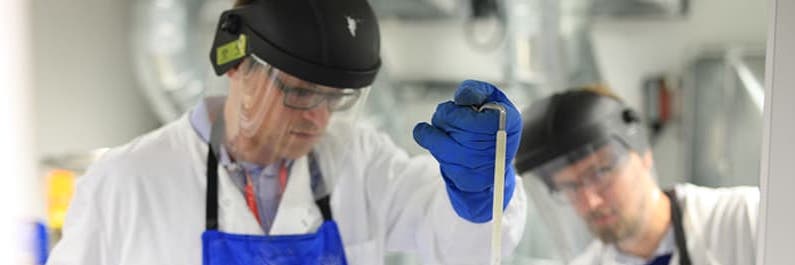
NOMIS researcher Marc-David Ruepp and colleagues have determined the different protein and RNA interactomes of soluble and phase-separated FUS. Their research was published in Nucleic Acids Research on July 7. Abstract Liquid–liquid phase separation (LLPS) of proteins and RNAs has emerged as the driving force underlying the formation of membrane-less organelles. Such biomolecular condensates have […]


January 22, 2021
Fostering a new generation of promising researchers
Jonas Mechtersheimer and Daniel Jutzi, students in the research laboratory of NOMIS scientist Marc-David Ruepp, obtained their PhDs in molecular biology on May 1, 2020, and September 1, 2020, respectively, at King’s College London. Mechtersheimer and Jutzi are two of the first students to participate in a NOMIS Foundation-funded project while completing their PhDs. Both […]
