
Phase Transitions and Biological Condensates: The Molecular Sociology of Cell Organization

Despite massive global efforts, there are only a handful of transformational new drugs launched each year. While there are many reasons for this low productivity, there is widespread agreement that our lack of understanding of the fundamental causes of disease is at the heart of the problem. To discover new therapies at an accelerated rate, we need fundamental new knowledge and new approaches.
Our project, Phase Transitions and Biological Condensates: The Molecular Sociology of Cell Organization, proposes to change the way we study disease by using a fundamental discovery from my laboratory — namely, that many cells compartmentalize their biochemistry into liquid-like condensates, mediated by the disordered regions of proteins.
Over the years, my team has shown that many different cellular compartments are liquid-like, and form by phase separation. These are now termed condensates. We have also suggested that aberrant phase separation could be linked to disease. To test these ideas, we are developing methods to identify scaffold proteins that drive the formation of condensates as well as methods to manipulate condensate formation.
The Phase Transitions project is being led by Anthony Hyman, group leader at and a director of the Max Planck Institute of Molecular Cell Biology and Genetics (Dresden, Germany).
NOMIS researchers

About Anthony Hyman Anthony (Tony) Hyman is a 2020 NOMIS Awardee and has been a group leader at and a director of the Max Planck Institute of Molecular Cell Biology and Genetics in Dresden, Germany, since 1999. He is leading the project Phase Transitions and Biological Condensates: The Molecular Sociology of Cell Organization. Born in Haifa, Israel, […]
Group leader and a director of the Max Planck Institute of Molecular Cell Biology and Genetics
Max Planck Institute of Molecular Cell Biology and Genetics
Project publications
SARS-CoV-2 nucleocapsid protein directly prevents cGAS–DNA recognition through competitive binding
Research Fields
Biochemistry & Molecular Biology, Biological Physics, Biomedical Research, Clinical Medicine, Health Sciences, Immunology, Natural Sciences, Physics & Astronomy, Virology

Mesoscale properties of protein clusters determine the size and nature of liquid-liquid phase separation (LLPS)
The observation of Liquid-Liquid Phase Separation (LLPS) in biological cells has dramatically shifted the paradigm that soluble proteins are uniformly dispersed in the cytoplasm or nucleoplasm. The LLPS region is preceded by a one-phase solution, where recent experiments have identified clusters in an aqueous solution with 102-103 proteins. Here, we theoretically consider a core-shell model with mesoscale core, surface, and bending properties of the clusters’ shell and contrast two experimental paradigms for the measured cluster size distributions of the Cytoplasmic Polyadenylation Element Binding-4 (CPEB4) and Fused in Sarcoma (FUS) proteins. The fits to the theoretical model and earlier electron paramagnetic resonance (EPR) experiments suggest that the same protein may exhibit hydrophilic, hydrophobic, and amphiphilic conformations, which act to stabilize the clusters. We find that CPEB4 clusters are much more stable compared to FUS clusters, which are less energetically favorable. This suggests that in CPEB4, LLPS consists of large-scale aggregates of clusters, while for FUS, clusters coalesce to form micron-scale LLPS domains.
Research Fields
Biological Physics, Chemical Physics, Natural Sciences, Physics & Astronomy

Intra-condensate demixing of TDP-43 inside stress granules generates pathological aggregates
Cytosolic aggregation of the nuclear protein TAR DNA-binding protein 43 (TDP-43) is associated with many neurodegenerative diseases, but the triggers for TDP-43 aggregation are still debated. Here, we demonstrate that TDP-43 aggregation requires a double event. One is up-concentration in stress granules beyond a threshold, and the other is oxidative stress. These two events collectively induce intra-condensate demixing, giving rise to a dynamic TDP-43-enriched phase within stress granules, which subsequently transition into pathological aggregates. Intra-condensate demixing of TDP-43 is observed in iPS-motor neurons, a disease mouse model, and patient samples. Mechanistically, intra-condensate demixing is triggered by local unfolding of the RRM1 domain for intermolecular disulfide bond formation and by increased hydrophobic patch interactions in the C-terminal domain. By engineering TDP-43 variants resistant to intra-condensate demixing, we successfully eliminate pathological TDP-43 aggregates in cells. We suggest that up-concentration inside condensates followed by intra-condensate demixing could be a general pathway for protein aggregation.
Research Fields
Biochemistry & Molecular Biology, Biology, Biomedical Research, Biophysics, Health Sciences, Natural Sciences, Neuroscience
Project news

June 24, 2025
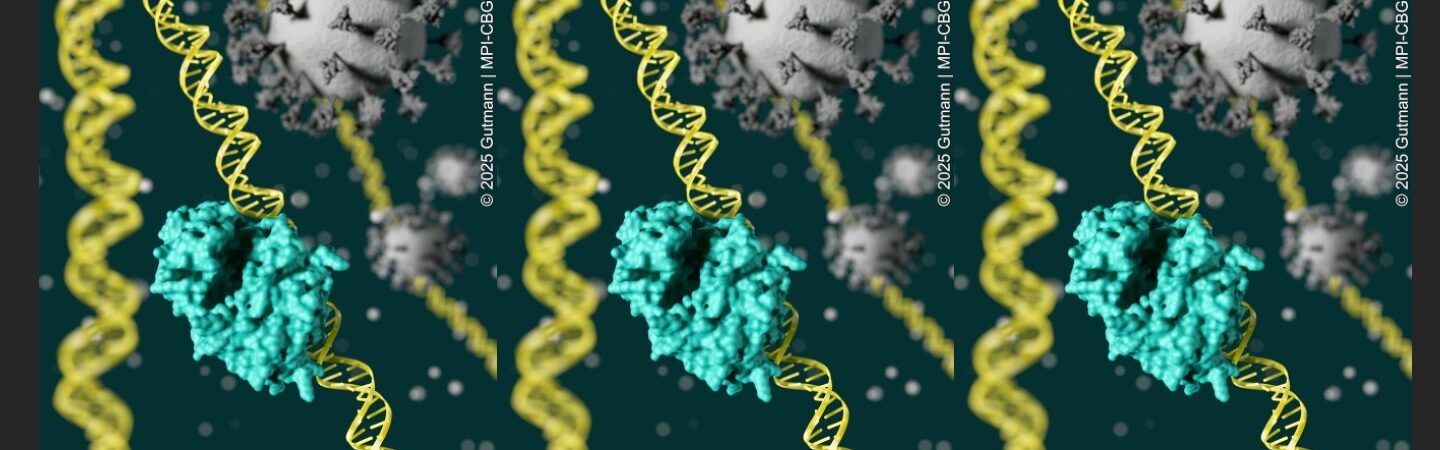
How the SARS-CoV-2 virus tricks the DNA alarm system
NOMIS Awardee Anthony Hyman and his team at the Max Planck Institute of Molecular Cell Biology and Genetics have discovered a new strategy used by the SARS-CoV-2 virus to hide from the body’s DNA immune detection system. Their findings were published in PNAS. When the SARS-CoV-2 virus invades a cell, it causes collateral damage. As […]


June 2, 2025
How cellular stress triggers harmful protein aggregates linked to ALS and frontotemporal dementia
NOMIS Awardee Anthony Hyman and collaborators from research institutions in Germany and the US have uncovered how the protein TDP-43 transforms into the solidified condensates that create pathological aggregates seen in amyotrophic lateral sclerosis (ALS) and frontotemporal dementia (FTD). Their insights could provide new therapy targets for these neurodegenerative diseases. The findings were published in […]
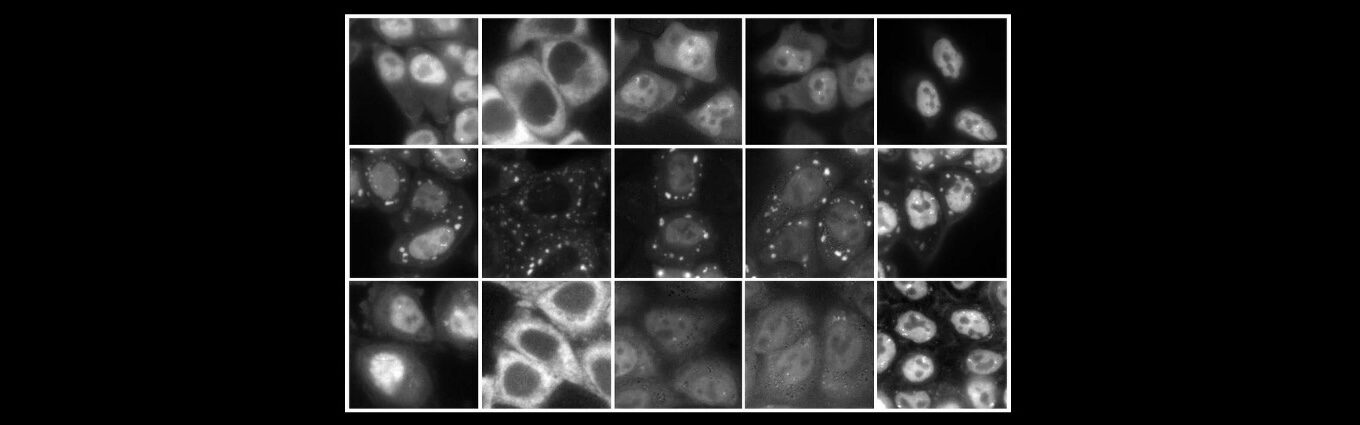

NOMIS Awardee Anthony Hyman and fellow scientists have discovered a small molecule that can prevent the formation of pathological stress granules — protein-rich condensates associated with cellular stress and ALS. Their findings were published in Nature Chemical Biology. Discovery by researchers in Dresden and Edinburgh points to new understanding of the onset of ALS A […]
