
A Cell and Molecular Approach to Research into the Biological Basis of the Human Condition


What sets humans apart from other organisms? That is a question that fascinates many scientists. Recently, we have determined high-quality genome sequences from Neandertals, the closest evolutionary relatives of present-day humans. This has enabled us to identify genetic changes in the human genome that all or almost all present-day humans share, no matter where they live on the planet, and that set us apart from Neandertals as well as chimpanzees and other apes. These genetic differences constitute an essentially complete “genetic recipe” for being a modern human.
Our project, A Cell and Molecular Approach to Research into the Biological Basis of the Human Condition, aims to analyze these genetic differences and identify those that have functional consequences – in particular with respect to the cognitive and social abilities that have made possible the development of rapidly changing technology, large societies, art and perhaps modern language.
NOMIS researchers

About Svante Pääbo Svante Pääbo is a 2017 NOMIS Awardee, a member of the NOMIS Honorary Council, a 2022 Nobel laureate, and director of the Department of Evolutionary Genetics at the Max Planck Institute for Evolutionary Anthropology in Leipzig, Germany. Pääbo was born in Stockholm, Sweden. He earned his PhD from Uppsala University, Sweden, in 1986 and […]
NOMIS Honorary Council member; director, Department of Evolutionary Genetics
Max Planck Institute for Evolutionary Anthropology
Project publications
Efficient high-precision homology-directed repair-dependent genome editing by HDRobust
Homology-directed repair (HDR), a method for repair of DNA double-stranded breaks can be leveraged for the precise introduction of mutations supplied by synthetic DNA donors, but remains limited by low efficiency and off-target effects. In this study, we report HDRobust, a high-precision method that, via the combined transient inhibition of nonhomologous end joining and microhomology-mediated end joining, resulted in the induction of point mutations by HDR in up to 93% (median 60%, s.e.m. 3) of chromosomes in populations of cells. We found that, using this method, insertions, deletions and rearrangements at the target site, as well as unintended changes at other genomic sites, were largely abolished. We validated this approach for 58 different target sites and showed that it allows efficient correction of pathogenic mutations in cells derived from patients suffering from anemia, sickle cell disease and thrombophilia. © 2023, The Author(s).
Research Fields
Biomedical Research, Developmental Biology, Health Sciences

Functional dissection of two amino acid substitutions unique to the human FOXP2 protein
The transcription factor forkhead box P2 (FOXP2) is involved in the development of language and speech in humans. Two amino acid substitutions (T303N, N325S) occurred in the human FOXP2 after the divergence from the chimpanzee lineage. It has previously been shown that when they are introduced into the FOXP2 protein of mice they alter striatal synaptic plasticity by increasing long-term depression in medium spiny neurons. Here we introduce each of these amino acid substitutions individually into mice and analyze their effects in the striatum. We find that long-term depression in medium spiny neurons is increased in mice carrying only the T303N substitution to the same extent as in mice carrying both amino acid substitutions. In contrast, the N325S substitution has no discernable effects. © 2023, The Author(s).
Research Fields
Biomedical Research, Developmental Biology, Health Sciences

Improved gRNA secondary structures allow editing of target sites resistant to CRISPR-Cas9 cleavage
The first step in CRISPR-Cas9-mediated genome editing is the cleavage of target DNA sequences that are complementary to so-called spacer sequences in CRISPR guide RNAs (gRNAs). However, some DNA sequences are refractory to CRISPR-Cas9 cleavage, which is at least in part due to gRNA misfolding. To overcome this problem, we have engineered gRNAs with highly stable hairpins in their constant parts and further enhanced their stability by chemical modifications. The ‘Genome-editing Optimized Locked Design’ (GOLD)-gRNA increases genome editing efficiency up to around 1000-fold (from 0.08 to 80.5%) with a mean increase across different other targets of 7.4-fold. We anticipate that this improved gRNA will allow efficient editing regardless of spacer sequence composition and will be especially useful if a desired genomic site is difficult to edit.
Research Fields
Biomedical Research, Developmental Biology, Health Sciences
Project news
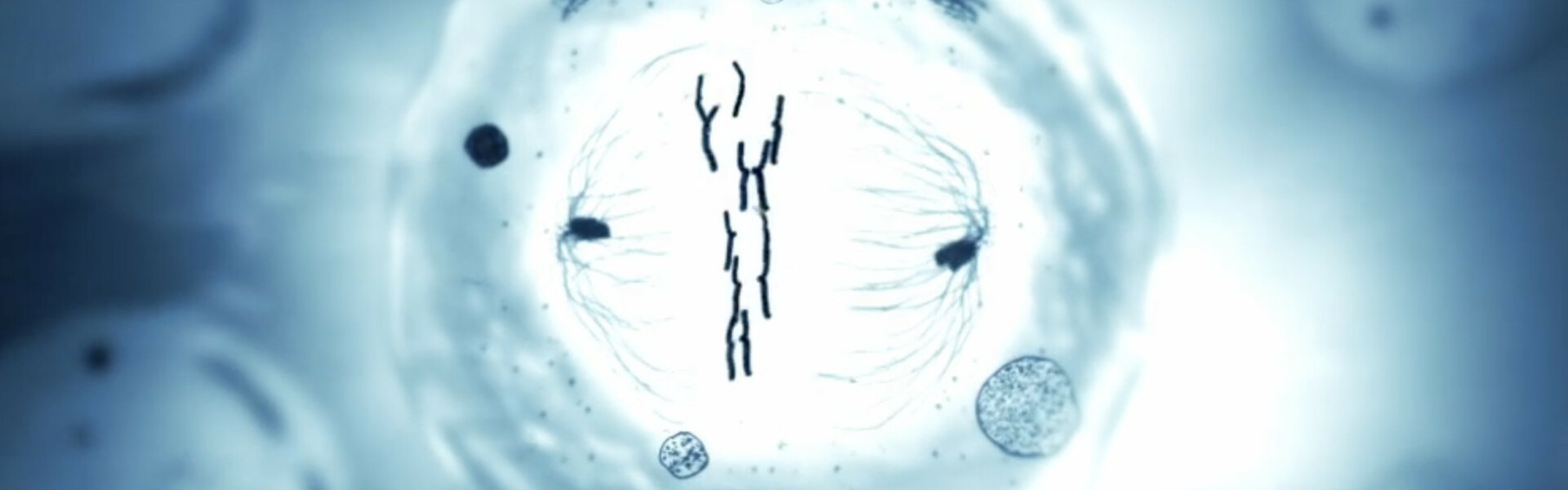

August 12, 2024
Svante Pääbo featured in newest NOMIS Insight film
NOMIS Awardee and Nobel laureate Svante Pääbo has been featured in the latest NOMIS Insight film, which details the journey of his recently concluded research project, A Cell and Molecular Approach to Research Into the Biological Basis of the Human Condition. Created in collaboration with Vollformat, the film presents Pääbo’s pioneering research and his insights into […]


August 10, 2023
Increased efficiency, precision and reliability in DNA editing
NOMIS Awardee and Nobel Laureate Svante Pääbo has, together with fellow researchers at the Max Planck Institute for Evolutionary Anthropology in Leipzig, Germany, described improvements in the methods with which mutations can be introduced in human and other genomes, making these methods much more efficient and less error prone. Their findings were published in Nature […]

NOMIS Awardee and Nobel laureate Svante Pääbo and colleagues have described a method to detect unintended on-target effects in CRISPR genome editing by DNA donors carrying diagnostic substitutions. Their findings were published in Nucleic Acid Research. The genome editing approach presented allows detection of copy number variants of the target site as well as loss […]
