Stories

How can a single spark of curiosity drive scientific breakthroughs? To find out, read the stories about our NOMIS Awardees — exceptional researchers who have made significant contributions to science and who continue to pursue ambitious questions.

People running photographed from a bird's eye view
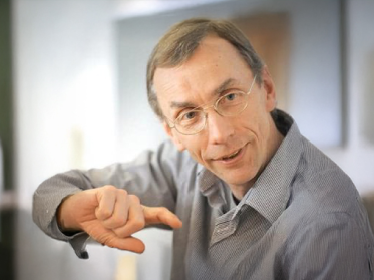
Portrait of Svante Pääbo

Svante Pääbo
2017 NOMIS Awardee

Who are we? Where do we come from?
How does the past shape our future?

Long before we could imagine reading DNA, Svante Pääbo dared to ask: Who are we, really? He went searching for answers in fragments of bone, deep in caves where Neandertals once lived.

Against all odds, he pieced together the first genomes of our extinct relatives — revealing that their story is also our story. The blood of Neandertals and Denisovans runs in us still.

That discovery changed everything. Our origins are a tapestry of connections and adaptations. Pääbo showed that the past is not gone; it lives inside us, shaping how we face the future.

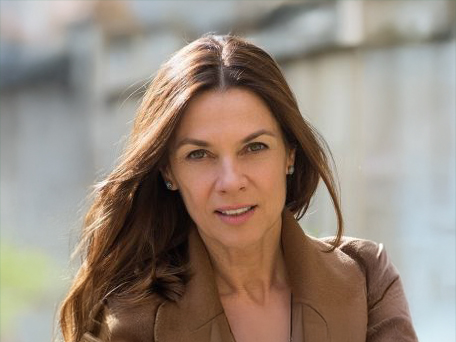
portrait picture of Magdalena Zernicka

Magdalena Zernicka-Goetz
2022 NOMIS Awardee

How does life begin? What makes us human?
Can we safeguard life?

Magdalena Zernicka-Goetz has long been fascinated by the moment when something becomes someone. She asked: How does life begin?

Peering into the earliest hours after conception, she revealed the delicate choreography by which a tiny cluster of cells decides its fate — movements and choices that will shape an entire human being.

By modeling these beginnings, she showed how small changes can echo across a lifetime, offering hope for fertility treatments, regenerative medicine, and understanding developmental disorders.

Didier Fassin
2018 NOMIS Awardee

What is justice? Why do inequalities persist?
What makes a life valuable?

Not all sparks are born in the laboratory. Didier Fassin’s spark was lit in the streets, in hospitals, in refugee camps — in the places where life is most fragile.

He asked: What makes a life valuable? Studying policing, health systems and humanitarian aid, he uncovered the moral choices hidden within everyday practices of power.

His work asks us to look again at justice, inequality and solidarity — not as abstractions, but as lived realities — and to ask ourselves, Can we do better?

Why we fund research with uncertain outcomes

Much of today’s research funding emphasizes predictability and clearly defined deliverables, a model well suited to incremental progress in established fields.

We take a different approach. We fund the complex questions whose answers and impacts cannot be predicted. These explorations often require new tools, interdisciplinary collaboration and long time horizons before their significance becomes clear.

Reading genomes from ancient DNA took decades of method development. Studying the earliest stages of human embryos depended on experimental systems that did not yet exist. Understanding how institutions shape moral behavior demanded years of fieldwork rather than controlled lab experiments.

In each case, insight followed open inquiry, not a rigid plan. By funding bold questions rather than guaranteed outcomes, we embrace uncertainty. We prioritize deep understanding over speed, knowing that this is what ultimately enables future breakthroughs.