
Collective Delusions: Social Identity and Scientific Misbeliefs

Many commentators have warned of a recent global trend of intensifying polarization. An especially worrying manifestation of this involves polarization not only over values and preferences, but over factual beliefs. For instance, Republicans and Democrats in the US disagree about the legitimacy of Joe Biden’s victory in the 2020 US presidential election, while Remainers and Brexiteers in the UK disagree about the economic benefits of leaving the European Union.
At present, we lack a detailed understanding of the depth and dynamics of these disagreements. In particular, the extent to which apparently distorted beliefs and inferences are disingenuous and performative—i.e., “expressive” rather than sincere—is unclear. Do partisans really disagree about fundamental facts, or are they playing to the gallery? The project Collective Delusions: Social Identity and Scientific Misbeliefs seeks to make an important contribution to this endeavor.
By combining theory, methods and expertise from multiple disciplines (e.g., experimental economic games, surveys, computerized tasks, neuroimaging) the project aims to illuminate the extent to which beliefs and decisions are distorted by motives to signal, protect and preserve valued social identities, and to understand the cognitive and neural mechanisms that mediate identity-protective cognition.
The Collective Delusions project is being led by Ryan McKay at Royal Holloway, University of London (UK).
NOMIS researchers
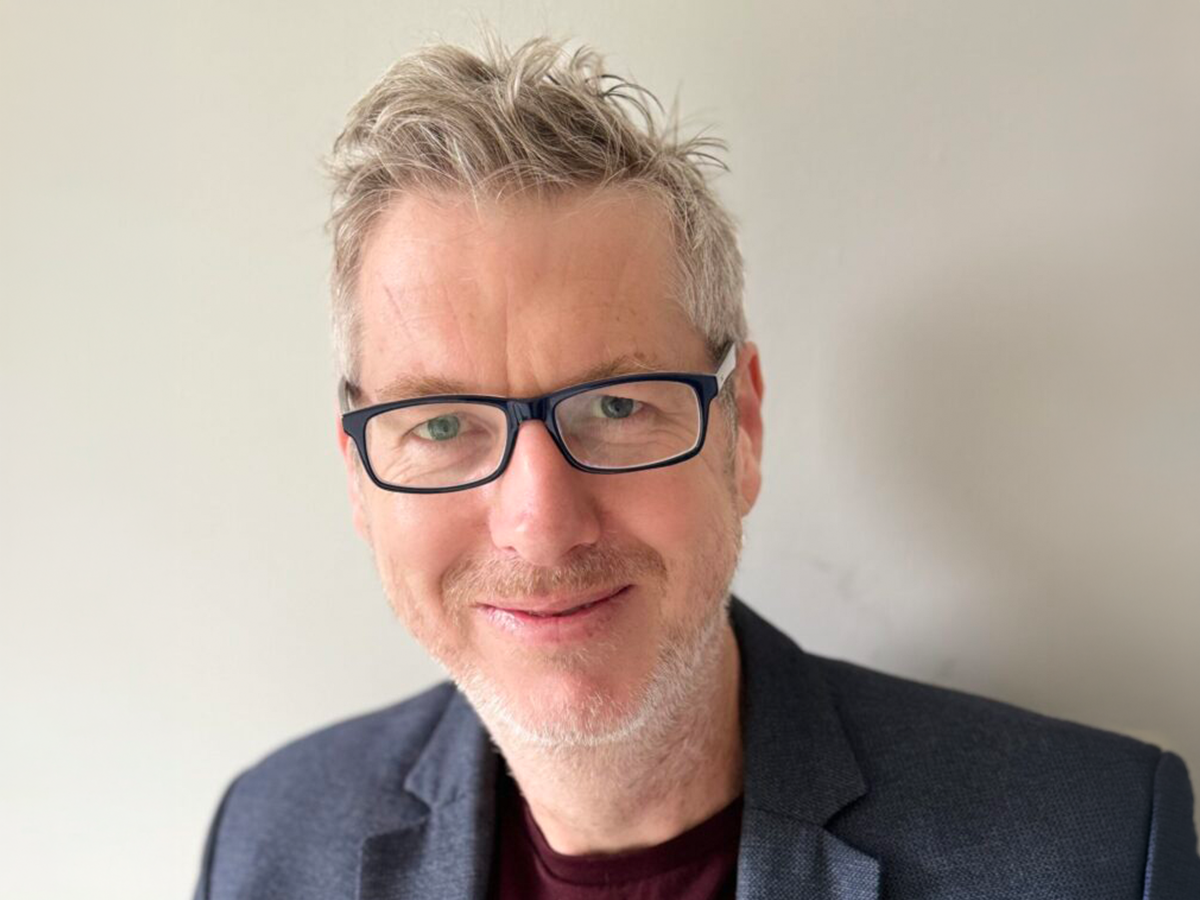
About Ryan McKay Ryan McKay is professor of psychology at Royal Holloway, University of London (UK), where he leads the Morality and Beliefs Laboratory (MaB-Lab). He is leading the project Collective Delusions: Social Identity and Scientific Misbeliefs. Born and raised in Australia, McKay received a BS (with honors in psychology) at the University of Western […]
Professor
Royal Holloway University of London
Project publications
Estimating the causal effects of cognitive effort and policy information on party cue influence
Party cues can influence public opinion, but the extent to which they do so varies dramatically from context to context. Why? The long-standing theory that party cues function as “heuristics” provides an answer, predicting that variation in exposure to policy information, a propensity for effortful thinking, or both causally affects the influence of party cues. However, this prediction has escaped decisive empirical testing to date, leaving in its wake a string of mixed results. Here we characterize the challenges that limit previous tests, and report on two large-scale experiments designed to overcome them. We find that exposure to policy information causally attenuates the influence of party cues, but engagement in effortful thinking per se does not. Our results advance understanding of the “when” and “why” of party cue influence; clarify a number of previously ambiguous findings; and have broad theoretical, methodological, and normative implications for understanding the influence of party cues.
Research Fields
Applied Sciences, Psychology & Cognitive Sciences
Signal discrimination in the psychotic phenotype: increased sensory precision and reduced decision threshold associated with psychotic-like experiences
Background
Psychotic-like experiences may reflect disrupted signal discrimination, whereby individuals overinterpret noisy sensory input as meaningful. Drawing on predictive coding accounts, we investigated whether increased sensory precision and reduced data-gathering relate to psychotic-like experiences in a signal discrimination task.
Methods
We fitted drift-diffusion models to Random Dot Motion (RDM) task data completed by 191 participants. We estimated drift rate and decision threshold: (1) across groups differing in psychotic phenotypes, and (2) as outcomes in regression models with psychotic-like experiences as predictors. Drift rate measures evidence gain and, in this task, can be considered an approximate measure of sensory precision. We also tested whether reduced data-gathering on the beads task replicated prior associations with psychotic phenotypes.
Results
Hallucination– and delusion-like experiences were associated with increased drift rates. Hallucination-like experiences also predicted lower decision thresholds. In the beads task, psychotic-like experiences correlated with higher confidence ratings but not with reduced data-gathering.
Conclusions
Our findings indicate that psychotic-like phenomenology is linked to increased precision of signal discrimination and reduced decision thresholds. Overprecise signal discrimination and lower decision thresholds may bias perceptual inference toward false positive detections, potentially leading to anomalous experiences.
Research Fields
Clinical Psychology, Experimental Psychology, Health Sciences, Psychology & Cognitive Sciences
Belief in belief: Even atheists in secular countries show intuitive preferences favoring religious belief
We find evidence of belief in belief—intuitive preferences for religious belief over atheism, even among atheist participants—across eight comparatively secular countries. Religion is a cross-cultural human universal, yet explicit markers of religiosity have rapidly waned in large parts of the world in recent decades. We explored whether intuitive religious influence lingers, even among nonbelievers in largely secular societies. We adapted a classic experimental philosophy task to test for this intuitive belief in belief among people in eight comparatively nonreligious countries: Canada, China, Czechia, Japan, the Netherlands, Sweden, the United Kingdom, and Vietnam (total N = 3,804). Our analyses revealed strong evidence that 1) people intuitively favor religious belief over atheism and that 2) this pattern was not moderated by participants’ own self-reported atheism. Indeed, 3) even atheists in relatively secular societies intuitively prefer belief to atheism. These inferences were robust across different analytic strategies and across other measures of individual differences in religiosity and religious instruction. Although explicit religious belief has rapidly declined in these countries, it is possible that belief in belief may still persist. These results speak to the complex psychological and cultural dynamics of secularization.
Research Fields
Arts & Humanities, Health Sciences, Philosophy & Theology, Psychology & Cognitive Sciences
Project news

Why do people turn to magic for healing, divination or other high-stakes decisions, even when its practical effects are uncertain? A new interdisciplinary paper by NOMIS researcher Ryan McKay and colleagues argues that the answer is more complex than simply believing or not believing. People may approach magical practices with a shifting mix of conviction, […]

February 23, 2026
Policy over party: How policy information shapes political opinions
When do voters actually think for themselves? A new study sheds light on when and why people follow their political party’s lead — and what it takes to break the “follow the leader” mentality. NOMIS researcher Ryan McKay and a colleague at Royal Holloway, University of London, found that when people are given clear policy […]


A study by NOMIS researcher Ryan McKay and colleagues reveals that atheists in some of the world’s most secular countries show an intuitive preference for religious belief over atheism. Their findings were published in Proceedings of the National Academy of Sciences (PNAS). The study, by academics at Brunel University of London, Royal Holloway, University of […]
