
NOMIS Professorship of Cognitive and Neuroeconomics, UZH
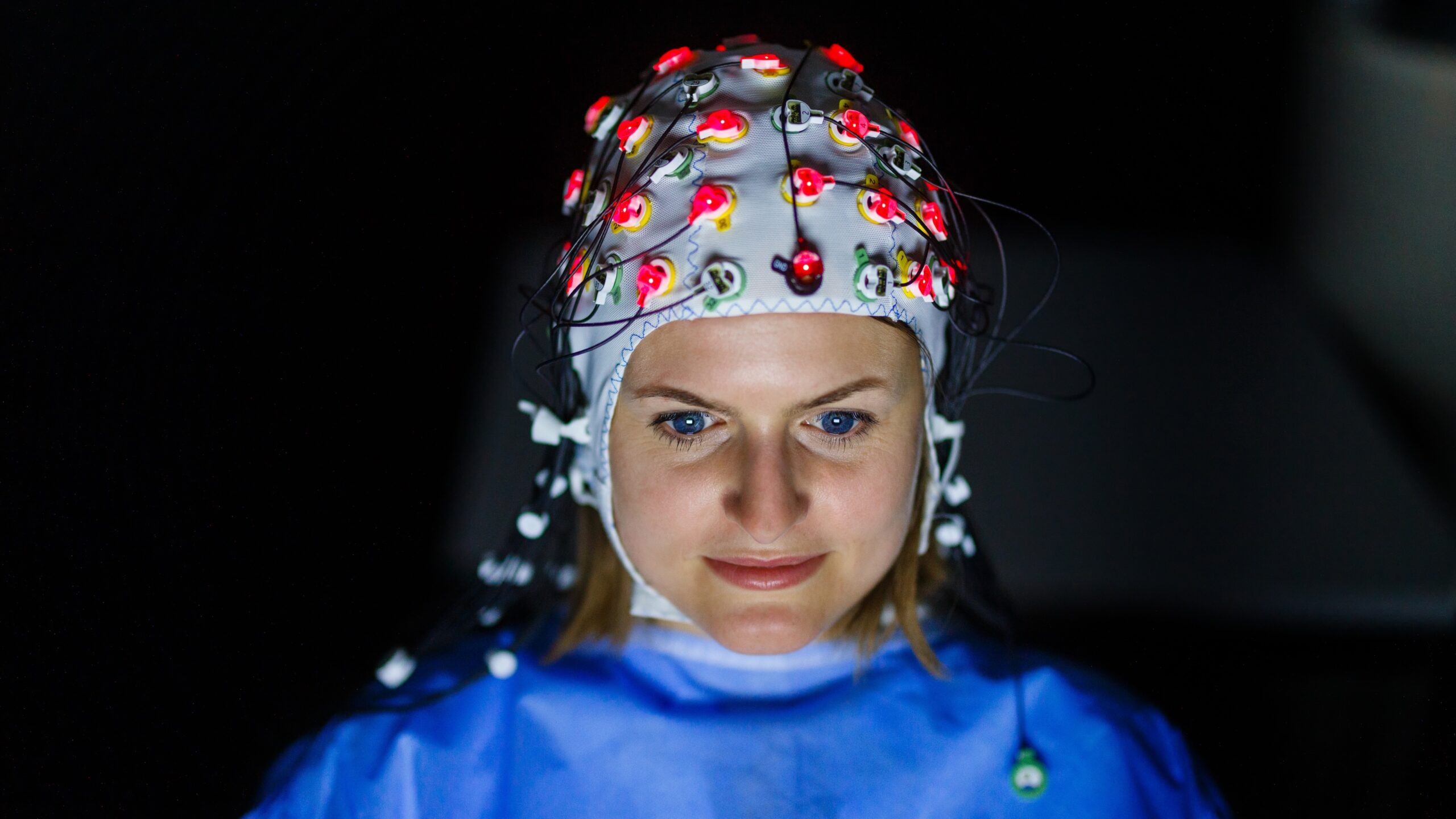

To fully understand human decision-making, we must connect the biological reality of the brain to the economic models that shape our world. While empirical research has successfully mapped many neural underpinnings of human behavior, a crucial element remains missing: the theoretical frameworks required to connect these biological processes with modern economic models of choice.
To bridge this gap, we partnered with the University of Zurich (UZH) to establish the NOMIS Professorship of Cognitive and Neuroeconomics. Housed within one of Europe’s leading economics departments, this position capitalizes on a deeply collaborative environment of neuroscientists, psychologists and economists., and is dedicated to constructing empirically informed, testable models that unite neural data with economic theory. By integrating these previously disparate disciplines, the professorship provides the foundational insights necessary to understand human decision-making from a truly integrated perspective.
The position was previously the NOMIS Professorship for Decision and Neuroeconomic Theory, held by Carlos Alós-Ferrer.
People

Thomas Graeber is the NOMIS Professor of Cognitive and Neuroeconomics at the University of Zurich (Switzerland).
Professor of Cognitive and Neuroeconomics
University of Zurich
1 of 1 People
Publications

Part-Time Bayesians: Incentives and Behavioral Heterogeneity in Belief Updating
Decisions in management and finance rely on information that often includes win-lose feedback (e.g., gains and losses, success and failure). Simple reinforcement then suggests to blindly repeat choices if they led to success in the past and change them otherwise, which might conflict with Bayesian updating of beliefs. We use finite mixture models and hidden Markov models, adapted from machine learning, to uncover behavioral heterogeneity in the reliance on difference behavioral rules across and within individuals in a belief-updating experiment. Most decision makers rely both on Bayesian updating and reinforcement. Paradoxically, an increase in incentives increases the reliance on reinforcement because the win-lose cues become more salient.
Published on
December 9, 2022
NOMIS Researcher
Carlos Alós-FerrerPublished in
Journal of Mathematical Economics
An Axiomatic Characterization of Bayesian Updating
We provide an axiomatic characterization of Bayesian updating, viewed as a mapping from prior beliefs and new information to posteriors, which is disentangled from any reference to preferences. Bayesian updating is characterized by Non-Innovativeness (events considered impossible in the prior remain impossible in the posterior), Dropping (events contradicted by new evidence are considered impossible in the posterior), and Proportionality (for other events, the posterior simply rescales the prior’s probabilities proportionally). The result clarifies the differences between the normative Bayesian benchmark, alternative models, and actual human behavior.
Research Fields
Economics
Published on
August 15, 2021
NOMIS Researcher
Carlos Alós-FerrerPublished in
Experimental Economics
Does choice change preferences? An incentivized test of the mere choice effect
Widespread evidence from psychology and neuroscience documents that previous choices unconditionally increase the later desirability of chosen objects, even if those choices were uninformative. This is problematic for economists who use choice data to estimate latent preferences, demand functions, and social welfare. The evidence on this mere choice effect, however, exhibits serious shortcomings which prevent evaluating its possible relevance for economics. In this paper, we present a novel, parsimonious experimental design to test for the economic validity of the mere choice effect addressing these shortcomings. Our design uses well-defined, monetary lotteries, all decisions are incentivized, and we effectively randomize participants’ initial choices without relying on deception. Results from a large, pre-registered online experiment find no support for the mere choice effect. Our results challenge conventional wisdom outside economics. The mere choice effect does not seem to be a concern for economics, at least in the domain of decision making under risk.
Research Fields
Psychology & Cognitive Sciences
3 of 3 Publications
News


The Covid-19 global vaccine roll-out is considered one of the greatest achievements in modern medical history, saving hundreds of thousands of lives. However, it was marred by decisions that saw those most in need of a vaccine in some countries wait too long, while those perceived to be least at risk getting them first. Now, […]


August 1, 2021
Study by Carlos Alós-Ferrer shows people are generous with individuals and selfish to the masses
Carlos Alós-Ferrer, who is NOMIS Professor for Decision and Neuroeconomic Theory at the University of Zurich, and his colleagues have published a study indicating that human beings can simultaneously be generous with others and selfish with large groups. The paper, which was published in Nature Human Behaviour, is summarized by Alós-Ferrer below. Selfish to the […]

January 31, 2019
NOMIS Professor Carlos Alós-Ferrer Appointed Editor-in-Chief of Journal of Economic Psychology
Carlos Alós-Ferrer, NOMIS Professor for Decision and Neuroeconomic Theory at the University of Zurich, has taken on the role or Editior-in-Chief of the Journal of Economic Psychology. The journal focuses on understanding behavioral, in particular psychological, aspects of economic phenomena and processes on different levels of aggregation, from the household and the individual consumer to the […]

April 15, 2018
AEA: "Understanding the economic brain: What can economics and social neuroscience learn from one another?"
The work of NOMIS scientist Carlos Alós-Ferrer has been highlighted in an article by the American Economic Association (AEA). Alós-Ferrer emphasizes the importance of interdisciplinary research between economists and social neuroscientists to increase our understanding of human behavior. The article, “Understanding the economic brain: What can economics and social neuroscience learn from one another?” pinpoints the […]
April 11, 2018
Carlos Alós-Ferrer named NOMIS Professor for Decision and Neuroeconomic Theory at the University of Zurich
Carlos Alós-Ferrer has been appointed NOMIS Professor for Decision and Neuroeconomic Theory at the University of Zurich (UZH) in Switzerland. He is an economist who, prior to joining UZH, was professor of microeconomics at the University of Cologne, Germany, and the speaker of the interdisciplinary research unit “Psychoeconomics,” funded by the German Research Foundation (DFG). […]


December 20, 2016
University of Zurich joins Open Library of Humanities’ Library Partnership Subsidy system
The University of Zurich (UZH), a NOMIS partner and one of the leading research universities in Europe, has joined the Open Library of Humanities’ (OLH) Library Partnership Subsidy (LPS) system. OLH is a charitable organization dedicated to publishing open-access scholarship with no author-facing article-processing charges. OLH is funded by an international consortium of libraries whose […]
