Boundary-crossing visionaries: Celebrating the 2026 NOMIS Awardees

Published on
October 19, 2026
Full professor of physics and electrical engineering
Professor and Liber Ero Chair in Biodiversity Conservation
Cora Jane Flood Professor of Finance and professor of economics
Organization
What happens when the boundaries between scientific disciplines begin to dissolve? Some of the most profound breakthroughs emerge when distinct perspectives come together. On Oct. 15, 2026, an international community of scholars gathered in Zurich, Switzerland, to celebrate the 2026 NOMIS Distinguished Scientist and Scholar Awardees — Tobias Kippenberg, Andrew Gonzalez, and Ulrike Malmendier — three pioneering researchers whose boundary-crossing work exemplifies this collaborative spirit.
The natural world offers countless examples of separate elements becoming something greater together — amino acids form chains that fold into complex proteins; small streams merge into fast-moving rivers; and individual instruments create the layered sound of a symphony. Research works similarly: Combining methods and perspectives from different disciplines can reveal dimensions of life’s fundamental questions that would otherwise remain unknown.
The NOMIS Distinguished Scientist and Scholar Award gives visionary researchers funding and intellectual freedom to pursue high-risk, curiosity-driven research. This year’s ceremony at the Kunsthaus Zurich honored Tobias Kippenberg, Andrew Gonzalez, and Ulrike Malmendier, whose work spans quantum physics and optics, ecology and network theory, and psychology and economics. By connecting ideas across fields, the awardees are illuminating the hidden systems that shape our existence.
2026 NOMIS Awardee Tobias Kippenberg
“What sets the ultimate limit of dissipation? That’s an open fundamental question. It doesn’t directly serve a purpose. It doesn’t solve a technical problem. But I think it’s just beautiful to be able to pursue that question, which is innate curiosity.”
— Tobias Kippenberg
Recognized as one of the world’s most influential experimental physicists, Tobias Kippenberg has made paradigm-shifting discoveries. He generated optical frequency combs using microresonators on a single microchip and helped pioneer the field of cavity optomechanics by demonstrating that circulating light exerts physical radiation pressure. Kippenberg is integrating experimental physics, optics, nanotechnology and quantum mechanics in his new NOMIS-supported project, The Quest for Ultralow Dissipation: From Self-Organized Light to Collective Quantum Drums. The project explores the limits of energy loss, investigates how light self-organizes, and pushes macroscopic mechanical structures into the quantum regime.
2026 NOMIS Awardee Andrew Gonzalez
“I’m really excited about the future of this project because it’s going to allow us to advance our general fundamental understanding of life on Earth — this unique thing — the only planet in the universe that we know of so far that has a biosphere. We have to understand that biosphere if we’re going to live sustainably with it into the 21st century.”
— Andrew Gonzalez
A pioneering ecologist, Andrew Gonzalez transformed conservation biology by demonstrating that ecosystem resilience depends on ecological connectivity across space and time. Building on these insights, Gonzalez combines evolutionary ecology, network theory and Earth system science in his new NOMIS-supported project, A Mesoscale Theory of the Biosphere. His research reframes biodiversity loss as a problem of planetary organization and examines how regional ecological networks buffer against or amplify global disruptions.
2026 NOMIS Awardee Ulrike Malmendier
“We have fallen in love with a mathematically beautiful model that captures humans as an algorithm that keeps optimizing over time and don’t think as much about how we are shaped by past experience, by past trauma, how important joy is, mental health, well-being. My dream would be that I can shape economics to become more of a human science. If that comes out of my work, I would be thrilled.”
— Ulrike Malmendier
A renowned economist and behavioral finance pioneer, Ulrike Malmendier established the concept of “experience effects,” showing how major financial shocks, such as the Great Depression, can have lasting effects on individual economic behavior. Her new NOMIS-supported project, Stress and Economics — Exploring the Alleviating Role of Predictability and Controllability, brings economics together with neurobiology, cognitive science, epidemiology and psychiatry to examine the physiological and psychological trauma caused by economic crises. Her research aims to help employers and policymakers develop strategies that mitigate workforce scarring during periods of disruption.
A celebration of convergence
The awards were presented by previous NOMIS Award recipients, including Anthony Hyman (2020), Rob Ewers (2021) and Wolfgang Busch (2025). Together, they welcomed the new cohort of distinguished scientists into the global NOMIS research community and recognized the creativity and innovation reflected in the awardees’ contributions to science.
“There is a tendency in modern science to think that instruments should be more and more complex, more extensive, that we should collect more data. But we should never forget that, for previous centuries and in the subsequent centuries that are coming, discovery, in the end, will depend on the ingenuity of the individual experiments and experimenters.”
— Anthony (Tony) Hyman
The ceremony not only celebrated trailblazing scientists but also brought together the NOMIS community of researchers. Many from this vibrant network gathered a day earlier at the NOMIS Insight lectures, where the 2026 awardees presented their pioneering research. The events foster the continued open dialogue across disciplines that sparks new collaborations and shapes the future of discovery.
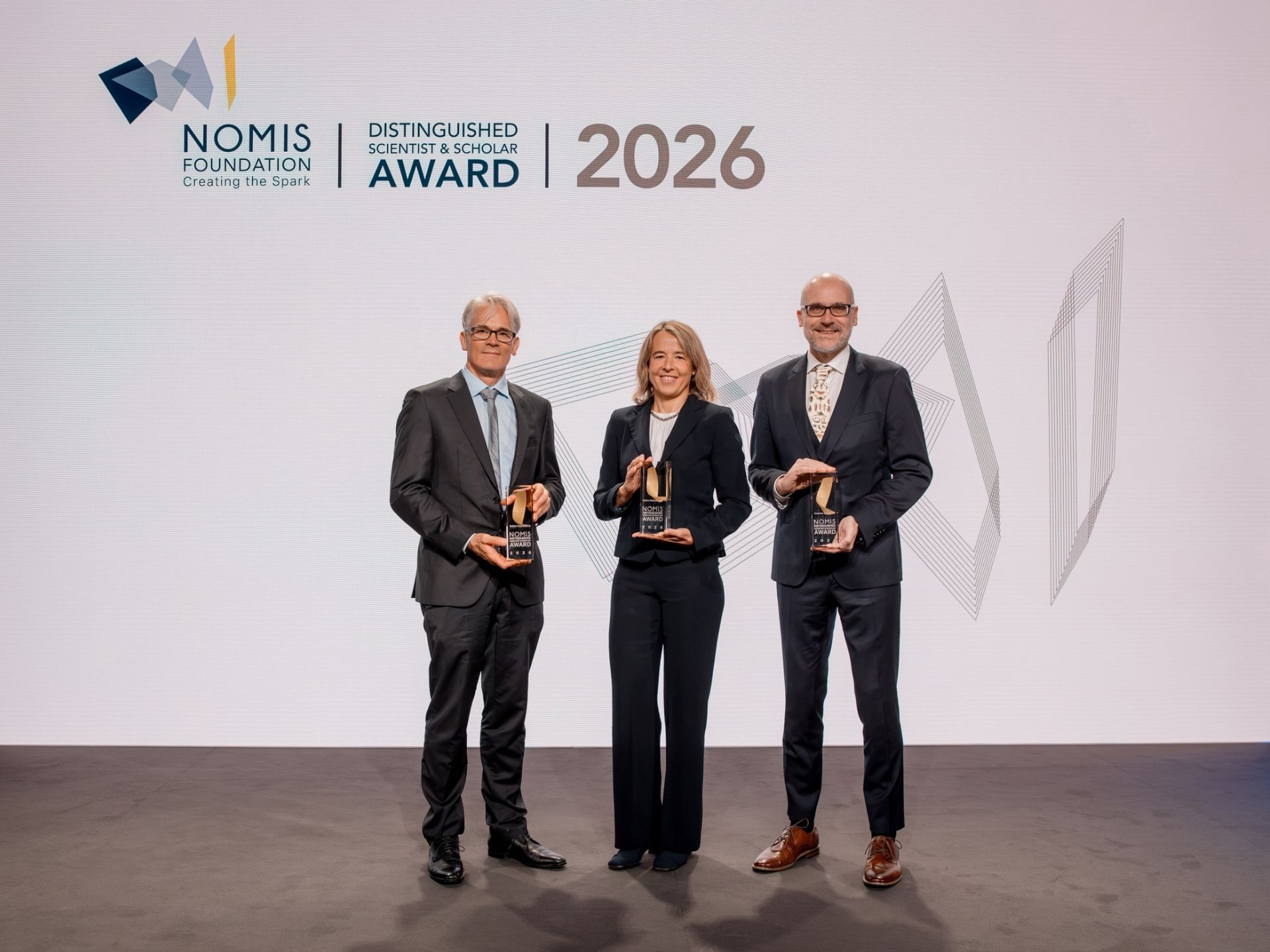
2026 NOMIS Awardees Tobias Kippenberg, Ulrike Malmendier and Andy Gonzalez. (Photo by David Biedert)

NOMIS Managing Director Markus Reinhard reflected on the role of convergence in science and in life at the 2026 NOMIS Award ceremony. (Photo by David Biedert)

Researchers from around the world and across disciplines gathered at the Kunsthaus Zurich for the 2026 NOMIS Award ceremony. (Photo by David Biedert)

A captive audience at the 2026 NOMIS Award ceremony. (Photo by David Biedert)

The 2026 NOMIS Distinguished Scientist and Scholar Award trophies (Photo by David Biedert)
2026 NOMIS Awardees Tobias Kippenberg, Ulrike Malmendier and Andy Gonzalez. (Photo by David Biedert)
NOMIS Managing Director Markus Reinhard reflected on the role of convergence in science and in life at the 2026 NOMIS Award ceremony. (Photo by David Biedert)
Researchers from around the world and across disciplines gathered at the Kunsthaus Zurich for the 2026 NOMIS Award ceremony. (Photo by David Biedert)
A captive audience at the 2026 NOMIS Award ceremony. (Photo by David Biedert)
The 2026 NOMIS Distinguished Scientist and Scholar Award trophies (Photo by David Biedert)
More about the NOMIS Distinguished Scientist and Scholar Award
The NOMIS Award honors exceptional researchers whose bold questions and broad-ranging approaches transform our understanding of the world. By recognizing scientists and scholars who actively build bridges between the sciences and humanities, the award champions the innovative ideas that lead to groundbreaking discoveries and open entirely new fields of study. Established in 2016, the NOMIS Award provides the essential funding and intellectual freedom these visionaries need to continue pursuing curiosity-driven science.
About the NOMIS Foundation
NOMIS’ vision is to “create a spark” in the world of science by enabling and supporting pioneering research in the natural sciences, social sciences and the humanities that benefits humankind and our planet. Our mission is to support and enable insight-driven science across all disciplines, focusing on researchers who put forth bold new ideas, exhibit a pioneering spirit and seek to inspire the world around them.
Related news
Bridging fields, sparking ideas: The 2026 NOMIS Insight lectures
Revealing hidden connections and systems: Announcing the 2026 NOMIS Awardees
NOMIS researchers

Andrew Gonzalez is a 2026 NOMIS Awardee, professor and Liber Ero Chair in Biodiversity Conservation at McGill University in Montreal, Canada, as well as a fellow of the Royal Society of Canada. He is leading the project A Mesoscale Theory of the Biosphere.
Professor and Liber Ero Chair in Biodiversity Conservation
McGill University
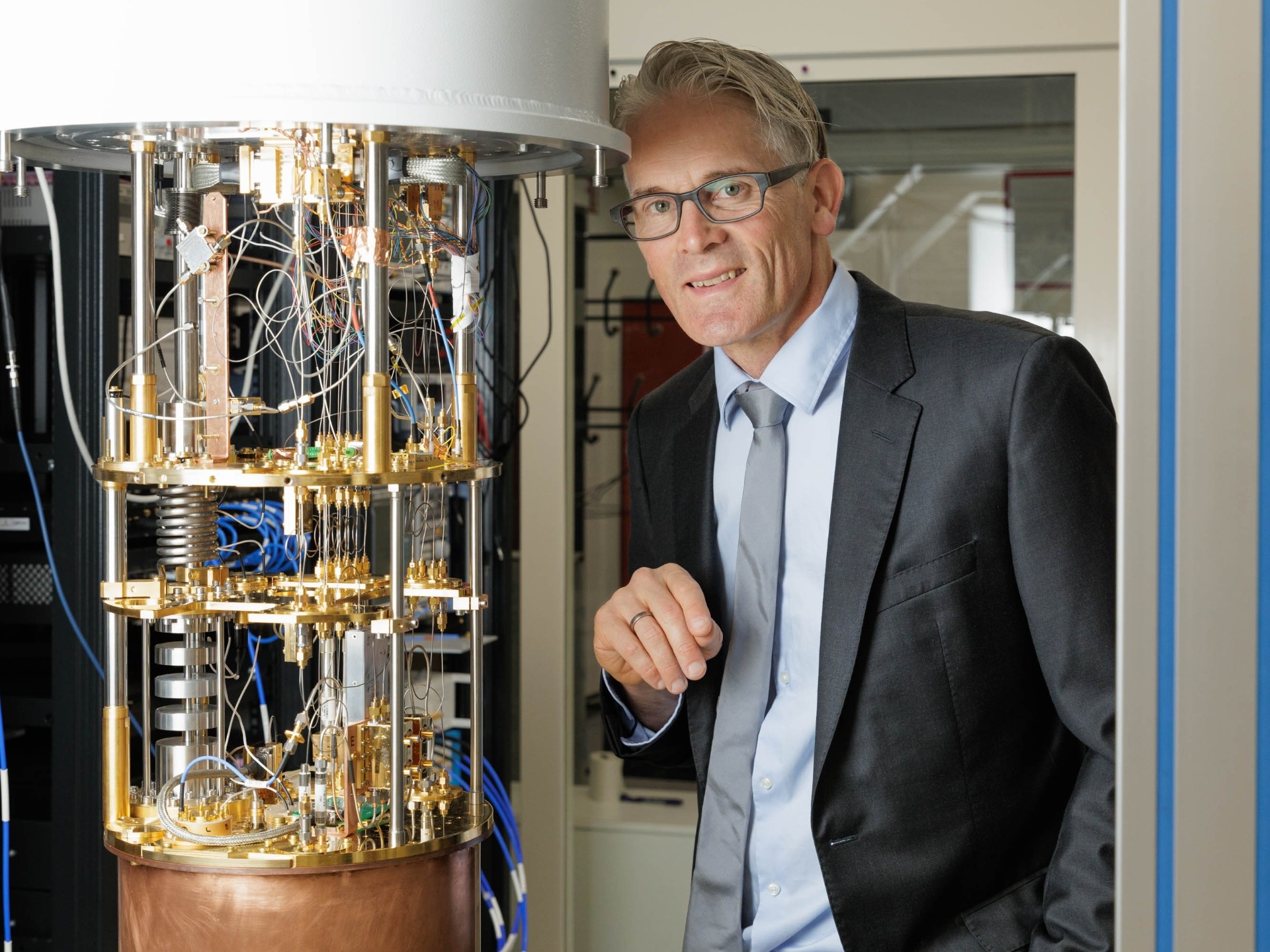
About Tobias Kippenberg Tobias Kippenberg is a 2026 NOMIS Awardee and a full professor of physics and electrical engineering in the Institute of Physics and Electrical Engineering at EPFL in Lausanne, Switzerland. He is leading the project The Quest for Ultralow Dissipation: From Self-Organized Light to Collective Quantum Drums. Kippenberg studied physics and electrical engineering […]
Full professor of physics and electrical engineering
EPFL (Swiss Federal Institute of Technology in Lausanne)

About Ulrike Malmendier Ulrike Malmendier is the Cora Jane Flood Professor of Finance at the Haas School of Business, and a professor of economics at the University of California, Berkeley, US. She is leading the project Stress and Economics — Exploring the Alleviating Role of Predictability and Controllability. Malmendier earned an MA in economics in […]
Cora Jane Flood Professor of Finance and professor of economics
University of California, Berkeley
NOMIS Project(s)
A Mesoscale Theory of the Biosphere
Human activities are causing an alarming decline in biodiversity, threatening the vital natural resources such as fertile soil, clean water and climate stability we depend on. While scientists have a strong understanding of how nature operates at local and planetary levels, we lack a general theory for how ecological changes at the mesoscale — the regional networks that connect the two — add up to impact the stability of the biosphere as a whole. How do ecosystems connected across landscapes, seascapes and regions collectively buffer — or amplify — environmental change? Understanding this is essential to preserving the natural systems that support all life.
NOMIS researcher
Project period
2026 – 2031

The Quest for Ultralow Dissipation
The question All physical systems gradually lose energy. A guitar string stops vibrating after being plucked, a swinging pendulum eventually comes to rest, and even light circulating inside a tiny glass structure slowly fades away. This universal process, known as dissipation, appears simple but raises a profound question: What ultimately determines how slowly energy can […]
NOMIS researcher
Project period
2026 – 2031

The question We live in a world of repeated crises, where economic shocks like stock-market crashes or unexpected layoffs are frequent occurrences. The impact of these shocks extends far beyond mere financial consequences. These deeply stressful experiences can cause lasting physical and mental harm, including accelerated aging and higher mortality. Furthermore, these ongoing biological stress […]
NOMIS researcher
Project period
2026 – 2031