
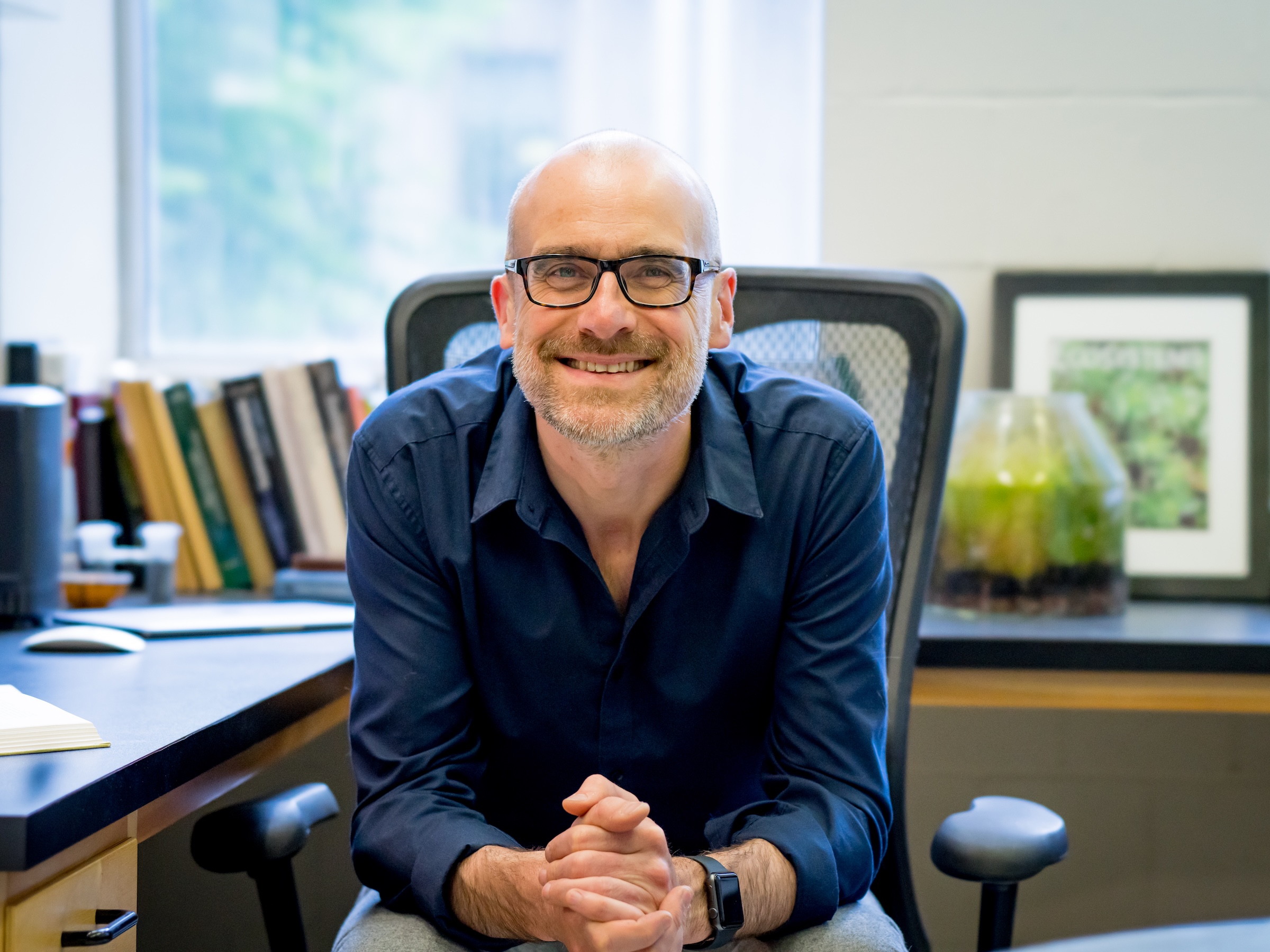
Andrew Gonzalez
Professor and Liber Ero Chair in Biodiversity Conservation
Organization
McGill University

About Andrew Gonzalez
Andrew Gonzalez is a 2026 NOMIS Awardee, professor and Liber Ero Chair in Biodiversity Conservation at McGill University in Montreal, Canada, as well as a fellow of the Royal Society of Canada. He is leading the project A Mesoscale Theory of the Biosphere.
Gonzalez earned his BSc in zoology and animal biology from the University of Nottingham in the UK, followed by a PhD in ecology from Imperial College London, UK, in 1998. He then spent four years as an assistant professor at the University of Paris VI before joining McGill University in 2003, where he now holds the Liber Ero Chair in Conservation Biology.
He has played a leading role in building biodiversity science and translating it into action. He is the founding director of the Quebec Centre for Biodiversity, a network linking 15 universities and colleges, 105 researchers, and 500 graduate students and postdoctoral researchers. He serves as co-chair of the Group on Earth Observations Biodiversity Observation Network (GEO BON) and co-chair of the IPBES methodological assessment on monitoring biodiversity and nature’s contributions to people. Through research, public engagement, policy leadership and applied conservation work, he has helped shape how biodiversity is monitored, understood and protected in Canada and globally.
“My career has been driven by a commitment to connect discovery with action: to uncover the fundamental workings of life on Earth — the patterns, processes, and theory that sustain biodiversity — and to ensure that this knowledge guides the conservation and restoration of the living world.”
— Andrew Gonzalez
Research focus
Gonzalez’s pioneering research has transformed our understanding of the causes and consequences of biodiversity loss, focusing on how ecological connectivity, rapid evolution and environmental change shape the persistence, functioning and resilience of ecosystems. He showed that biodiversity, stability, adaptation and persistence are intertwined and fundamental to understanding the structure of the living world, and that ecological systems persist not only because of what happens locally, but also because populations, communities and ecosystems are connected across a great range of scales of time and space. These insights are the foundation for his current work: to develop a new mesoscale theory of the biosphere.
Awards and recognition
Gonzalez was awarded a Killam Research Fellowship in 2016, one of Canada’s most distinguished research honors. He has published more than 200 scientific articles, including in Nature and Science, and has been recognized as an ISI highly cited researcher from 2019 to 2025.
‘s projects
A Mesoscale Theory of the Biosphere
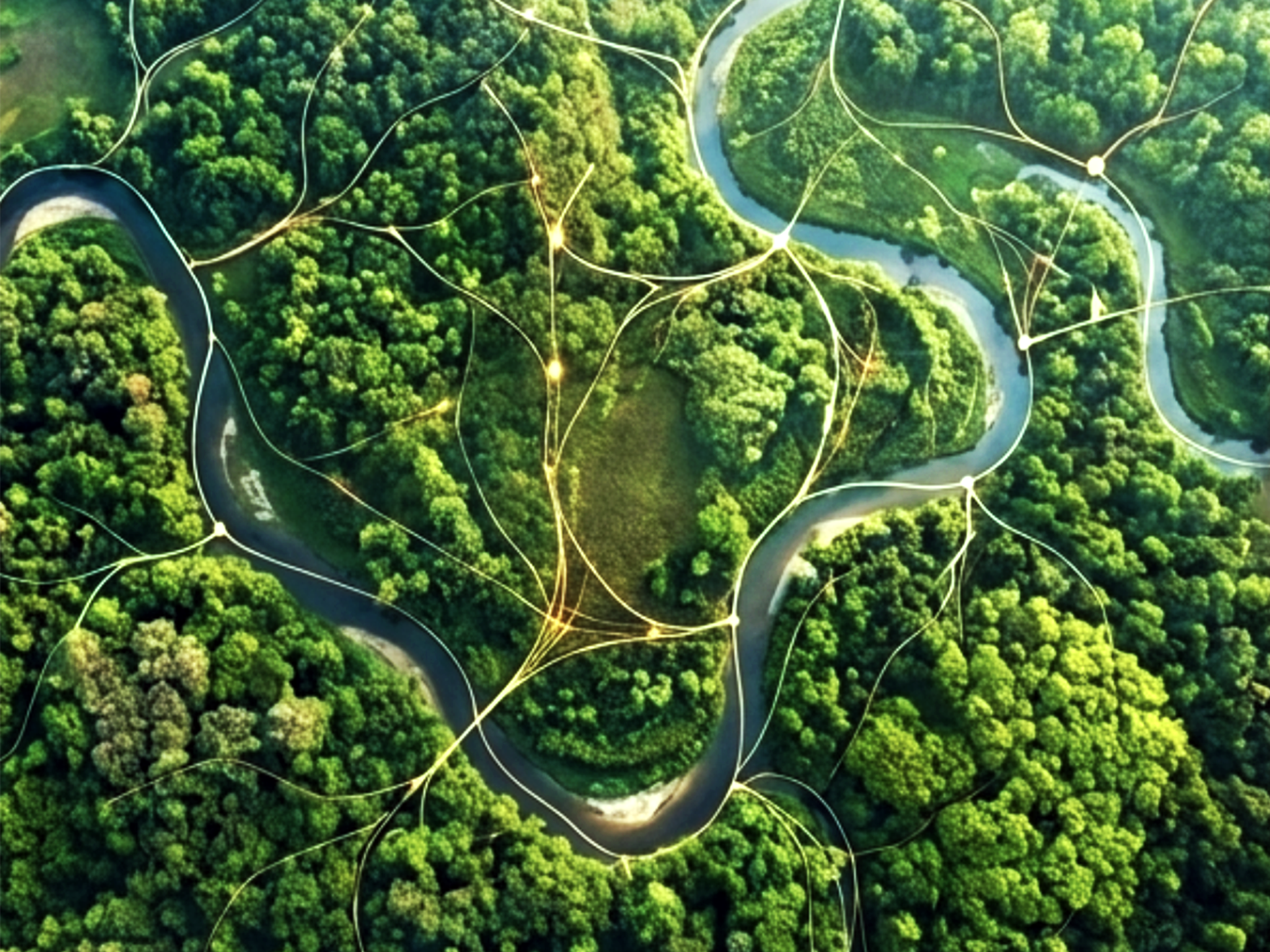
Human activities are causing an alarming decline in biodiversity, threatening the vital natural resources such as fertile soil, clean water and climate stability we depend on. While scientists have a strong understanding of how nature operates at local and planetary levels, we lack a general theory for how ecological changes at the mesoscale — the regional networks that connect the two — add up to impact the stability of the biosphere as a whole. How do ecosystems connected across landscapes, seascapes and regions collectively buffer — or amplify — environmental change? Understanding this is essential to preserving the natural systems that support all life.
NOMIS researcher
Project period
2026 – 2031
‘s news


Breakthroughs in science emerge when we dare to connect the seemingly unrelated. Just as Leonardo da Vinci drew on art, anatomy and engineering to reveal an interconnected world, solving today’s greatest mysteries demands the same boundary-crossing vision. In this spirit, the 2026 NOMIS Distinguished Scientist and Scholar Award honors three pioneering researchers whose bold ideas […]
