Revealing hidden connections and systems: Announcing the 2026 NOMIS Awardees

Published on
June 18, 2026
Professor and Liber Ero Chair in Biodiversity Conservation
Full professor of physics and electrical engineering
Cora Jane Flood Professor of Finance and professor of economics
Organization
Breakthroughs in science emerge when we dare to connect the seemingly unrelated. Just as Leonardo da Vinci drew on art, anatomy and engineering to reveal an interconnected world, solving today’s greatest mysteries demands the same boundary-crossing vision. In this spirit, the 2026 NOMIS Distinguished Scientist and Scholar Award honors three pioneering researchers whose bold ideas bridge disciplines to illuminate the hidden connections and systems shaping our existence. This year, we celebrate Andrew Gonzalez, who is charting the complex ecological networks of our biosphere; Tobias Kippenberg, who is pushing the frontiers of experimental physics; and Ulrike Malmendier, who is decoding how experience shapes economic decision-making.
How do interconnected ecosystems collectively buffer — or amplify — environmental change? What ultimately determines how slowly energy can be lost in physical systems? And what role can policymakers and employers play in reducing the harmful, lasting effects of traumatic economic experiences? As 2026 NOMIS Distinguished Scientist and Scholar Awardees, Andrew Gonzalez, Tobias Kippenberg and Ulrike Malmendier are exploring these fundamental interdisciplinary questions.
The NOMIS Award honors bold researchers who collaborate at the intersection of disciplines and challenge established thinking to uncover the most complex aspects of nature, the mind and society. These pioneers support our vision of creating a spark in science.

Andrew Gonzalez
Professor and Liber Ero Chair in Biodiversity Conservation
McGill University, Montreal, Canada
As a pioneering ecologist, Gonzalez’s distinctive approach reframes biodiversity loss as a problem of planetary organization, demonstrating that ecosystems persist because communities and populations are connected across vast scales of time and space.
Reflecting on his journey, Gonzalez shares: “My career has been driven by a commitment to connect discovery with action: to uncover the fundamental workings of life on Earth — the patterns, processes and theory that sustain biodiversity — and to ensure that this knowledge guides the conservation and restoration of the living world.”
The NOMIS Award will support his bold new project, A Mesoscale Theory of the Biosphere. By studying the regional ecological networks that link local ecosystems to planetary levels, Gonzalez will explore how biodiversity acts as an active stabilizing force, helping us understand where the biosphere remains resilient and where disruptions risk system-wide ecological collapse.
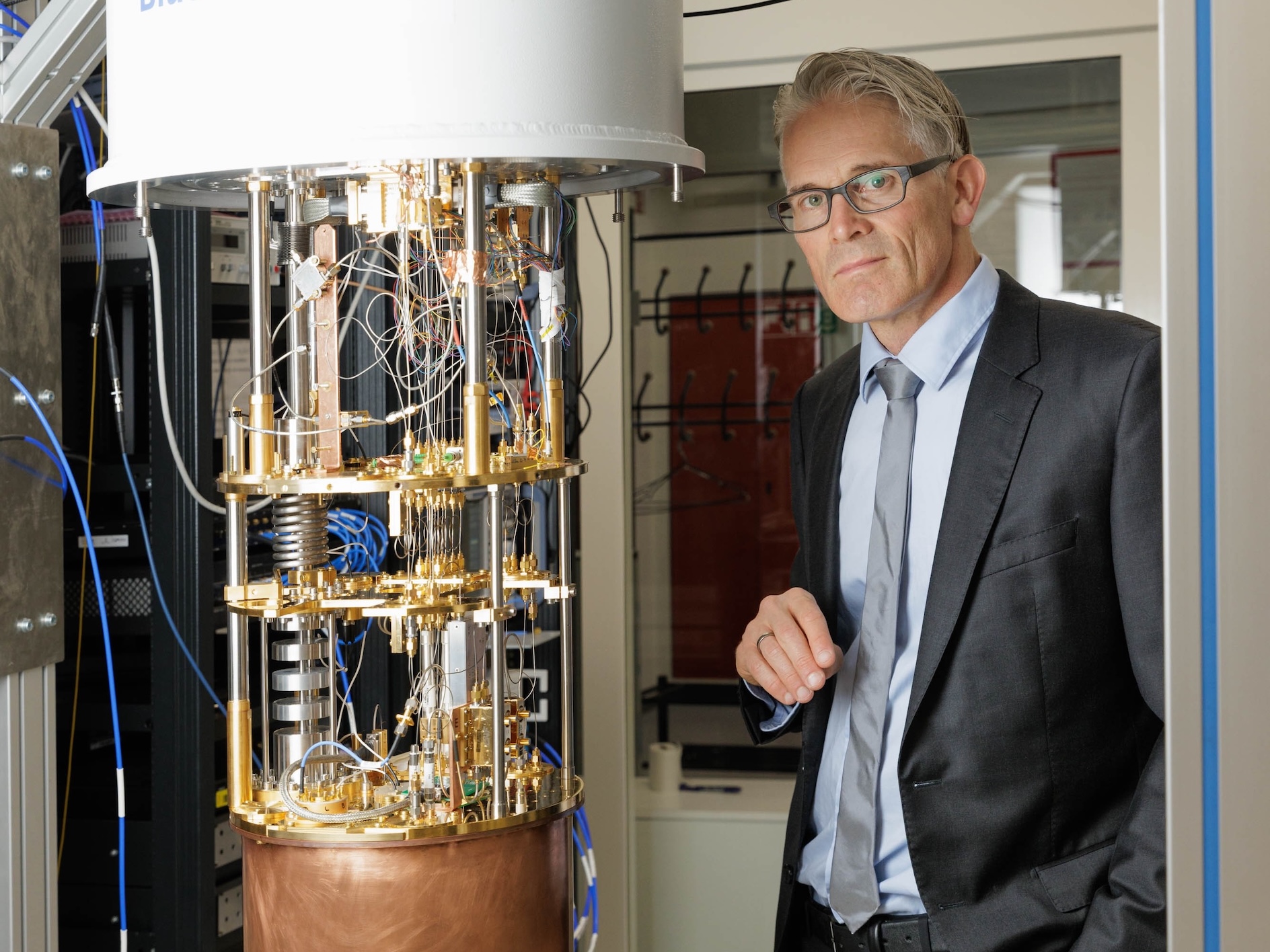
Recognized as one of the world’s most influential experimental physicists, Kippenberg’s paradigm-shifting approach uses microresonators — microscopic glass rings that trap light — to generate optical frequency combs and exert physical radiation pressure on the structure, opening the entirely new field of cavity optomechanics.
Driven by fundamental curiosity, Kippenberg notes: “As a PhD student, I was intrigued by the question of whether one can observe quantum effects in macroscopic objects. I have been fascinated by the idea of ‘putting quantum into mechanics’ and have devoted nearly 20 years of research to this fundamental endeavor.”
His NOMIS-supported project, The Quest for Ultralow Dissipation, will investigate how minimizing energy loss can paradoxically give rise to new forms of physical order. By exploring how light self-organizes and pushing microscopic mechanical “drums” into the quantum regime, his research aims to develop sensors of unprecedented sensitivity.

Ulrike Malmendier
Cora Jane Flood Professor of Finance, Haas School of Business, and Professor of Economics
University of California, Berkeley, US
A renowned economist, Malmendier’s unique approach bridges the gap between economics and psychology by pioneering the concept of “experience effects” — demonstrating how lived economic experiences and traumatic events permanently shape an individual’s financial caution and risk-taking.
Embracing the complexities of her field, Malmendier says: “Whenever I encounter a phenomenon I fail to grasp, I want to figure out what’s going on. This is particularly true for social phenomena. In physics, beautiful math equations can explain much of what is going on in the world. In economics, human behavior is far too messy to allow for that. I love thinking about our messy human behavior!”
With the support of the NOMIS Award, Malmendier will pursue her project, Stress and Economics, which explores the biological stress responses caused by repeated economic crises. By focusing on the roles of predictability and controllability, her research aims to help employers and policymakers design strategies that reduce the long-term physical and economic scarring on the workforce during times of disruption.
NOMIS Distinguished Scientist and Scholar Award
The NOMIS Award honors exceptional researchers whose bold questions and broad-ranging approaches transform our understanding of the world. By recognizing scientists and scholars who actively build bridges between the sciences and humanities, the award champions the innovative ideas that lead to groundbreaking discoveries and open entirely new fields of study. Established in 2016, the NOMIS Award provides the essential funding and intellectual freedom these visionaries need to continue pursuing curiosity-driven science.
NOMIS Foundation
NOMIS’ vision is to “create a spark” in the world of science by enabling and supporting pioneering research in the natural sciences, social sciences and the humanities that benefits humankind and our planet. Our mission is to support and enable insight-driven science across all disciplines, focusing on researchers who put forth bold new ideas, exhibit a pioneering spirit and seek to inspire the world around them.
NOMIS researchers
Andrew Gonzalez is a 2026 NOMIS Awardee, professor and Liber Ero Chair in Biodiversity Conservation at McGill University in Montreal, Canada, as well as a fellow of the Royal Society of Canada. He is leading the project A Mesoscale Theory of the Biosphere.
Professor and Liber Ero Chair in Biodiversity Conservation
McGill University
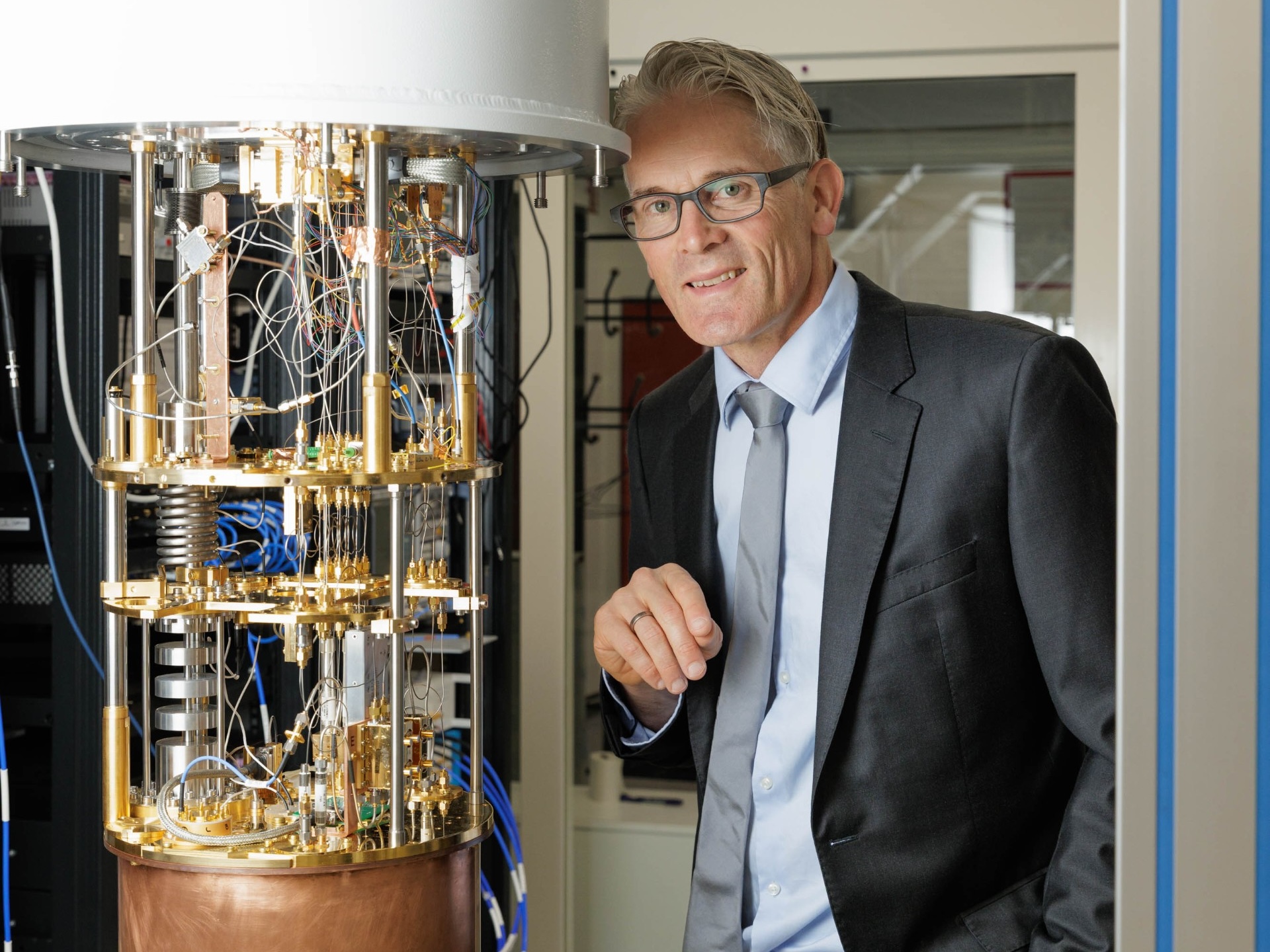
About Tobias Kippenberg Tobias Kippenberg is a 2026 NOMIS Awardee and a full professor of physics and electrical engineering in the Institute of Physics and Electrical Engineering at EPFL in Lausanne, Switzerland. He is leading the project The Quest for Ultralow Dissipation: From Self-Organized Light to Collective Quantum Drums. Kippenberg studied physics and electrical engineering […]
Full professor of physics and electrical engineering
EPFL (Swiss Federal Institute of Technology in Lausanne)

About Ulrike Malmendier Ulrike Malmendier is the Cora Jane Flood Professor of Finance at the Haas School of Business, and a professor of economics at the University of California, Berkeley, US. She is leading the project Stress and Economics — Exploring the Alleviating Role of Predictability and Controllability. Malmendier earned an MA in economics in […]
Cora Jane Flood Professor of Finance and professor of economics
University of California, Berkeley
NOMIS Project(s)
A Mesoscale Theory of the Biosphere
Human activities are causing an alarming decline in biodiversity, threatening the vital natural resources such as fertile soil, clean water and climate stability we depend on. While scientists have a strong understanding of how nature operates at local and planetary levels, we lack a general theory for how ecological changes at the mesoscale — the regional networks that connect the two — add up to impact the stability of the biosphere as a whole. How do ecosystems connected across landscapes, seascapes and regions collectively buffer — or amplify — environmental change? Understanding this is essential to preserving the natural systems that support all life.
NOMIS researcher
Project period
2026 – 2031

The Quest for Ultralow Dissipation
The question All physical systems gradually lose energy. A guitar string stops vibrating after being plucked, a swinging pendulum eventually comes to rest, and even light circulating inside a tiny glass structure slowly fades away. This universal process, known as dissipation, appears simple but raises a profound question: What ultimately determines how slowly energy can […]
NOMIS researcher
Project period
2026 – 2031

The question We live in a world of repeated crises, where economic shocks like stock-market crashes or unexpected layoffs are frequent occurrences. The impact of these shocks extends far beyond mere financial consequences. These deeply stressful experiences can cause lasting physical and mental harm, including accelerated aging and higher mortality. Furthermore, these ongoing biological stress […]
NOMIS researcher
Project period
2026 – 2031