
The Quest for Ultralow Dissipation

The question
All physical systems gradually lose energy. A guitar string stops vibrating after being plucked, a swinging pendulum eventually comes to rest, and even light circulating inside a tiny glass structure slowly fades away. This universal process, known as dissipation, appears simple but raises a profound question: What ultimately determines how slowly energy can be lost?
Understanding the limits of dissipation is important because, when dissipation becomes extremely small, entirely new physical phenomena can emerge: Systems can spontaneously organize into stable, long-lived patterns — sustained by the very flow of energy through them — or begin to exhibit quantum effects, such as existing in two states at once, in objects large enough to see. These patterns are called dissipative structures. Similar forms of pattern formation occur throughout nature — from sand dunes to chemical reactions. Yet, the fundamental mechanisms that determine the minimum dissipation in many physical systems are poorly understood. The project The Quest for Ultralow Dissipation: From Self-Organized Light to Collective Quantum Drums asks: How far can dissipation be reduced, and how does the resulting ultralow-loss regime fundamentally shape the behavior of complex physical systems?
“By uncovering the fundamental limits of energy loss, this project advances our ability to control complex optical and quantum systems, enabling technologies for precision measurements while deepening humanity’s understanding of how order and new phenomena emerge in the physical world.”
— Tobias Kippenberg
The approach
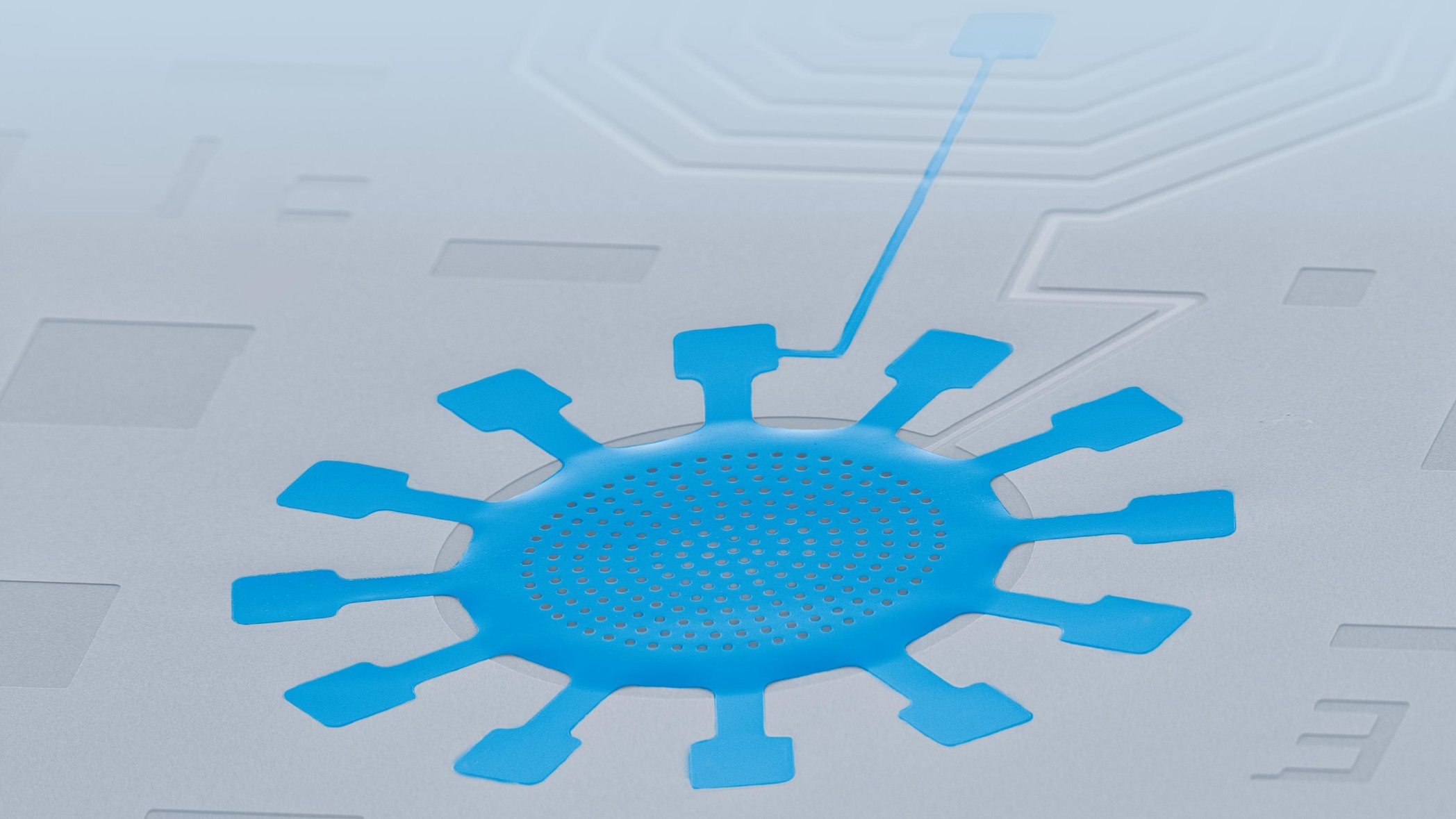
By probing both optical and quantum systems, the Quest for Ultralow Dissipation project aims to uncover how energy loss fundamentally shapes the emergence of order in complex optical systems, and to move the boundary of quantum systems to ever-larger objects that can be seen with the naked eye.
First, the researchers investigate light confined in microscopic optical resonators, where it circulates many thousands of times. When losses are very low, the light can spontaneously organize into stable patterns or light pulses. By coupling many such resonators, the team explores how these patterns interact and whether they form new collective states of light. Achieving such large-scale behavior requires minimizing optical dissipation so that the dynamics can persist across the entire resonator network. These systems can provide coherent light pulses, which also underpin applications in frequency metrology and precision measurements.
The researchers also study tiny mechanical “drums” or oscillators operating in the quantum regime. Over the last century, scientists have developed ways to control individual quantum systems, such as atoms, ions and molecules; a new frontier is to extend this control to macroscopic mechanical systems normally associated with classical physics. In this regime, dissipation determines whether a system behaves classically or can exhibit genuinely quantum behavior. By coupling mechanical resonators the team explores how they behave as a network: What new phenomena arise? What limits their dissipation? Such systems hold promise for future quantum sensing technologies with unprecedented sensitivity.
The Quest for Ultralow Dissipation project is being led by Tobias Kippenberg at EPFL in Lausanne, Switzerland.
Photo: EPFL
NOMIS researchers
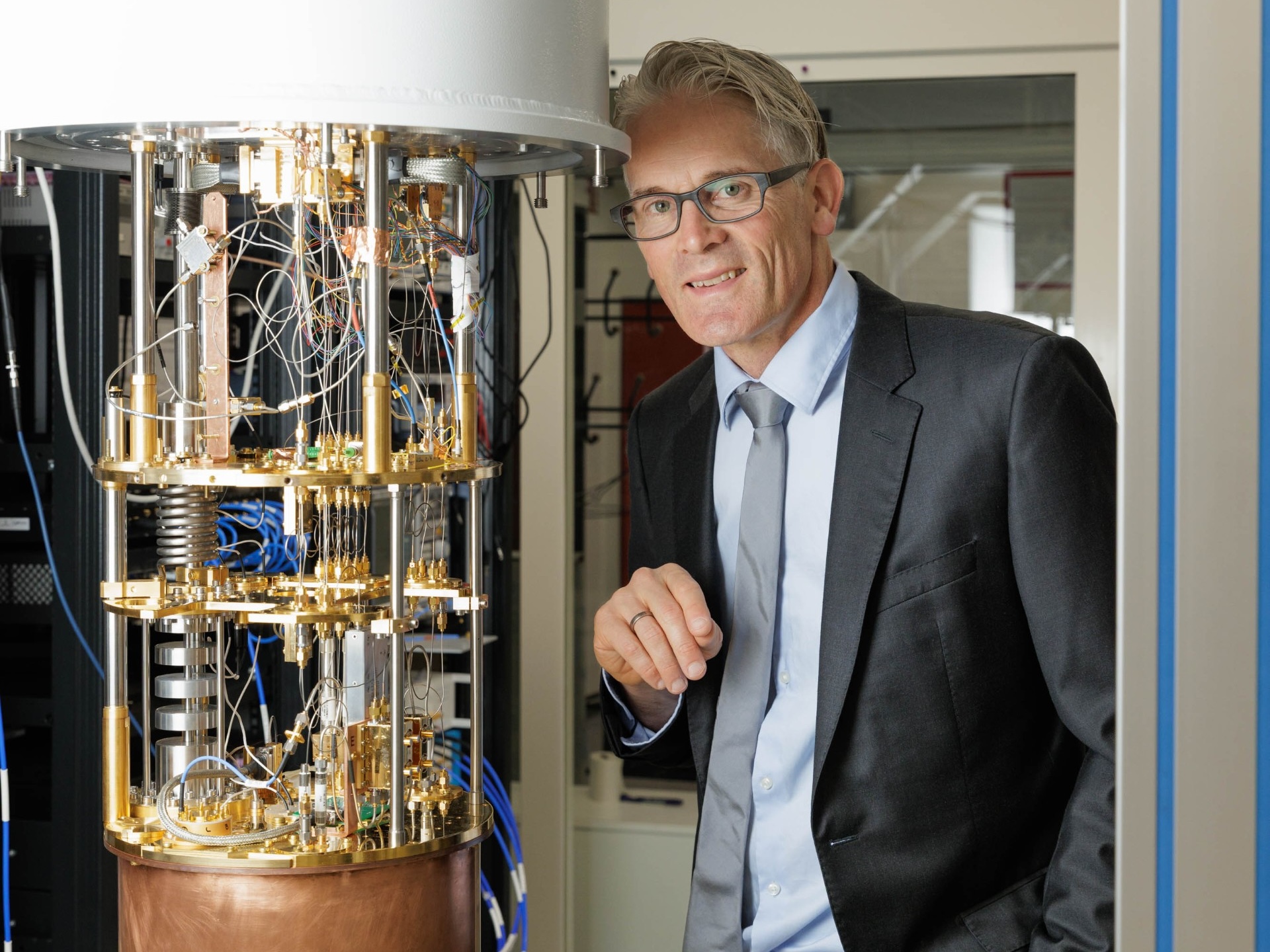
About Tobias Kippenberg Tobias Kippenberg is a 2026 NOMIS Awardee and a full professor of physics and electrical engineering in the Institute of Physics and Electrical Engineering at EPFL in Lausanne, Switzerland. He is leading the project The Quest for Ultralow Dissipation: From Self-Organized Light to Collective Quantum Drums. Kippenberg studied physics and electrical engineering […]
Full professor of physics and electrical engineering
EPFL (Swiss Federal Institute of Technology in Lausanne)
Project news

Breakthroughs in science emerge when we dare to connect the seemingly unrelated. Just as Leonardo da Vinci drew on art, anatomy and engineering to reveal an interconnected world, solving today’s greatest mysteries demands the same boundary-crossing vision. In this spirit, the 2026 NOMIS Distinguished Scientist and Scholar Award honors three pioneering researchers whose bold ideas […]
