
Tobias Kippenberg
Full professor of physics and electrical engineering
Organization
EPFL (Swiss Federal Institute of Technology in Lausanne)

About Tobias Kippenberg
Tobias Kippenberg is a 2026 NOMIS Awardee and a full professor of physics and electrical engineering in the Institute of Physics and Electrical Engineering at EPFL in Lausanne, Switzerland. He is leading the project The Quest for Ultralow Dissipation: From Self-Organized Light to Collective Quantum Drums.
Kippenberg studied physics and electrical engineering at RWTH Aachen in Germany and earned a PhD in applied physics from the California Institute of Technology in Pasadena, US, in 2004. He then led an independent junior research group at the Max Planck Institute of Quantum Optics in Garching, Germany. He joined EPFL in 2008 and has been full professor in the Institute of Physics and Electrical Engineering since 2013. He cofounded a foundry company to broaden access to low-loss optical microresonator technology.
“As a PhD student, I was intrigued by the question of whether one can observe quantum effects in macroscopic objects. I have been fascinated by the idea of ‘putting quantum into mechanics’ and have devoted nearly 20 years of research to this fundamental endeavor.”
— Tobias Kippenberg
Research focus
One of the world’s most influential experimental physicists, Tobias Kippenberg is best known for two paradigm-shifting discoveries. He showed that microresonators — tiny glass-like rings that trap and circulate light — can spontaneously generate a precise set of evenly spaced light frequencies, called an optical frequency comb, from a single laser. Acting as an ultraprecise ruler for light, these combs are essential tools in advanced telecommunications and chemical sensing. This overturned the long-held assumption that such combs required large, complex laboratory setups — a tiny chip is enough.
He also discovered that light circulating inside a microresonator exerts a physical force on its walls — radiation pressure — coupling light to the mechanical vibrations of the structure. This unexpected finding opened an entirely new field of physics known as cavity optomechanics. By using light to measure and manipulate mechanical objects at the quantum level, his work has paved the way for ultrasensitive sensors and new developments in quantum technologies.
His current research explores optical and quantum systems to uncover how energy loss fundamentally shapes the emergence of order in complex optical systems, and to move the boundary of quantum systems to ever-larger objects that can be seen with the naked eye.
Awards and recognition
Kippenberg has received numerous awards and honors, including first prize for the European Union Contest for Young Scientists in 1996. For his early contributions, he received the Helmholtz Prize in Metrology and the EPS Fresnel Prize in 2009, as well as the EFTF Young Scientist Award in 2011. Further awards include the 2013 ICO Award, the 2014 Latsis Swiss Science Prize, the 2015 Klung Wilhelmy Science Award in Physics, the 2018 ZEISS Research Award, the 2021 R.W. Wood Prize, and the 2025 Marcel Benoist Swiss Science Prize. Kippenberg has been on Clarivate Analytics’ list of highly cited physicists since 2014. He is an elected member of the German National Academy of Sciences Leopoldina.
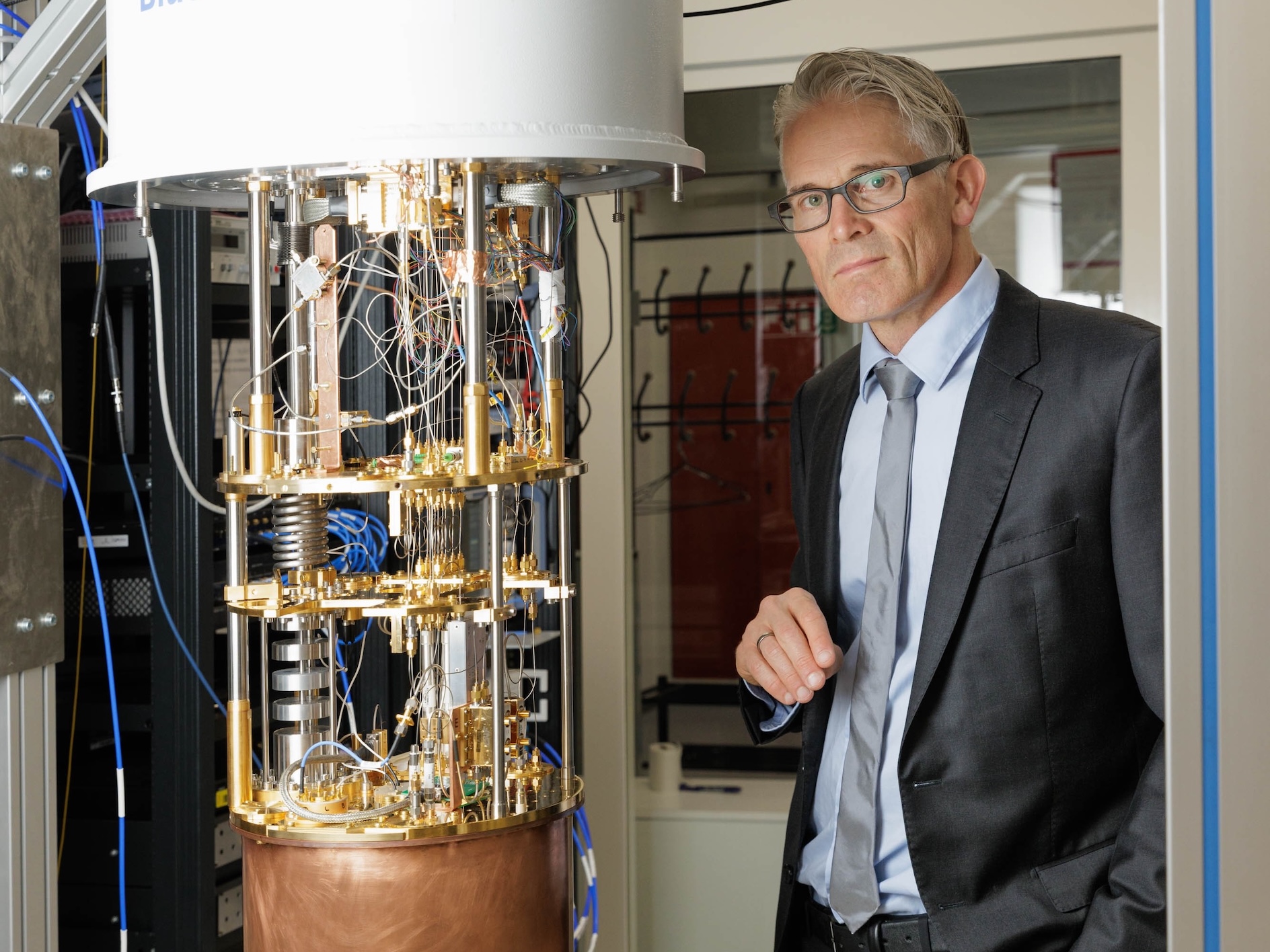
Tobias Kippenberg portrait by Daniel Rihs
‘s projects
The Quest for Ultralow Dissipation
The question All physical systems gradually lose energy. A guitar string stops vibrating after being plucked, a swinging pendulum eventually comes to rest, and even light circulating inside a tiny glass structure slowly fades away. This universal process, known as dissipation, appears simple but raises a profound question: What ultimately determines how slowly energy can […]
NOMIS researcher
Project period
2026 – 2031
‘s news

Breakthroughs in science emerge when we dare to connect the seemingly unrelated. Just as Leonardo da Vinci drew on art, anatomy and engineering to reveal an interconnected world, solving today’s greatest mysteries demands the same boundary-crossing vision. In this spirit, the 2026 NOMIS Distinguished Scientist and Scholar Award honors three pioneering researchers whose bold ideas […]
