
A Mesoscale Theory of the Biosphere

The question
Human activities are causing an alarming decline in biodiversity, threatening the vital natural resources we depend on such as fertile soil, clean water and climate stability. While scientists have a strong understanding of nature’s patterns and processes at local and planetary levels, we lack a general theory for how ecological changes at the mesoscale — the regional networks that connect the two levels — add up to impact the biodiversity and stability of the biosphere as a whole. How do ecosystems connected across landscapes, seascapes and regions collectively buffer — or amplify — environmental change? Understanding this is essential to preserving the natural systems that support all life.
“The stability of the biosphere depends not only on how much biodiversity remains, but on how life is connected across space. My work reframes biodiversity loss as a problem of planetary organization. It asks how the living world maintains stability across scales and how human pressures may be eroding the very network structure that makes the biosphere resilient.”
— Andrew Gonzalez
The approach
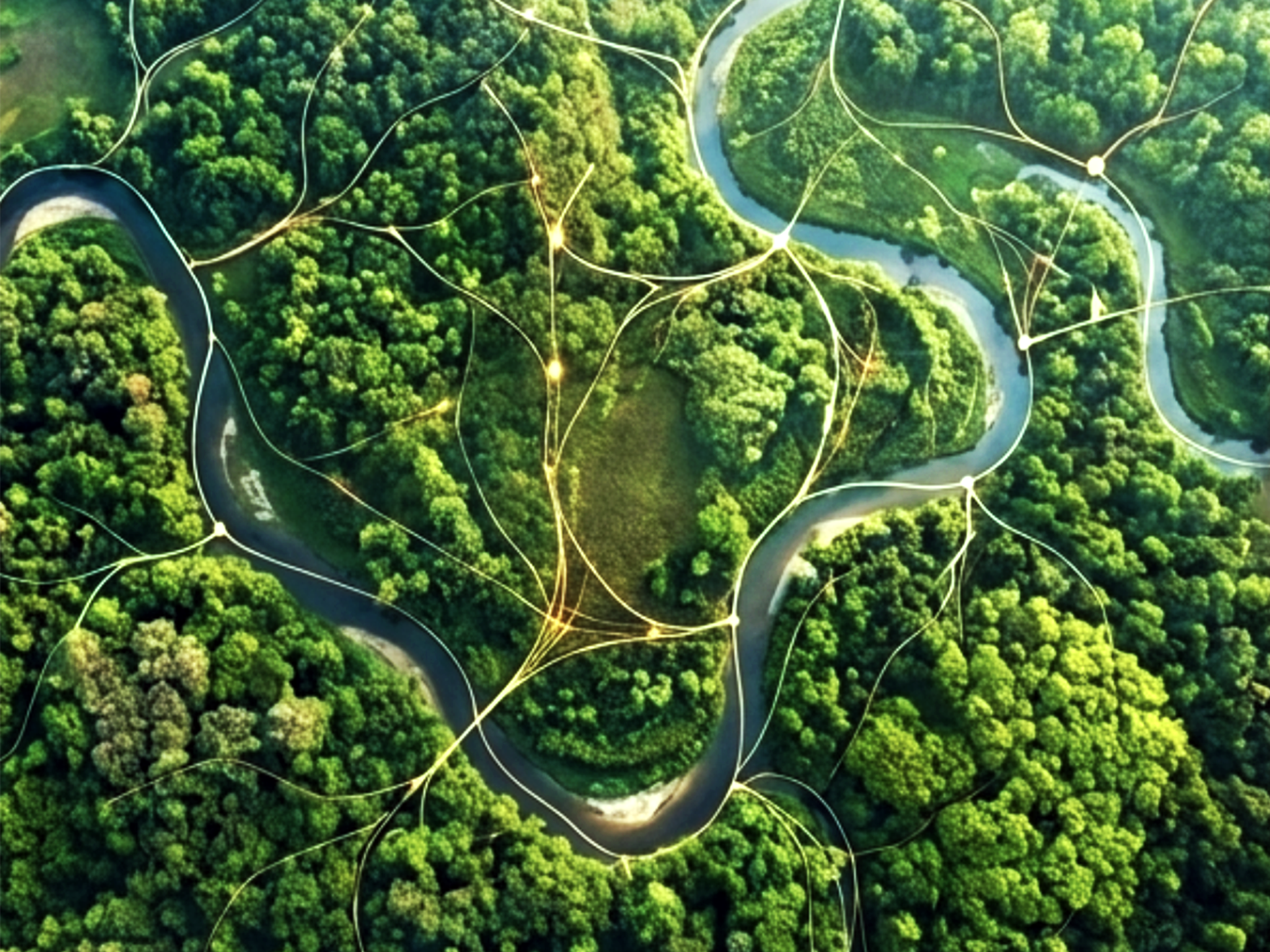
To bridge this gap, the project combines biodiversity science, ecosystem science, network theory and Earth system thinking to develop a new mesoscale theory of the biosphere. Rather than treating biodiversity loss as isolated local degradation, the researchers view the biosphere as a network of connected ecological regions linked by migration, climate and human activities. In this framework, biodiversity is not just something that changes in response to environmental pressure; it is a stabilizing force that helps determine how ecological systems function.
A key insight from existing theory is that ecosystems can appear highly productive but actually become extremely fragile if fluctuations in different regions start occurring in lockstep. Much like a financial market crash, system-wide disruptions risk system-wide ecological collapse. Drawing on global datasets, the research team is testing whether the dominant patterns of ecological change follow the structure of regional ecological networks. They will create new tools to detect the hidden systemic risks.
By identifying when ecological networks provide stabilizing “spatial insurance” and when they enable contagion, synchronization or cascading failure, the project will generate practical diagnostics for biosphere stability. This work establishes a missing bridge between local ecology and planetary-scale environmental change, offering a new way to understand where the biosphere is resilient, where it is vulnerable, and how biodiversity helps maintain the stability of life-supporting systems.
A Mesoscale Theory of the Biosphere is being led by Andrew Gonzalez at McGill University in Montreal, Canada.
NOMIS researchers

Andrew Gonzalez is a 2026 NOMIS Awardee, professor and Liber Ero Chair in Biodiversity Conservation at McGill University in Montreal, Canada, as well as a fellow of the Royal Society of Canada. He is leading the project A Mesoscale Theory of the Biosphere.
Professor and Liber Ero Chair in Biodiversity Conservation
McGill University
Project news

Breakthroughs in science emerge when we dare to connect the seemingly unrelated. Just as Leonardo da Vinci drew on art, anatomy and engineering to reveal an interconnected world, solving today’s greatest mysteries demands the same boundary-crossing vision. In this spirit, the 2026 NOMIS Distinguished Scientist and Scholar Award honors three pioneering researchers whose bold ideas […]
