
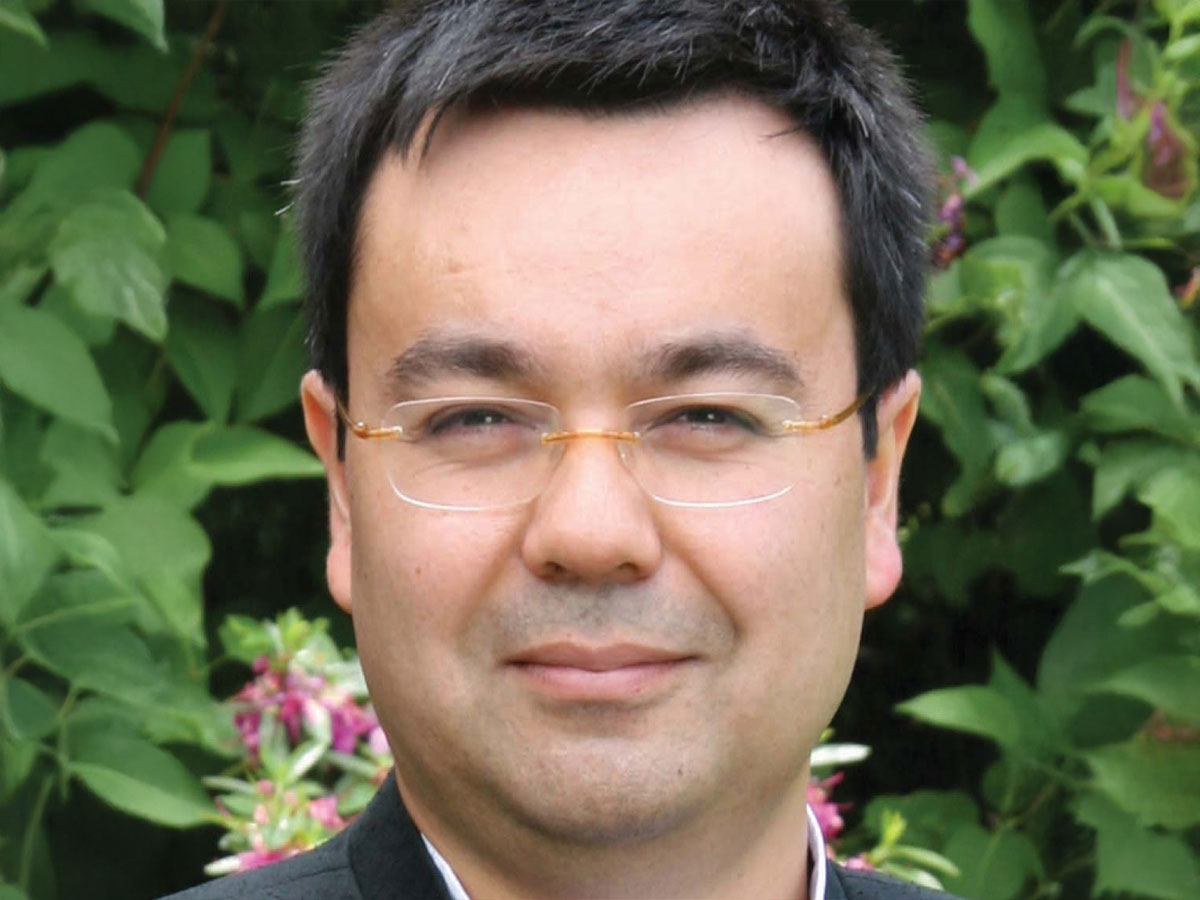
Frédéric Allain
Full professor
Organization
ETH Zurich

About Frédéric Allain
Frédéric Allain is full professor at ETH Zurich (Switzerland). He is co-leading the project Structure and Function of the Human Ribonucleosome.
Allain was born in France and educated at the Ecole Normale Supérieure, Paris (promotion 1990). In 1997, he received his PhD from the University of Cambridge (UK) after working at the MRC Laboratory of Molecular Biology under the supervision of Gabriele Varani. He was a postdoctoral fellow at UCLA (Los Angeles, US) under Juli Feigon (1997–2000) and later under Doug Black (2000-2001) before becoming a professor of biomolecular NMR in 2001 in the Department of Biology at ETH Zurich. He became full professor in 2010. Allain was elected an EMBO member in 2009 and has been the co-director of the Swiss National Science Foundation National Center of Competence in Research (SNSF-NCCR) RNA & Disease since 2014.
Allain’s research interest lies primarily in determining structures of protein-RNA complexes in solution to understand mechanisms of post-transcriptional gene regulation such as alternative-splicing, RNA editing and translation regulation. This research is highly relevant for understanding the molecular basis of many genetic diseases originating from defects in RNA splicing, including spinal muscular atrophy (SMA) and amyotrophic lateral sclerosis (ALS).
‘s projects
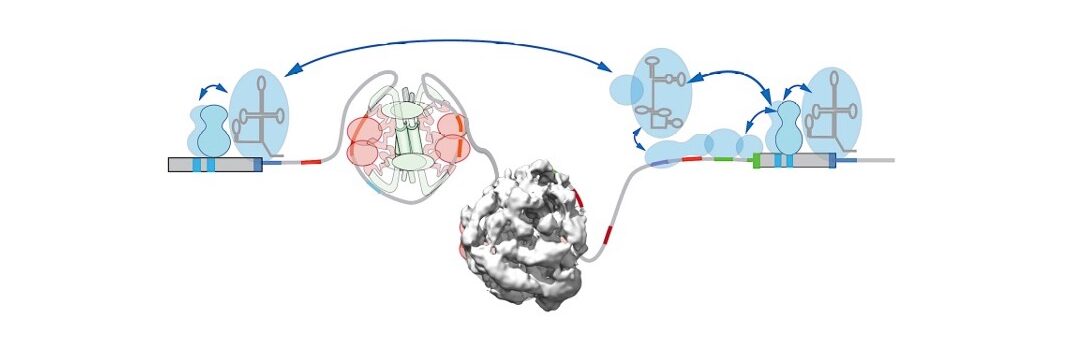
Structure and Function of the Human Ribonucleosome
More than 50 years ago, a family of heterogenous nuclear ribonucleoproteins (hnRNPs) was detected and proposed to package and regulate transcript expression. Recently, scientists in the Allain, Blencowe, Mühlemann and Novacek research groups initiated a structural and functional characterization of stable hnRNP assemblies sedimenting at 40S. Remarkably, these particles preferentially bind intronic sequences of pre-mRNA, […]
NOMIS researchers
Ben Blencowe Jiří Nováček Oliver Mühlemann Daniel Zenklusen Frédéric Allain
Project period
2022 – 2026
‘s publications
Molecular basis of RNA-binding and autoregulation by the cancer-associated splicing factor RBM39
Pharmacologic depletion of RNA-binding motif 39 (RBM39) using aryl sulfonamides represents a promising anti-cancer therapy but requires high levels of the adaptor protein DCAF15. Consequently, novel approaches to deplete RBM39 in an DCAF15-independent manner are required. Here, we uncover that RBM39 autoregulates via the inclusion of a poison exon into its own pre-mRNA and identify the cis-acting elements that govern this regulation. We also determine the NMR solution structures of RBM39’s tandem RNA recognition motifs (RRM1 and RRM2) bound to their respective RNA targets, revealing how RRM1 recognises RNA stem loops whereas RRM2 binds specifically to single-stranded N(G/U)NUUUG. Our results support a model where RRM2 selects the 3’-splice site of a poison exon and the RRM3 and RS domain stabilise the U2 snRNP at the branchpoint. Our work provides molecular insights into RBM39-dependent 3’-splice site selection and constitutes a solid basis to design alternative anti-cancer therapies. © 2023, Springer Nature Limited.
Research Fields
Health Sciences

40S hnRNP particles are a novel class of nuclear biomolecular condensates
Heterogenous nuclear ribonucleoproteins (hnRNPs) are abundant proteins implicated in various steps of RNA processing that assemble on nuclear RNA into larger complexes termed 40S hnRNP particles. Despite their initial discovery 55 years ago, our understanding of these intriguing macromolecular assemblies remains limited. Here, we report the biochemical purification of native 40S hnRNP particles and the determination of their complete protein composition by label-free quantitative mass spectrometry, identifying A-group and C-group hnRNPs as the major protein constituents. Isolated 40S hnRNP particles dissociate upon RNA digestion and can be reconstituted in vitro on defined RNAs in the presence of the individual protein components, demonstrating a scaffolding role for RNA in nucleating particle formation. Finally, we revealed their nanometer scale, condensate-like nature, promoted by intrinsically disordered regions of A-group hnRNPs. Collectively, we identify nuclear 40S hnRNP particles as novel dynamic biomolecular condensates.
Research Fields
Biochemistry & Molecular Biology
Aberrant interaction of FUS with the U1 snRNA provides a molecular mechanism of FUS induced amyotrophic lateral sclerosis
Mutations in the RNA-binding protein Fused in Sarcoma (FUS) cause early-onset amyotrophic lateral sclerosis (ALS). However, a detailed understanding of central RNA targets of FUS and their implications for disease remain elusive. Here, we use a unique blend of crosslinking and immunoprecipitation (CLIP) and NMR spectroscopy to identify and characterise physiological and pathological RNA targets of FUS. We find that U1 snRNA is the primary RNA target of FUS via its interaction with stem-loop 3 and provide atomic details of this RNA-mediated mode of interaction with the U1 snRNP. Furthermore, we show that ALS-associated FUS aberrantly contacts U1 snRNA at the Sm site with its zinc finger and traps snRNP biogenesis intermediates in human and murine motor neurons. Altogether, we present molecular insights into a FUS toxic gain-of-function involving direct and aberrant RNA-binding and strengthen the link between two motor neuron diseases, ALS and spinal muscular atrophy (SMA).
Research Fields
Biomedical Research, Developmental Biology, Health Sciences
