Jesús Crespo Cuaresma publishes “What do we know about poverty in North Korea?”
Published on
March 28, 2020
Professor of economics
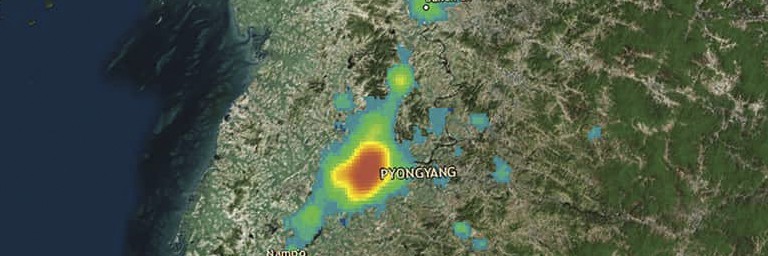
Reliable quantitative information on the North Korean economy is extremely scarce. In particular, reliable income per capita and poverty figures for the country are not available. In this contribution, we provide for the first time estimates of absolute poverty rates in North Korean subnational regions based on the combination of innovative remote-sensed night-time light intensity data (monthly information for built areas) with estimated income distributions. Our results, which are robust to the use of different methods to approximate the income distribution in the country, indicate that the share of persons living in extreme poverty in North Korea may be larger than previously thought. We estimate a poverty rate for the country of around 60% in 2018 and a high volatility in the dynamics of income at the national level in North Korea for the period 2012–2018. Income per capita estimates tend to decline significantly from 2012 to 2015 and present a recovery since 2016. The subnational estimates of income and poverty reveal a change in relative dynamics since the second half of the 2012–2018 period. The first part of the period is dominated by divergent dynamics in income across regions, while the second half reveals convergence in regional income.
Continue reading this Palgrave Communications article
NOMIS researcher(s)
About Jesús Crespo Cuaresma Jesús Crespo Cuaresma is professor of economics at the Vienna University of Economics and Business (WU), director of economic analysis at the Wittgenstein Centre for Demography and Global Human Capital (WIC), as well as research scholar at the International Institute of Applied Systems Analysis (IIASA). He led the project Converting Geospatial […]
Professor of economics
WU Institute for Macroeconomics
NOMIS Project(s)
Converting Geospatial Observations into Socioeconomic Data
The World Data Lab (WDL), along with its research partners, aimed to deploy new methods in data collection, data curation and dissemination, laying the groundwork to advance social and economic research on poverty in the most underdeveloped regions worldwide. The challenge was to convert vast amounts of unstructured data into regular socioeconomic forecasts. Against this […]
NOMIS researcher
Project period
2017 – 2020