
Harnessing Big Data to Improve Children’s Mental Health Treatment

Children’s mental health is an area where new approaches to evaluating clinical practice are urgently needed. Worldwide 10 to 20% of children suffer from some form of mental disorder, which often have more harmful effects on children’s future education and employment prospects than common physical health problems. Hence, identifying the most effective treatments is critical. But there are an overwhelming number of treatments and psychotropic medications on the market that are not well tested in children, or that are not tested in children at all.
The research project, Harnessing Big Data to Improve Children’s Mental Health Treatment, is investigating whether administrative big data can be used to identify those therapies that are most promising for children with diagnoses of mental disorders, as well as those therapies that pose the highest risk of harm. Using big data generated by the health care systems of various countries, the project aims to better understand children’s mental health and ultimately to improve the diagnosis, treatment and prognosis of children with mental health conditions.
The Harnessing Big Data project is being led by Janet Currie, who is currently based at Yale University.
NOMIS researchers

About Janet Currie Janet Currie is a 2019 NOMIS Awardee, codirector of the Program on Families and Children at the National Bureau of Economic Research, and professor of economics at Yale University (New Haven, US) since 2025. She is leading the project Harnessing Big Data to Improve Children’s Mental Health Treatment. Born in Canada, Currie […]
Professor of economics
Yale University
Project Publications
Screening for postpartum depression at well child visits: evaluating the impact of Michigan’s statewide initiative
Objective
To examine a 2018 rule change allowing pediatric providers to bill the child’s Medicaid ID for post-partum depression (PPD) screening of mothers conducted during well-child visits, and document its relationship with PPD treatment and infant hospitalizations.
Study setting and design
Screening rates during well-child visits are calculated at the zip code level and used in linear probability and Instrumental Variable (IV) models to examine increases in screening after the policy change and relate them to PPD treatment and infant hospitalizations.
Data sources and analytic sample
Individual-level Medicaid claims were used to compute PPD screening rates and measures of PPD treatment and infant hospitalization.
Principal findings
The policy was associated with increases in screening rates, although take up was uneven and overall screening rates remained low at 8.8%. There was little overall increase in treatment, although in zip codes in the top third of screening rates, higher screening was associated with 10.1% higher probability of maternal treatment. Zip codes with high fractions in poverty and/or minority had low screening rates, but screening was more likely to be associated with increases in treatment in these areas. There are no effects in the full sample of children, but among children above the poverty line, the observed increases in screening reduced the probability of infant hospitalization in the first six months by 7.7%.
Conclusions
The policy change had only limited success increasing screening, but increased screening could lead to more maternal PPD treatment and lower infant hospitalization rates if accompanied by expanded access to PPD treatment.
Research Fields
Clinical Medicine, Health Policy & Services, Health Sciences, Pediatrics, Public Health, Public Health & Health Services

The Economics of Child Mental Health: Introducing the Causes and Consequences of Child Mental Health Special Issue
This special issue of the Journal of Human Resources showcases an emerging literature on the economics of child mental health. Until recently, the severe stigma associated with mental health issues meant that few people felt comfortable talking about them or realized how very prevalent they are (Bharadwaj, Pai, and Suziedelyte 2017). Arguably, this changed with the COVID-19 pandemic, which precipitated widespread discussions of a child and youth mental health crisis (United States Public Health Service, Office of the Surgeon General 2021).
Research Fields
Economics, Psychology & Cognitive Sciences

New Caregiver Diagnoses of Severe Depression and Child Asthma Controller Medication Adherence
Background and Objectives: Children with asthma who have depressed caregivers are known to be less adherent to medication regimes. However, it is less clear how adherence responds to a caregiver’s new diagnosis of severe depression or whether there is a similar relationship with other serious caregiver diagnoses. The hypothesis is that adherence worsens both with new diagnoses of depression and possibly with new diagnoses of other serious conditions. Methods: This study follows a cohort of 341,444 continuously insured children with asthma before and after a caregiver’s new diagnosis of severe depression or another serious health condition. The effect of a new depression diagnosis on a child’s medication adherence is compared to the effect of new diagnoses of other common caregiver chronic conditions including diabetes, cancer, congestive heart failure, coronary artery disease, and chronic obstructive pulmonary disease. Results: Results show that children’s medication adherence declines following a caregiver’s new diagnosis of severe depression, but that it also declines following a caregiver’s new diagnosis of diabetes. There is no association with new diagnoses of the other caregiver chronic conditions examined. Conclusions: Children whose caregivers have a new diagnosis of depression or diabetes may be at increased risk of deterioration in their medication adherence. These caregivers may benefit from additional support and follow-up. The relationship between caregivers’ health and children’s medication adherence is complex and deserves further study.
Research Fields
Economic & Social Sciences, Pediatrics, Public Health
News


January 11, 2023
Janet Currie elected president of American Economic Association
NOMIS Awardee Janet Currie, Professor of Economics and Public Affairs at Princeton University and the Co-director of Princeton’s Center for Health and Wellbeing, has recently been elected president of the American Economic Association (AEA). She will serve as president-elect in 2023 and as president in 2024. Established in 1885, the AEA is a non-profit, non-partisan, scholarly […]


December 22, 2021
Antidepressant treatment for postpartum depression may be overprescribed
NOMIS Awardee Janet Currie and postdoctoral research associate Esmée Zwiers have published a study in the National Bureau of Economic Research (NBER) suggesting that antidepressants may be overprescribed for treating postpartum depression. In countries like the U.S. and the Netherlands, antidepressants are a commonly prescribed treatment for postpartum depression. But a new study by Princeton University scholars […]

August 30, 2021
Janet Currie testifies before Congress: Economic disparities drive long-lasting challenges for American children
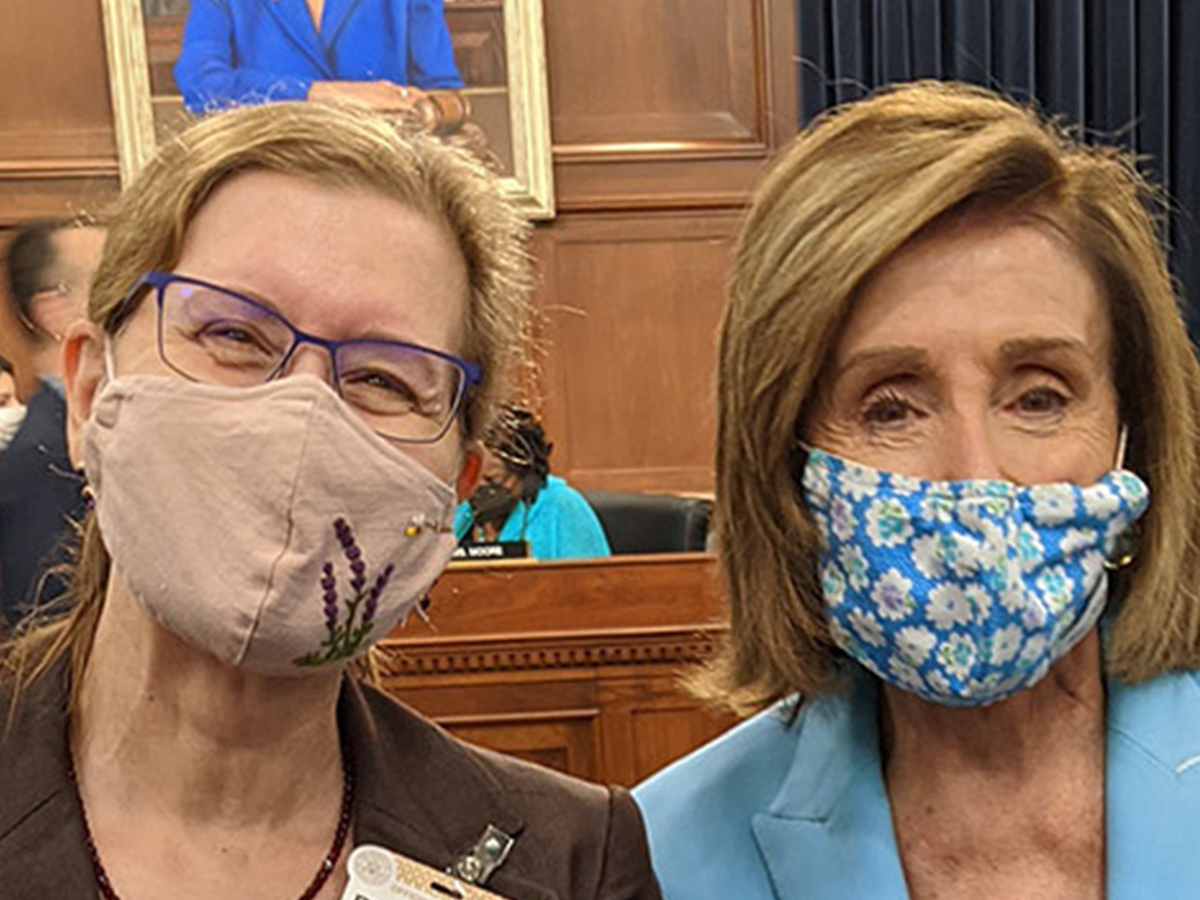
NOMIS Awardee Janet Currie testified before the U.S. House Select Committee on Economic Disparity and Fairness in Growth on July 29, arguing that, because economic disparities affect the health, wellness and success of children even before they are born, expanding social welfare programs could help to break this cycle. Economic Disparities Drive Long-Lasting Challenges for […]
