
Frontotemporal Lobar Degeneration

The German Center for Neurodegenerative Diseases (Deutsches Zentrum für Neurodegenerative Erkrankungen, DZNE) is committed to understanding commonalities and differences between various brain diseases in order to develop new preventive and therapeutic approaches. The Frontotemporal Lobar Degeneration – from the Basic Mechanism and Target Identification to Translational and Clinical Approaches project is based on a new, cross-cutting approach: clinical and basic research are done at the same time, which allows their results to be directly fed into each other’s processes. NOMIS is supporting this innovative framework by matching DZNE funding for the clinical research with funding for the basic research component; this will focus on identifying therapeutic targets and understanding their physiological function, as well as finding the mechanism through which mutant genes cause the disease. The Frontotemporal Lobar Degeneration project comprises the search for biomarkers as well as screening for disease-modulating compounds.
The project is being led by Christian Haass and Dieter Edbauer at the DZNE.
NOMIS researchers

About Dieter Edbauer Dieter Edbauer is professor of translational neurobiochemistry at Ludwig Maximilian University in Munich, Germany. He is co-leading the project Frontotemporal Lobar Degeneration—from the Basic Mechanism and Target Identification to Translational and Clinical Approaches. Edbauer received his MD from the University of Munich (LMU; Germany) in 2001. In his doctoral thesis with M. […]
Professor
Ludwig-Maximilians-Universität München

About Christian Haass Christian Haass is a NOMIS board member and has been professor of biochemistry and the head of the Department of Metabolic Biochemistry at the Biomedical Research Center at Ludwig Maximilian University (Munich, Germany) since 1999. He has also served as the spokesman of the German Center for Neurodegenerative Disorders (DZNE) in Munich […]
Member of the NOMIS Foundation Board of Directors
German Center for Neurodegenerative Diseases (DZNE)
NOMIS Foundation
Project publications
Phenylalanine-tRNA aminoacylation is compromised by ALS/FTD-associated C9orf72 C4G2 repeat RNA
The expanded hexanucleotide GGGGCC repeat mutation in the C9orf72 gene is the main genetic cause of amyotrophic lateral sclerosis and frontotemporal dementia. Under one disease mechanism, sense and antisense transcripts of the repeat are predicted to bind various RNA-binding proteins, compromise their function and cause cytotoxicity. Here we identify phenylalanine-tRNA synthetase (FARS) subunit alpha (FARSA) as the main interactor of the CCCCGG antisense repeat RNA in cytosol. The aminoacylation of tRNAPhe by FARS is inhibited by antisense RNA, leading to decreased levels of charged tRNAPhe. Remarkably, this is associated with global reduction of phenylalanine incorporation in the proteome and decrease in expression of phenylalanine-rich proteins in cellular models and patient tissues. In conclusion, this study reveals functional inhibition of FARSA in the presence of antisense RNA repeats. Compromised aminoacylation of tRNA could lead to impairments in protein synthesis and further contribute to C9orf72 mutation-associated pathology. © 2023, Springer Nature Limited.
Research Fields
Health Sciences
Additive value of [18F]PI-2620 perfusion imaging in progressive supranuclear palsy and corticobasal syndrome
Purpose: Early after [18F]PI-2620 PET tracer administration, perfusion imaging has potential for regional assessment of neuronal injury in neurodegenerative diseases. This is while standard late-phase [18F]PI-2620 tau-PET is able to discriminate the 4-repeat tauopathies progressive supranuclear palsy and corticobasal syndrome (4RTs) from disease controls and healthy controls. Here, we investigated whether early-phase [18F]PI-2620 PET has an additive value for biomarker based evaluation of 4RTs. Methods: Seventy-eight patients with 4RTs (71 ± 7 years, 39 female), 79 patients with other neurodegenerative diseases (67 ± 12 years, 35 female) and twelve age-matched controls (69 ± 8 years, 8 female) underwent dynamic (0–60 min) [18F]PI-2620 PET imaging. Regional perfusion (0.5–2.5 min p.i.) and tau load (20–40 min p.i.) were measured in 246 predefined brain regions [standardized-uptake-value ratios (SUVr), cerebellar reference]. Regional SUVr were compared between 4RTs and controls by an ANOVA including false-discovery-rate (FDR, p < 0.01) correction. Hypoperfusion in resulting 4RT target regions was evaluated at the patient level in all patients (mean value − 2SD threshold). Additionally, perfusion and tau pattern expression levels were explored regarding their potential discriminatory value of 4RTs against other neurodegenerative disorders, including validation in an independent external dataset (n = 37), and correlated with clinical severity in 4RTs (PSP rating scale, MoCA, activities of daily living). Results: Patients with 4RTs had significant hypoperfusion in 21/246 brain regions, most dominant in thalamus, caudate nucleus, and anterior cingulate cortex, fitting to the topology of the 4RT disease spectrum. However, single region hypoperfusion was not specific regarding the discrimination of patients with 4RTs against patients with other neurodegenerative diseases. In contrast, perfusion pattern expression showed promise for discrimination of patients with 4RTs from other neurodegenerative diseases (AUC: 0.850). Discrimination by the combined perfusion-tau pattern expression (AUC: 0.903) exceeded that of the sole tau pattern expression (AUC: 0.864) and the discriminatory power of the combined perfusion-tau pattern expression was replicated in the external dataset (AUC: 0.917). Perfusion but not tau pattern expression was associated with PSP rating scale (R = 0.402; p = 0.0012) and activities of daily living (R = − 0.431; p = 0.0005). Conclusion: [18F]PI-2620 perfusion imaging mirrors known topology of regional hypoperfusion in 4RTs. Single region hypoperfusion is not specific for 4RTs, but perfusion pattern expression may provide an additive value for the discrimination of 4RTs from other neurodegenerative diseases and correlates closer with clinical severity than tau pattern expression. © 2022, The Author(s).
Research Fields
Clinical Medicine, Health Sciences, Nuclear Medicine & Medical Imaging

Distinct molecular profiles of skull bone marrow in health and neurological disorders
The bone marrow in the skull is important for shaping immune responses in the brain and meninges, but its molecular makeup among bones and relevance in human diseases remain unclear. Here, we show that the mouse skull has the most distinct transcriptomic profile compared with other bones in states of health and injury, characterized by a late-stage neutrophil phenotype. In humans, proteome analysis reveals that the skull marrow is the most distinct, with differentially expressed neutrophil-related pathways and a unique synaptic protein signature. 3D imaging demonstrates the structural and cellular details of human skull-meninges connections (SMCs) compared with veins. Last, using translocator protein positron emission tomography (TSPO-PET) imaging, we show that the skull bone marrow reflects inflammatory brain responses with a disease-specific spatial distribution in patients with various neurological disorders. The unique molecular profile and anatomical and functional connections of the skull show its potential as a site for diagnosing, monitoring, and treating brain diseases. © 2023 The Author(s)
Research Fields
Health Sciences
Project news

February 8, 2023
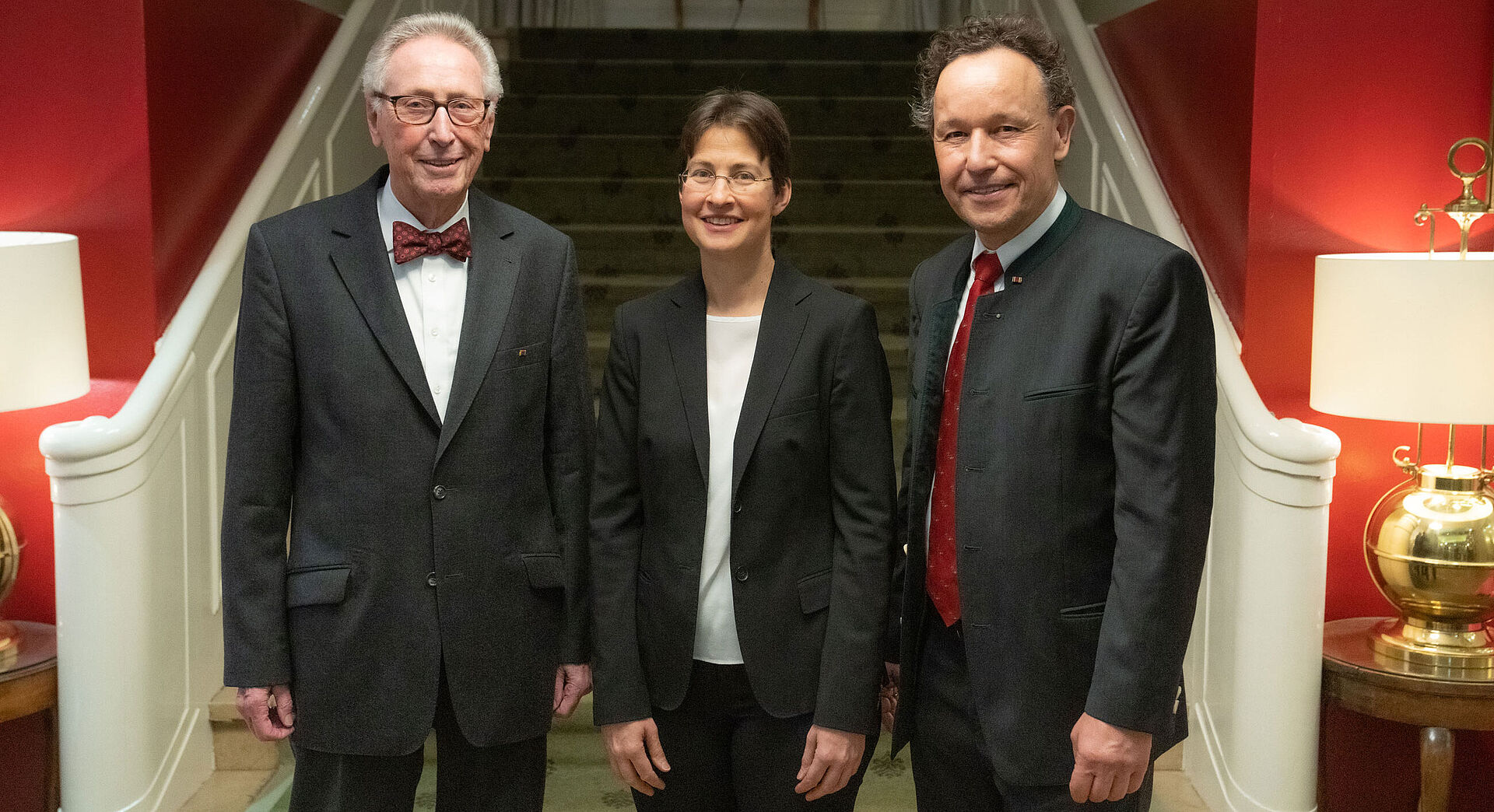
Christian Haass awarded Hector Wissenschaftspreis 2022
NOMIS Board Member and researcher Christian Haass has been awarded the 2022 Hector Wissenschaftspreis (science award) for his groundbreaking research on Alzheimer’s disease, his interdisciplinary approach as a university professor, and as an exemplary role model for students and young scientists. Haass led the NOMIS project Frontotemporal Lobar Degeneration, which ended last year. Christian Haass, professor […]
