

Ye Zheng
Associate professor
Organization
Salk Institute for Biological Studies

About Ye Zheng
Ye Zheng is associate professor in the NOMIS Center for Immunobiology and Microbial Pathogenesis at the Salk Institute for Biological Studies (US).
Zheng received a BS in biochemistry and molecular biology from Peking University (China) and a PhD from Columbia University (US). He was a postdoctoral fellow at the University of Washington (US) and a research scholar at Memorial Sloan-Kettering Cancer Center. He completed a postdoctoral fellowship at the Cancer Research Institute from 2005-2008 and was a Rita Allen Foundation Scholar from 2010-2015.
Zheng’s research focuses on a specialized set of immune cells called regulatory T cells (Tregs) that act to balance and maintain a healthy immune system. Tregs control the immune response, telling the more aggressive immune cells when to stop their frenzied attack. Abnormal Treg function has been linked to a number of autoimmune diseases, such as arthritis, type 1 diabetes, lupus and multiple sclerosis. A key molecular component of these cells, a protein called Foxp3, is often responsible for deficient Tregs. Zheng is making advances in understanding the genes that control Foxp3—as well as genes that Foxp3 controls—to ultimately lead to ways to manage Treg function. Since manipulations of Tregs can either weaken or strengthen the immune response, his findings can potentially open new avenues in the treatment of autoimmune diseases, improve organ transplant survival and uncover new cancer targets.
‘s publications
Succinate undermines FOXP3 stability and disrupts Treg cell function
Increased levels of succinate in individuals with inflammatory bowel disease suppress succinylation of the transcription factor FOXP3, leading to its increased ubiquitination and degradation in intestinal regulatory T cells. This process exacerbates colon inflammation and contributes to disease progression.
Foxp3 orchestrates reorganization of chromatin architecture to establish regulatory T cell identity
Chromatin conformation reorganization is emerging as an important layer of regulation for gene expression and lineage specification. Yet, how lineage-specific transcription factors contribute to the establishment of cell type-specific 3D chromatin architecture in the immune cells remains unclear, especially for the late stages of T cell subset differentiation and maturation. Regulatory T cells (Treg) are mainly generated in the thymus as a subpopulation of T cells specializing in suppressing excessive immune responses. Here, by comprehensively mapping 3D chromatin organization during Treg cell differentiation, we show that Treg-specific chromatin structures were progressively established during its lineage specification, and highly associated with Treg signature gene expression. Additionally, the binding sites of Foxp3, a Treg lineage specifying transcription factor, were highly enriched at Treg-specific chromatin loop anchors. Further comparison of the chromatin interactions between wide-type Tregs versus Treg cells from Foxp3 knock-in/knockout or newly-generated Foxp3 domain-swap mutant mouse revealed that Foxp3 was essential for the establishment of Treg-specific 3D chromatin architecture, although it was not dependent on the formation of the Foxp3 domain-swapped dimer. These results highlighted an underappreciated role of Foxp3 in modulating Treg-specific 3D chromatin structure formation.
Research Fields
Genetics & Heredity, Immunology, Oncology & Carcinogenesis

CTLA-4 blockade induces a microglia-Th1 cell partnership that stimulates microglia phagocytosis and anti-tumor function in glioblastoma
The limited efficacy of immunotherapies against glioblastoma underscores the urgency of better understanding immunity in the central nervous system. We found that treatment with αCTLA-4, but not αPD-1, prolonged survival in a mouse model of mesenchymal-like glioblastoma. This effect was lost upon the depletion of CD4+ T cells but not CD8+ T cells. αCTLA-4 treatment increased frequencies of intratumoral IFNγ-producing CD4+ T cells, and IFNγ blockade negated the therapeutic impact of αCTLA-4. The anti-tumor activity of CD4+ T cells did not require tumor-intrinsic MHC-II expression but rather required conventional dendritic cells as well as MHC-II expression on microglia. CD4+ T cells interacted directly with microglia, promoting IFNγ-dependent microglia activation and phagocytosis via the AXL/MER tyrosine kinase receptors, which were necessary for tumor suppression. Thus, αCTLA-4 blockade in mesenchymal-like glioblastoma promotes a CD4+ T cell-microglia circuit wherein IFNγ triggers microglia activation and phagocytosis and microglia in turn act as antigen-presenting cells fueling the CD4+ T cell response. © 2023 Elsevier Inc.
Research Fields
Biomedical Research, Developmental Biology, Health Sciences
‘s news


November 6, 2023
Genetic architecture may be key to using peacekeeping immune cells to treat autoimmunity or fight cancer
NOMIS researcher Ye Zheng, former NOMIS Fellow Zhi Liu and fellow researchers at the Salk Institute have discovered that Foxp3 is essential for creating the unique chromatin architecture of regulatory T cells and, in turn, promoting their immune suppressive function. Regulatory T cells are specialized immune cells that suppress the immune response and prevent the […]

December 13, 2022
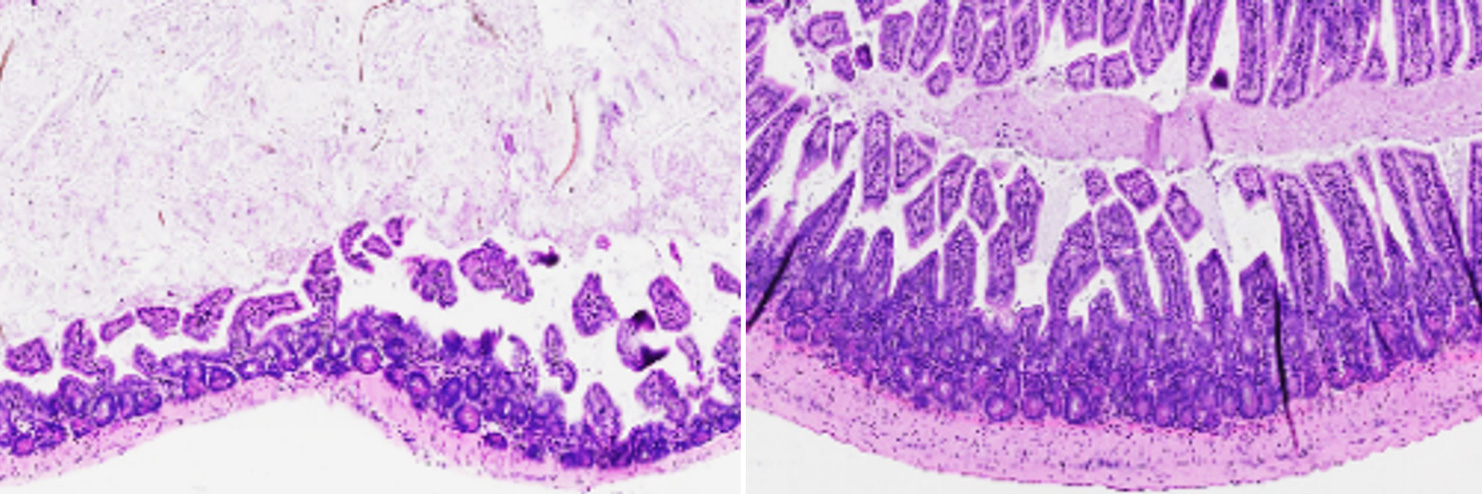
Salk scientists develop compound that reverses gut inflammation in mice
NOMIS Awardee Ronald Evans, NOMIS researcher Ye Zheng and colleagues have published in Proceedings of the National Academy of Sciences their findings showing that a compound they developed, FexD, can prevent and reverse intestinal inflammation in mice with inflammatory bowel disease. By targeting a molecule that keeps order in the gut, the new therapeutic has […]


Study highlights how current treatments for alopecia work on a cellular level NOMIS researcher Ye Zheng and fellow Salk scientists have uncovered an unexpected molecular target of a common treatment for alopecia, a condition in which a person’s immune system attacks their own hair follicles, causing hair loss. The findings, published in Nature Immunology on June […]
