
Gerald Shadel elected as 2025 AAAS Fellow
Published on
March 26, 2026
Professor in the Molecular and Cell Biology Laboratory, and Audrey Geisel Chair in Biomedical Science
Organization

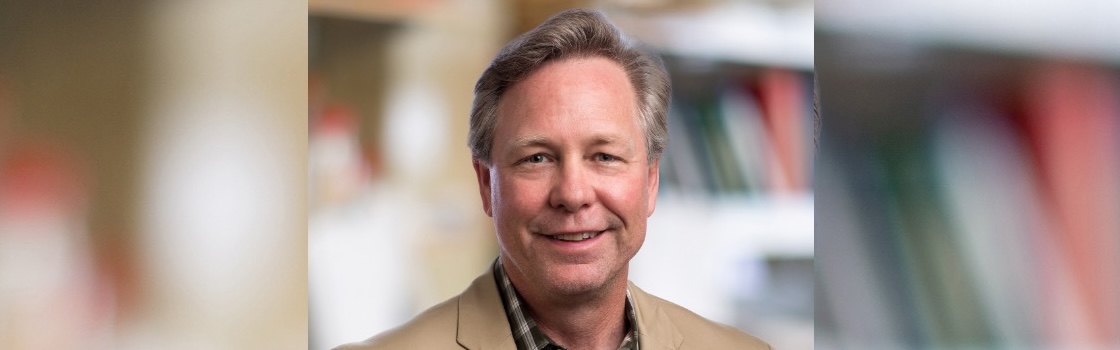
NOMIS researcher Gerald Shadel has been elected as a 2025 American Association for the Advancement of Science (AAAS) Fellow. He is one of two Salk Institute scientists to receive the honor this year.
Salk Institute molecular biologist Gerald Shadel, PhD, and neuroscientist Tatyana Sharpee, PhD, have been elected as 2025 American Association for the Advancement of Science (AAAS) Fellows. The honor recognizes scientists with distinguished scientific and social accomplishments, and AAAS Fellows become national and global science spokespersons for the rest of their lives.
Shadel and Sharpee are among nearly 500 scientists, engineers, and innovators who have been elected as 2025 Fellows. At Salk, they join the ranks of seven other faculty members who are also AAAS Fellows.
“Both of these distinguished scientists have advanced science and exemplified the impact of foundational research. Tatyana’s research has contributed to deep mechanistic understanding of brain function and Gerald’s work has provided important insights into the complex inner workings of mitochondria,” says Salk President Gerald Joyce, MD, PhD. “This recognition reflects the creativity, rigor, and vision that drive their discoveries.”
Gerald Shadel, PhD
Shadel is a professor in the Molecular and Cell Biology Laboratory, Audrey Geisel Chair in Biomedical Science, and co-director of the Paul F. Glenn Center for Biology of Aging Research at Salk. Shadel is a mitochondria expert; his lab focuses on these little cellular powerhouses and the way their function or dysfunction can impact aging, cancer, and degenerative disease. His research has led to many foundational discoveries, including a recent finding that mitochondrial DNA can promote inflammation, which could lead to anti-inflammatory treatments for autoimmune diseases like lupus and pathology associated with aging.
Shadel has received many awards recognizing his achievements, including the Amgen Outstanding Investigator Award, the Paul F. Glenn Foundation Award for Research in Biological Mechanisms of Aging, and the Charles L. Hoppel Prize for Outstanding Contributions in Mitochondrial Research. Shadel was also part of a Salk team that was awarded $19.2 million by the American Heart Association-Allen Initiative to study Alzheimer’s and aging in the brain. Alongside Sanford Burnham Prebys, UC San Diego, and Salk colleagues, Shadel also received $13 million from the National Institutes of Health to study aging as a major risk factor for liver cancer.
Tatyana Sharpee, PhD
Sharpee is a professor in the Computational Neurobiology and Integrative Biology Laboratories and holds the Edwin K. Hunter Chair at Salk. In her research, Sharpee combines mathematics, statistics, and physics to ask how the brain and body work while their components constantly change: When our neural connections are constantly changing during our lives, how do we retain a sense of self? How do we perceive the world? By focusing on brain circuitry and understanding basic sensory experiences, her discoveries bring us closer to solutions for a broad range of diseases and disorders, from stroke to Alzheimer’s to schizophrenia.
Sharpee is a fellow of the American Physical Society and has received numerous other accolades celebrating her science, including a National Science Foundation CAREER Award. In 2022, Sharpee became the second woman to receive the American Society for Biochemistry and Molecular Biology (ASBMB) Delano Award for Computational Bioscience. Since then, she was named a Prebys Research Hero.
About the American Association for the Advancement of Science
Founded in 1848, AAAS was the first permanent organization formed to promote the development of science and engineering nationally. In 1899, AAAS cemented a partnership with Science magazine, a private venture partially funded by Thomas Edison and, later, Alexander Graham Bell. For over 170 years, AAAS has built pioneering programs to bring underrepresented groups into science; to apply science to human rights; to support the growth of science in the developing world; to explore issues of science, ethics, and law; to track federal spending for R&D; and much more. In recent years, AAAS has redoubled its efforts to be the leading voice and force for science. We are dedicated to ensuring that science and scientific evidence are fully and positively integrated into public policy, and the scientific community is speaking with one voice to advance science in the United States and around the world.
Read the Salk release: Two Salk scientists elected as 2025 AAAS Fellows
Read the AAAS release: AAAS welcomes 449 scientists and engineers as Honorary Fellows
Feature image: Gerald Shadel (Photo: Salk Institute)
NOMIS researchers
About Gerald Shadel Gerald Shadel is a professor in the Molecular and Cell Biology Laboratory and holds the Audrey Geisel Chair in Biomedical Science at the Salk Institute for Biological Studies (La Jolla, US). He co-led the Marmosets as a Model System of Aging and Neurodegeneration project. Shadel received a BS in chemistry from the […]
Professor in the Molecular and Cell Biology Laboratory, and Audrey Geisel Chair in Biomedical Science
Salk Institute for Biological Studies
