
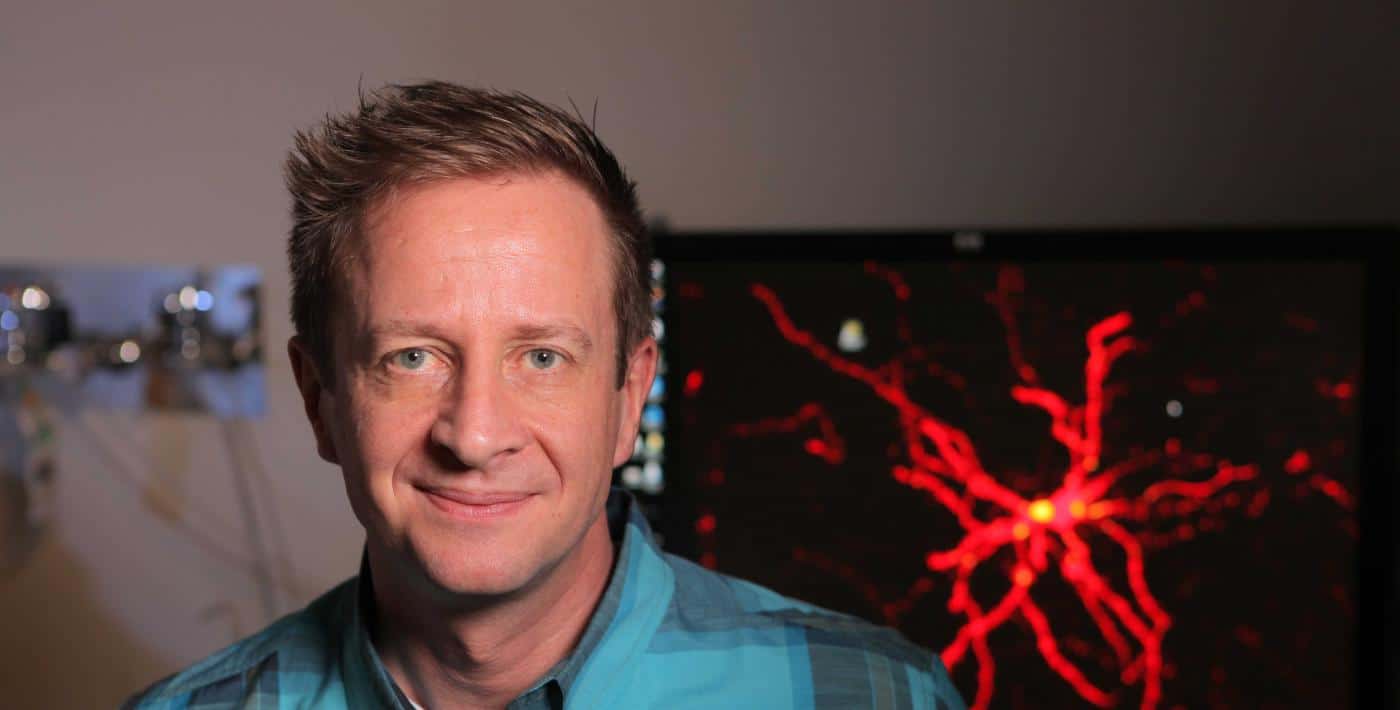
Franck Polleux
Professor of neuroscience
Organization
Columbia Zuckerman Institute

About Franck Polleux
Franck Polleux is professor of neuroscience and a member of the Mortimer B. Zuckerman Mind Brain Behavior Institute at Columbia University. He co-led the Deciphering the Evolutionary Origins of Human Brain Uniqueness project and is currently co-leading the Human Brain Evolution Initiative.
Polleux completed his undergraduate and graduate studies at Université Claude Bernard in Lyon (France), where he obtained a PhD in neuroscience in 1997. He then joined the laboratory of Dr. Anirvan Ghosh at Johns Hopkins University for his postdoctoral training. In 2002, Polleux was hired as assistant professor in the Neuroscience Center at the University of North Carolina – Chapel Hill, becoming associate professor in 2008. He joined the Scripps Research Institute in La Jolla, California in 2010. In 2013, he was recruited as a professor in the Department of Neuroscience at Columbia University to join the new Mortimer B. Zuckerman Mind Brain Behavior Institute.
Research Focus
Throughout his career, Polleux has focused on the identification of the cellular and molecular mechanisms underlying the development and function of neuronal connectivity in the mammalian brain. Recently, his lab began studying the genetic basis of human brain evolution through the identification of human-specific genetic modifiers of synaptic and cortical circuit development.
Awards and Recognition
Polleux’s scientific achievements have earned him numerous awards, including the 2000 Albert Lehninger Research Award for postdoctoral research from Johns Hopkins University, the 2005 Pew Scholar Award in Biomedical Sciences, the 2005 NARSAD Young Investigator Award and, more recently, the 2015 Roger De Spoelberch Prize for mid-career European neuroscientists.
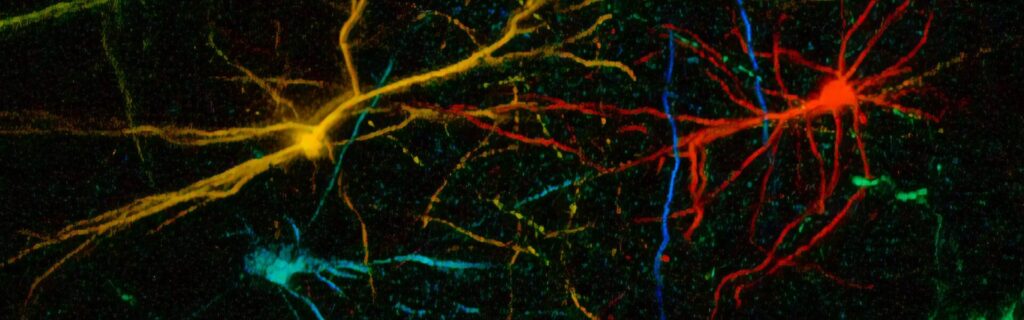
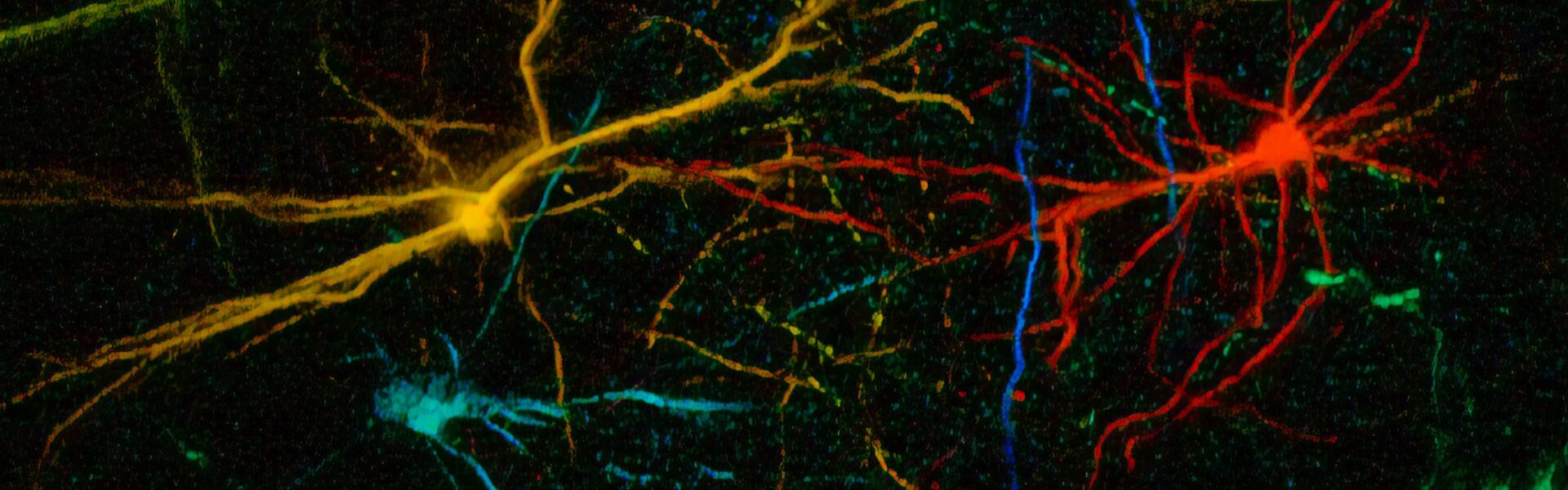
Feature image: Catching human neurons in action: in vivo calcium imaging of human pluripotent stem cell–derived cortical pyramidal neurons transplanted in the mouse visual cortex. (Photo: Ben Vermaercke, Bonin and Vanderhaeghen Laboratories)
‘s projects
Human Brain Evolution Initiative
The Question Humans exhibit exceptional cognitive abilities and social skills, including complex forms of written and oral communication, our propensity to develop new technologies and explore and rapidly adapt to new ecological niches, and our ability to produce artistic representations of our imagination. These features emerged due to genetic modifications leading to known traits of […]
NOMIS researchers
Project period
2025 – 2030
Deciphering the Evolutionary Origins of Human Brain Uniqueness
Humans exhibit unique cognitive features, including the emergence of complex forms of written and oral communication, our propensity to develop new technologies and our ability to produce artistic representations of our experiences. These unique abilities are ultimately due to developmental changes that increased brain size and circuit complexity during human evolution. The decoding of the […]
NOMIS researchers
Project period
2020 – 2025
‘s publications

Clustered inputs engage dendritic nonlinearities and calcium signaling to support efficient place-field formation in CA1 pyramidal neurons
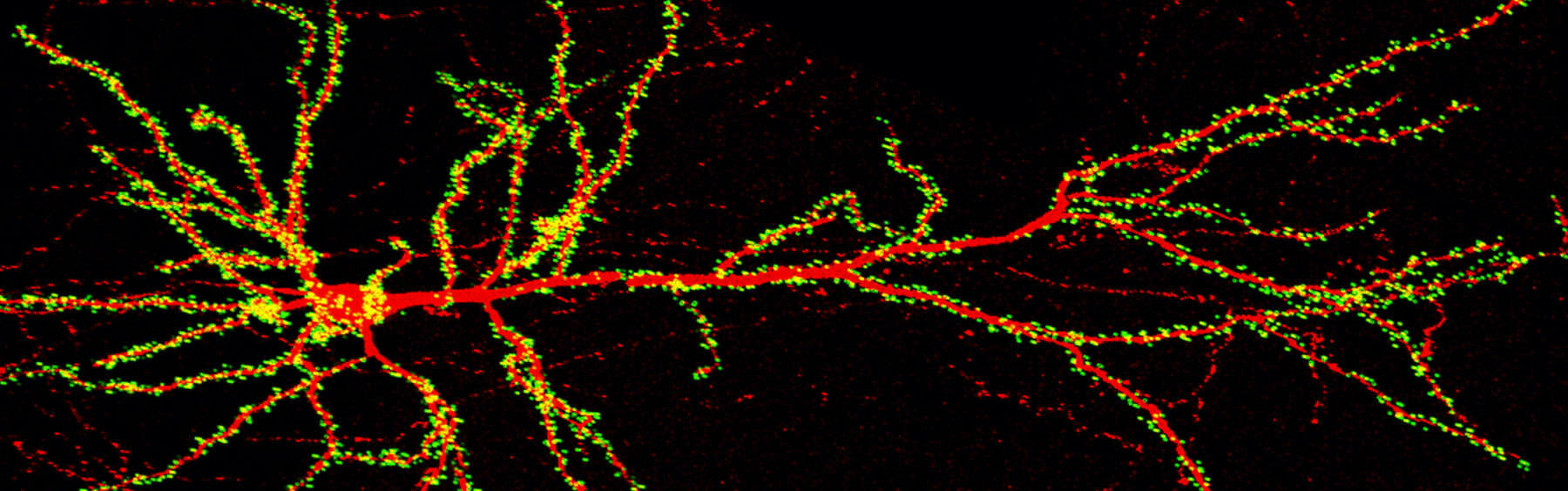
How the spatial arrangement of synaptic inputs shapes neuronal feature selectivity remains a fundamental question. Here, we map the three-dimensional distribution of excitatory and inhibitory synapses across the dendritic arbor of CA1 pyramidal neurons in vivo and build biophysical models to probe their impact on place-cell emergence. Excitatory synapses are non-uniformly distributed, forming structural clusters preferentially on terminal apical and basal dendrites, whereas inhibitory synapses are uniformly arranged. Relative to dispersed configurations, clustered inputs generate higher-quality, stable place fields while recruiting ∼13% fewer active synapses for equivalent somatic output, and cause elevated voltage-gated calcium influx and NMDA-receptor activation. Notably, disrupting clustering permits recovery of somatic excitability but not dendritic calcium dynamics, implicating clustering in calcium-dependent plasticity. Synaptic organization further determines integration strategy: clustered inputs preferentially engage apical dendritic nonlinearities, whereas distributed inputs rely on basal summation. These results establish synaptic clustering as a core mechanism for efficient, compartmentalized spatial computation.
Research Fields
Biomedical Research, Developmental Biology, Health Sciences
Human-specific SRGAP2 paralogs synchronize neotenic microglial maturation and synaptic development
The human brain is distinguished by unusually prolonged developmental timing, yet the genetic mechanisms coordinating this neoteny across cell types remain incompletely understood. Here, we show that human cortical microglia undergo neotenic structural and transcriptional maturation relative to mouse microglia. We identify SRGAP2B/C , human-specific paralogs of the ancestral SRGAP2A , as the only human-specific gene duplications expressed in human microglia. Using xenotransplantation of human induced pluripotent stem cell (hiPSC)-derived microglia and mouse genetic models, we demonstrate that human-specific SRGAP2B/C, previously shown to reduce SRGAP2A protein abundance, are both necessary and sufficient to induce neotenic structural microglial maturation. Our results reveal that neotenic microglial maturation modifies the timing of synaptic development, linking microglial developmental programs to the timing of circuit formation. Together with previous evidence for neuronal SRGAP2A function, our results suggest that the human-specific SRGAP2B/C paralogs coordinated the emergence of neotenic synaptic development by acting in both neurons and microglia during human brain evolution.
Research Fields
Clinical Medicine, Health Sciences, Neurology & Neurosurgery

Visually guided in vivo single-cell electroporation for monitoring and manipulating mammalian hippocampal neurons
Sparse, single-cell labeling approaches enable high-resolution, high signal-to-noise recordings from subcellular compartments and intracellular organelles and allow precise manipulations of individual cells and local circuits while minimizing complex changes associated with global network manipulations. However, thus far, only a limited number of approaches have been developed to label single cells with unique combinations of genetically encoded indicators, target deep cortical structures or sustainably use the same chronic preparation for weeks. Here we developed a method to deliver plasmids selectively to single pyramidal neurons in the mouse dorsal hippocampus using two-photon visually guided in vivo single-cell electroporation to address these limitations. This method allows long-term plasmid expression in a controlled number of individual pyramidal neurons, facilitating subcellular resolution imaging, intracellular organelle tracking, monosynaptic input mapping, plasticity induction and targeted whole-cell patch-clamp recordings.
Research Fields
Biology, Molecular Biology, Natural Sciences, Neuroscience
‘s news


January 16, 2026
Two NOMIS researchers awarded Fyssen Foundation International Prize
What if the secret to human intelligence isn’t just in how many neurons we have, but in the specific genetic “glitches” that slowed down our brain’s development? In recognition of their outstanding scientific contributions to understanding the neurobiological foundations of human cognition, NOMIS researchers Franck Polleux and Pierre Vanderhaeghen have been awarded the 2025 Fyssen […]


NOMIS researcher Franck Polleux and fellow scientists at Columbia’s Zuckerman Institute have, for the first time, observed how synaptic connections in the brain change during memory formation in living mice. Their study, published in Nature, provides direct evidence supporting the long-standing theory that memories are encoded through synaptic plasticity — the strengthening or weakening of […]


October 14, 2024
Scientists discover unexpected link between genes involved in human brain evolution and developmental disorders
NOMIS researcher Franck Polleux and colleagues have found that human-specific genes regulate a key gene mutated in intellectual disability and autism spectrum disorders. Their findings were published in Neuron. The human brain’s remarkably prolonged development is unique among mammals and is thought to contribute to our advanced learning abilities. Disruptions in this process may explain […]
