
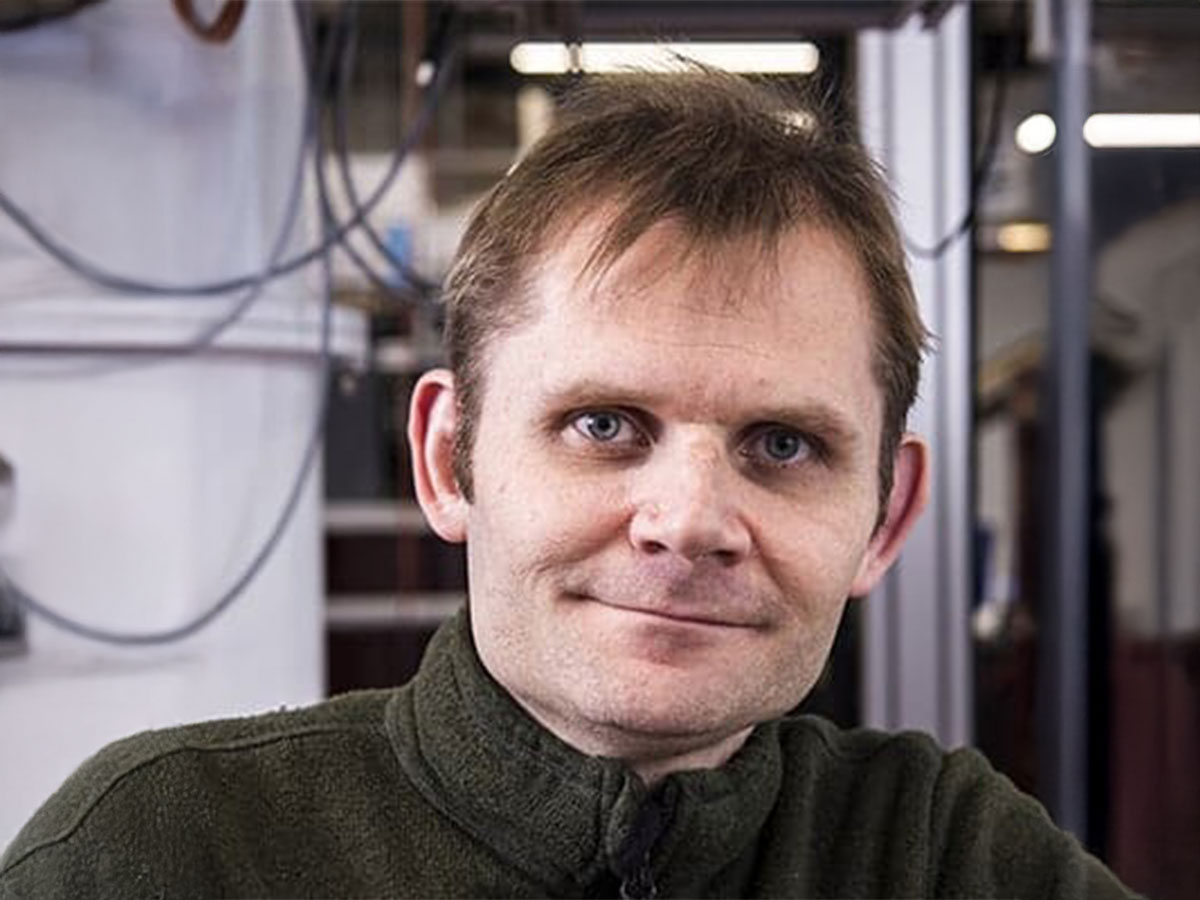
Georgios Katsaros
Professor
Organization
Institute of Science and Technology Austria (ISTA)

About Georgios Katsaros
Georgios Katsaros is professor at the Institute of Science and Technology Austria (ISTA). He co-led the Hybrid Semiconductor—Superconductor Quantum Devices project and is currently co-leading the Protected States of Quantum Matter project.
There is an intense effort in information technology to find solutions to the problems emerging from the miniaturization of conventional complementary metal oxide semiconductor devices. In microelectronics, researchers are trying to create ever smaller and faster transistors by decreasing their dimensions or by choosing materials with different, more promising properties.
Researchers in basic research on the other hand are investigating new concepts which would allow information processing to operate on completely different principles. In this line, Loss and DiVincenzo suggested the use of electron spins confined in lithographically defined quantum dots as elementary quantum bits to realize a quantum computer. In parallel to the development of spin qubits, there has recently been a huge wave of excitement in the prospect of using topological qubits for quantum computation. Such topological qubits are predicted to be robust versus decoherence. In the main focus of these proposals are the so-called Majorana fermions. Various studies have suggested the use of topological insulators and semiconductor nanowires for the realization of Majorana fermions. Indeed, first experimental signatures of Majorana fermions have been reported in the past few years.
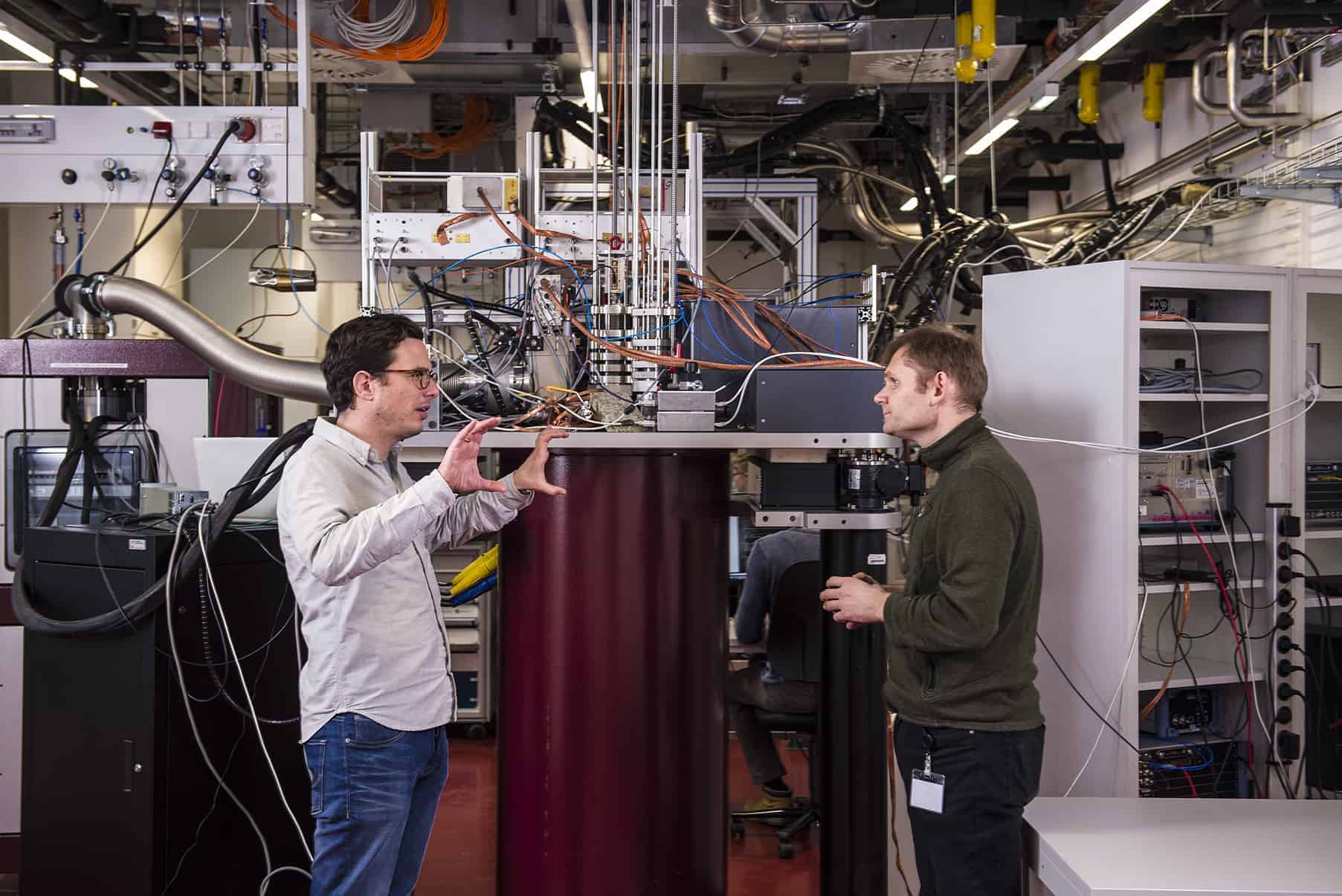
In the nanoelectronics group we study spin qubits in Ge based systems, self-assembled QDs and lithographically defined QDs in two dimensional hole gases. In parallel we aim to understand whether Majorana fermions can be realized and detected in a hole-type system. Finally, hybrid Al/InAs nanowire devices are studied aiming at proving the topological properties of Majorana fermions. While our research is focused on the realization of different types of qubits, the group is very much interested in studying new fundamental physics emerging in semiconductor nanodevices.
‘s projects
Protected States of Quantum Matter
Major corporations have recently made dramatic investments toward building a quantum computer. The current level of technological development has been referred to as the era of noisy intermediate-scale quantum computing (NISQ), reflecting the fact that currently available quantum processors are dominated by noise. In fact, because current systems are unprotected, the effect of noise increases […]
NOMIS researchers
Project period
2022 – 2026
Hybrid Semiconductor–Superconductor Quantum Devices
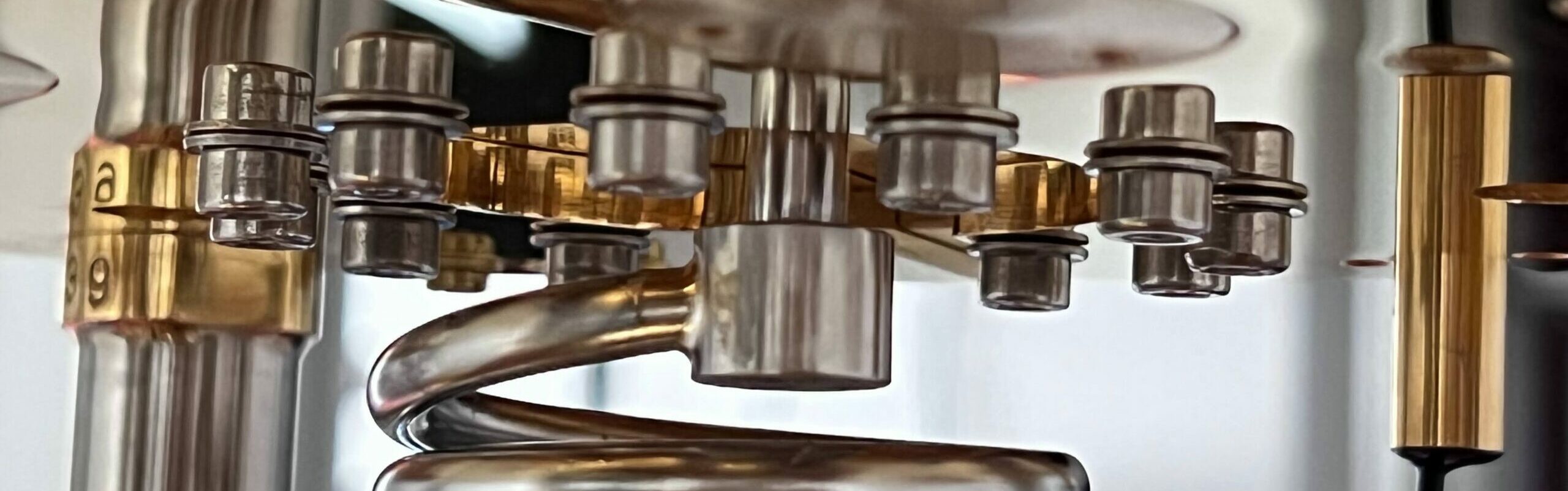
Embedded in the research infrastructure of the Institute of Science and Technology Austria (ISTA), the Hybrid Semiconductor–Superconductor Quantum Devices project aimed to answer some of the fundamental questions of quantum physics. Specifically, the research team investigated how to use the quantum state of microscopic nanofabricated physical systems as building blocks for the elusive vision of […]
NOMIS researchers
Project period
2017 – 2021
‘s publications

Low-noise quantum dots in ultra-shallow Ge/SiGe heterostructures for prototyping hybrid semiconducting–superconducting devices
Planar germanium is currently the only semiconducting platform where high-coherence spin qubits and proximity-induced superconductivity have each been demonstrated. Recent research into spin qubits in Ge/SiGe heterostructures has focused on increasing the thickness of the SiGe capping layer, reporting improvements in the electrostatic noise levels. Meanwhile, heterostructures with thinner capping layers remain rather unexplored, despite the potential advantages for proximity-induced superconductivity. Here, we study a Ge/SiGe heterostructure with a thin SiGe cap d ≈ 4 nm and investigate its viability to host low-noise quantum dots. To keep the thermal budget compatible with superconducting layers, low-temperature oxide deposition processes were developed and implemented for the gate dielectrics. The charge noise level of the fabricated devices is estimated to be 1.8 ± 1.0 μeV/Hz, comparable to devices fabricated on shallow heterostructures (d ∼ 20 nm) with high-temperature deposited oxides. Low charge noise levels, together with the straightforward integration of superconductors, make this heterostructure an attractive platform for prototyping hybrid semiconducting–superconducting devices.
Research Fields
Applied Physics, Natural Sciences, Physics & Astronomy
Exchange anisotropies in microwave-driven singlet-triplet qubits
Hole spin qubits are emerging as the workhorse of semiconducting quantum processors because of their large spin-orbit interaction, enabling fast, low-power, all-electric operations. However, this interaction also causes non-uniformities, resulting in site-dependent qubit energies and anisotropies. Although these anisotropies enable single-spin control, if not properly harnessed, they can hinder scalability. Here, we report on microwave-driven singlet-triplet qubits in planar germanium and use them to investigate spin anisotropies. For in-plane magnetic fields, the spins are largely anisotropic and electrically tunable, allowing access to all transitions and coherence times exceeding 3 μs are extracted. For out-of-plane fields they have an isotropic response. Even in this field direction, where the qubit lifetime is strongly affected by nuclear spins, we find 400 ns coherence times. Our work adds a valuable tool to investigate and harness the spin anisotropies, applicable to two-dimensional devices, facilitating the path towards scalable quantum processors.
Research Fields
Microwave, Natural Sciences, Quantum, Qubits
Strong charge-photon coupling in planar germanium enabled by granular aluminium superinductors
High kinetic inductance superconductors are gaining increasing interest for the realisation of qubits, amplifiers and detectors. Moreover, thanks to their high impedance, quantum buses made of such materials enable large zero-point fluctuations of the voltage, boosting the coupling rates to spin and charge qubits. However, fully exploiting the potential of disordered or granular superconductors is challenging, as their inductance and, therefore, impedance at high values are difficult to control. Here, we report a reproducible fabrication of granular aluminium resonators by developing a wireless ohmmeter, which allows in situ measurements during film deposition and, therefore, control of the kinetic inductance of granular aluminium films. Reproducible fabrication of circuits with impedances (inductances) exceeding 13 kΩ (1 nH per square) is now possible. By integrating a 7.9 kΩ resonator with a germanium double quantum dot, we demonstrate strong charge-photon coupling with a rate of gc/2π = 566 ± 2 MHz. This broadly applicable method opens the path for novel qubits and high-fidelity, long-distance two-qubit gates.
Research Fields
Applied Sciences, Enabling & Strategic Technologies, Nanoscience & Nanotechnology, Natural Sciences, Quantum
‘s news

Amid the race to develop and market practical quantum computers, NOMIS researcher Georgios Katsaros and his group at the Institute of Science and Technology Austria (ISTA) pay particular attention to the intriguing physics of special qubits generated in the semiconductor germanium. By harnessing the response of these so-called hole spin qubits to magnetic and electric […]

March 14, 2023
FWF awards funding for multi-institutional research collaborations to NOMIS researchers at ISTA
Recognizing research clusters in Austria that combine high-level research, research training, and the promotion of young scientists, the Austrian Science Fund (FWF) has awarded funding for multi-institutional research collaborations to NOMIS researchers Johannes Fink, Andrew Higginbotham and Georgios Katsaros. To strengthen the research of national universities and institutes, the Austrian Science Fund (FWF) is kick-starting an ambitious funding campaign. Funding for five clusters of […]

December 14, 2022
Imposter Majorana particles revealed and explained
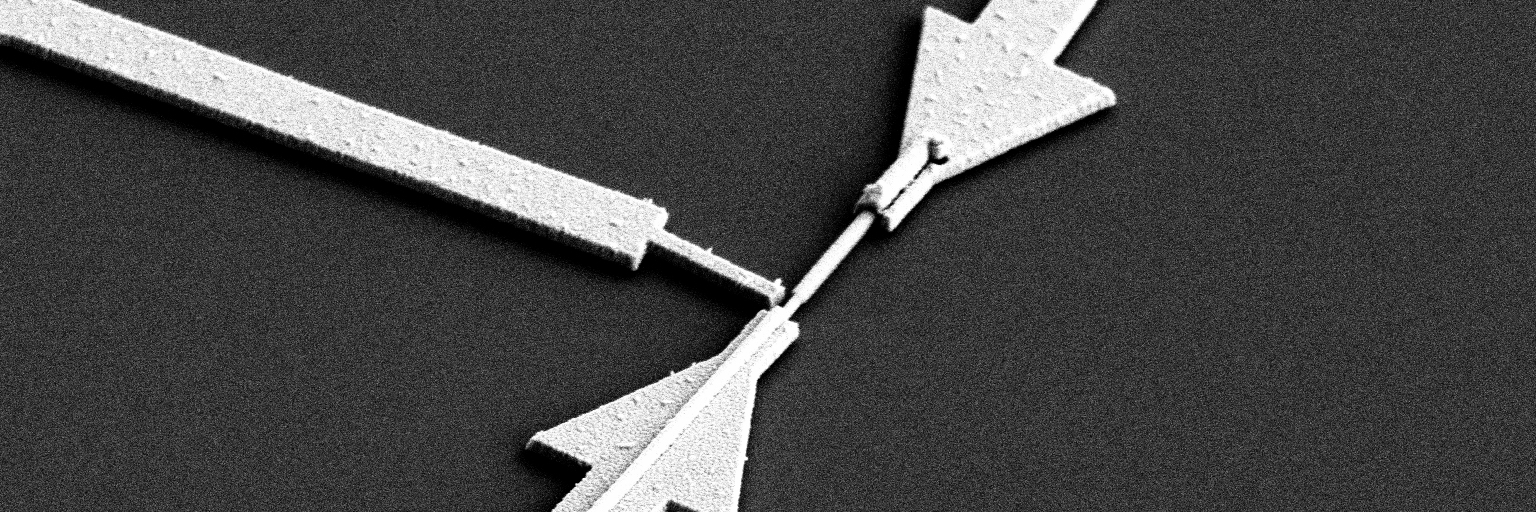
NOMIS researcher Georgios Katsaros and colleagues have revealed the existence of a highly convincing kind of imposter Majorana particle. Their findings were published in Nature. Researchers at ISTA go looking for “rock star” particles and emerge with an imposter Majoranas are theoretical particles of great interest, as they are anticipated to show different exotic properties, […]
