
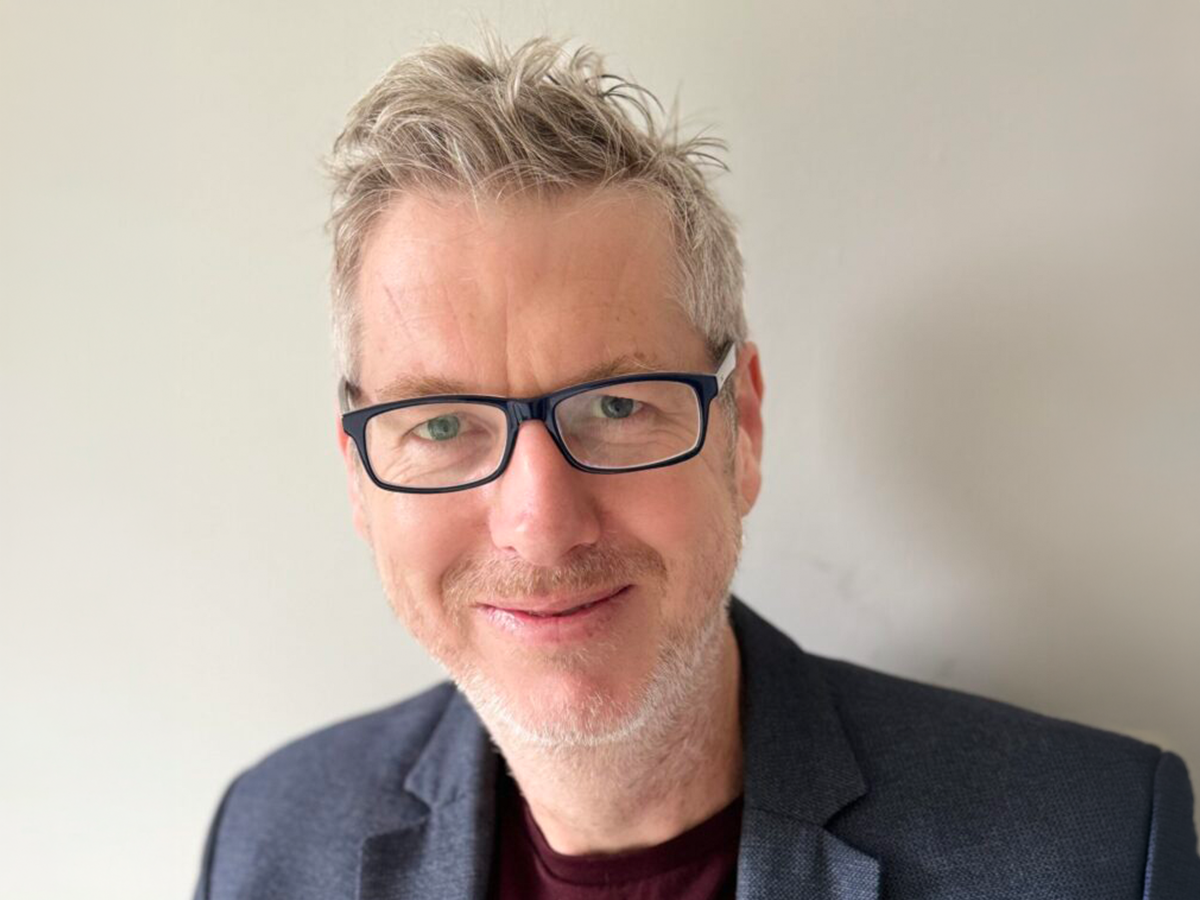
Ryan McKay
Professor
Organization
Royal Holloway University of London

About Ryan McKay
Ryan McKay is professor of psychology at Royal Holloway, University of London (UK), where he leads the Morality and Beliefs Laboratory (MaB-Lab). He is leading the project Collective Delusions: Social Identity and Scientific Misbeliefs.
Born and raised in Australia, McKay received a BS (with honors in psychology) at the University of Western Australia in Perth. He later earned his PhD in cognitive neuropsychiatry at Macquarie University in Sydney, working with Professors Max Coltheart and Robyn Langdon on theoretical models of delusion formation. After a stint working as a clinician at the National Hospital for Neurology and Neurosurgery in Queen Square, London, McKay moved to Boston to carry out postdoctoral work on the evolution of misbelief with Professor Daniel Dennett at Tufts University. He has also held postdoctoral positions with Ernst Fehr at the University of Zürich (Switzerland) and Harvey Whitehouse at Oxford University (UK), where he investigated the relationship between religion and morality. He has been at Royal Holloway since 2010.
McKay’s research focuses on belief formation—he is interested in how we form and revise our beliefs about ourselves and the world, and how this process can derail to produce “pathologies of belief,” ranging from bizarre delusions in clinical settings to collective delusions in which thousands or millions of people adopt poorly evidenced beliefs. His NOMIS project seeks to illuminate the extent to which belief formation is distorted by social affiliation motives—e.g., motives to signal, protect and preserve valued social identities.
‘s projects
Collective Delusions: Social Identity and Scientific Misbeliefs
Many commentators have warned of a recent global trend of intensifying polarization. An especially worrying manifestation of this involves polarization not only over values and preferences, but over factual beliefs. For instance, Republicans and Democrats in the US disagree about the legitimacy of Joe Biden’s victory in the 2020 US presidential election, while Remainers and […]
NOMIS researcher
Project period
2023 – 2027

‘s publications
A motley of attitudes: belief, insincerity, and non-doxastic commitment in magical practice
Magic is frequently employed in high-stakes contexts such as healing and divination, which suggests that its users take it to be efficacious. This poses a puzzle: why would broadly rational agents persist in practices that are, by their ostensible aims, ineffective? Existing accounts divide between intellectualist views, which hold that practitioners genuinely believe in the efficacy of magic, and non-intellectualist views, which argue that magical practices are accompanied by non-doxastic attitudes such as imagination, symbolism, or make-believe. We argue that both positions capture part of the truth. Drawing on ethnography, cognitive science, political psychology, and philosophy, we defend a mixed-attitude account according to which individuals within the same culture—and even the same individual over time—can relate to different magical practices with a range of attitudes, from genuine belief to scepticism, expressive endorsement, or mistaken self-ascription of belief. This framework reconciles evidence cited by both intellectualists and their critics and suggests that belief reports about magic, as well as those concerning conspiracy theories and magic in WEIRD societies, should not be assumed to reflect a single, uniform cognitive attitude.
Research Fields
Health Sciences, Psychology & Cognitive Sciences, Social Psychology
Estimating the causal effects of cognitive effort and policy information on party cue influence
Party cues can influence public opinion, but the extent to which they do so varies dramatically from context to context. Why? The long-standing theory that party cues function as “heuristics” provides an answer, predicting that variation in exposure to policy information, a propensity for effortful thinking, or both causally affects the influence of party cues. However, this prediction has escaped decisive empirical testing to date, leaving in its wake a string of mixed results. Here we characterize the challenges that limit previous tests, and report on two large-scale experiments designed to overcome them. We find that exposure to policy information causally attenuates the influence of party cues, but engagement in effortful thinking per se does not. Our results advance understanding of the “when” and “why” of party cue influence; clarify a number of previously ambiguous findings; and have broad theoretical, methodological, and normative implications for understanding the influence of party cues.
Research Fields
Applied Sciences, Psychology & Cognitive Sciences
Signal discrimination in the psychotic phenotype: increased sensory precision and reduced decision threshold associated with psychotic-like experiences
Background
Psychotic-like experiences may reflect disrupted signal discrimination, whereby individuals overinterpret noisy sensory input as meaningful. Drawing on predictive coding accounts, we investigated whether increased sensory precision and reduced data-gathering relate to psychotic-like experiences in a signal discrimination task.
Methods
We fitted drift-diffusion models to Random Dot Motion (RDM) task data completed by 191 participants. We estimated drift rate and decision threshold: (1) across groups differing in psychotic phenotypes, and (2) as outcomes in regression models with psychotic-like experiences as predictors. Drift rate measures evidence gain and, in this task, can be considered an approximate measure of sensory precision. We also tested whether reduced data-gathering on the beads task replicated prior associations with psychotic phenotypes.
Results
Hallucination– and delusion-like experiences were associated with increased drift rates. Hallucination-like experiences also predicted lower decision thresholds. In the beads task, psychotic-like experiences correlated with higher confidence ratings but not with reduced data-gathering.
Conclusions
Our findings indicate that psychotic-like phenomenology is linked to increased precision of signal discrimination and reduced decision thresholds. Overprecise signal discrimination and lower decision thresholds may bias perceptual inference toward false positive detections, potentially leading to anomalous experiences.
Research Fields
Clinical Psychology, Experimental Psychology, Health Sciences, Psychology & Cognitive Sciences
‘s news

Why do people turn to magic for healing, divination or other high-stakes decisions, even when its practical effects are uncertain? A new interdisciplinary paper by NOMIS researcher Ryan McKay and colleagues argues that the answer is more complex than simply believing or not believing. People may approach magical practices with a shifting mix of conviction, […]

February 23, 2026
Policy over party: How policy information shapes political opinions
When do voters actually think for themselves? A new study sheds light on when and why people follow their political party’s lead — and what it takes to break the “follow the leader” mentality. NOMIS researcher Ryan McKay and a colleague at Royal Holloway, University of London, found that when people are given clear policy […]


A study by NOMIS researcher Ryan McKay and colleagues reveals that atheists in some of the world’s most secular countries show an intuitive preference for religious belief over atheism. Their findings were published in Proceedings of the National Academy of Sciences (PNAS). The study, by academics at Brunel University of London, Royal Holloway, University of […]
