
Tardinomis – Decrypting Cryptobiosis in Tardigrades
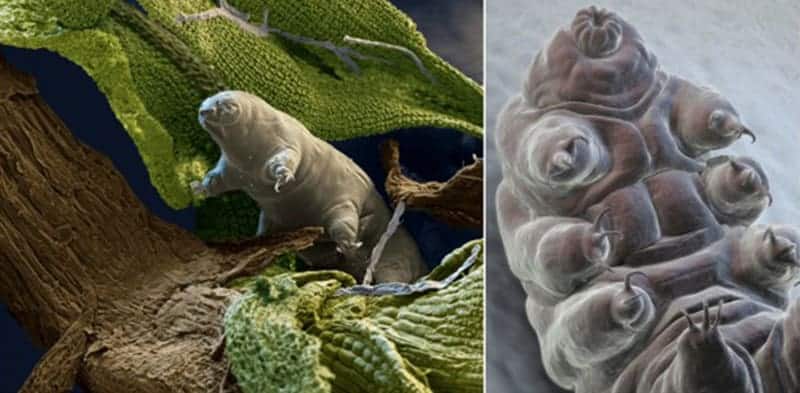
Tardigrades are extraordinary beings that have been sent to outer space and found to survive after returning to earth. Commonly known as water bears or moss piglets, these microscopic animals are capable of surviving environmental extremes—including freezing to -230 C, ionizing radiation and total dehydration—through cryptobiosis (“hidden life”). Cryptobiosis is the reversible physiological state of an organism when it shows no sign of life, and when metabolic activity is no longer measurable. This ametabolic state is an adaptation among tardigrades that enables the animal to survive extreme conditions.
The Tardinomis–Decrypting Cryptobiosis in Tardigrades project set out to explore the molecular mechanisms for preserving cellular integrity during cryptobiosis, as well as the genetic programs that initiate the transition in and out of cryptobiosis. Understanding this unique state of being neither dead nor alive could significantly advance the frontiers of contemporary biology, leading to new insights into the deterioration of protein homeostasis underlying human aging and several neurodegenerative disorders.
The project was led by Alwin Köhler at the Max Perutz Labs Vienna in Austria.
NOMIS researchers
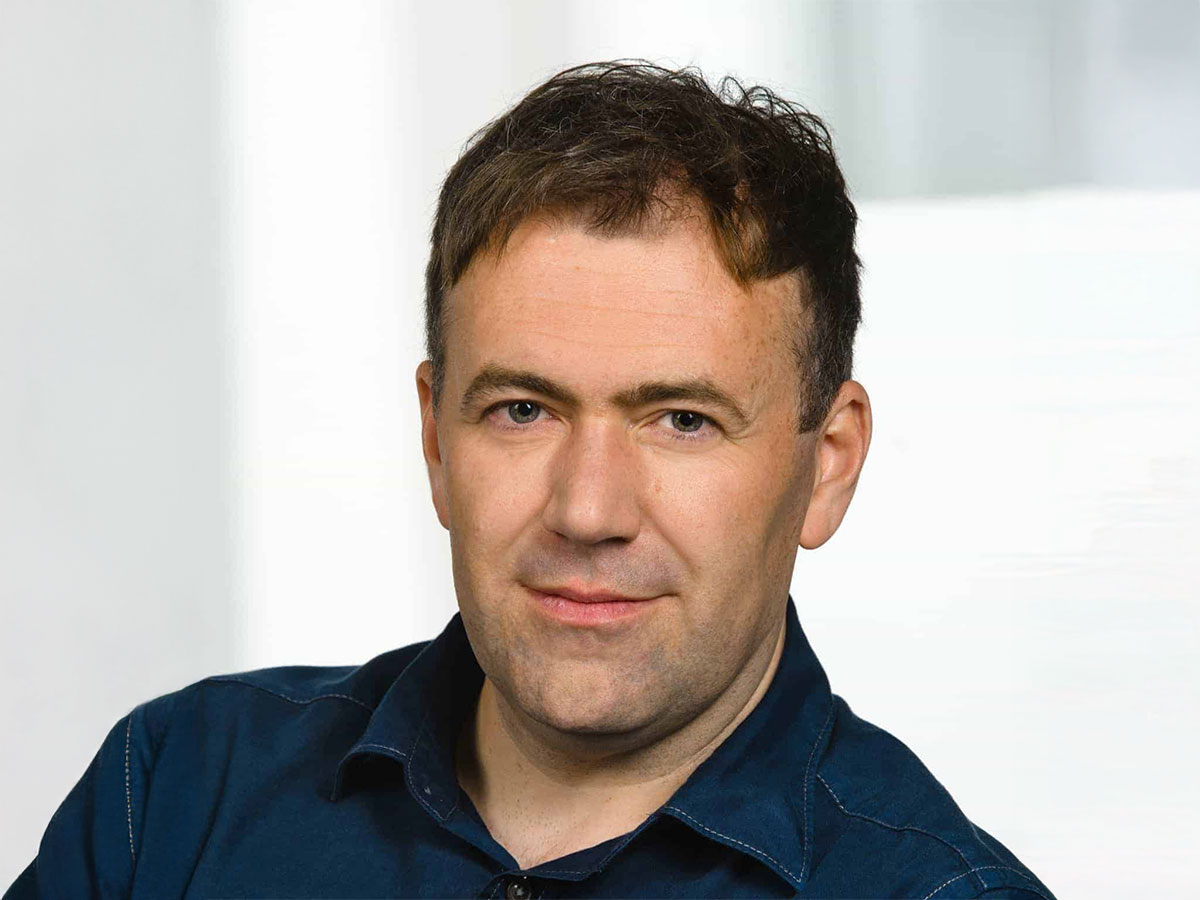
About Alwin Köhler Alwin Köhler is scientific director of the Max Perutz Labs Vienna and professor of mechanistic cell biology. He led the Tardinomis–Decrypting Cryptobiosis in Tardigrades project. Born in Transylvania, Romania, he studied medicine and music in Würzburg, Germany, and performed his doctoral work at Harvard Medical School, where he was trained in biochemistry. […]
Scientific director and professor of mechanistic cell biology
Max Perutz Labs Vienna
Project publications
The interplay of nuclear pores and lipids
Nuclear pore complexes (NPCs) mediate the bidirectional transport of cargo across the nuclear envelope (NE). NPCs are also membrane remodeling machines with a capacity to curve and fuse the membranes of the NE. However, little is known about the interplay of NPCs and lipids at a mechanistic level. A full understanding of NPC structure and function needs to encompass how the NPC shapes membranes and is itself shaped by lipids. Here we attempt to connect recent findings in NPC research with the broader field of membrane biochemistry to illustrate how an interplay between NPCs and lipids may facilitate the conformational plasticity of NPCs and the generation of a unique pore membrane topology. We highlight the need to better understand the NPC’s lipid environment and outline experimental avenues towards that goal. © 2023 The Authors
Research Fields
Health Sciences
Lipid saturation controls nuclear envelope function
The nuclear envelope (NE) is a spherical double membrane with elastic properties. How NE shape and elasticity are regulated by lipid chemistry is unknown. Here we discover lipid acyl chain unsaturation as essential for NE and nuclear pore complex (NPC) architecture and function. Increased lipid saturation rigidifies the NE and the endoplasmic reticulum into planar, polygonal membranes, which are fracture prone. These membranes exhibit a micron-scale segregation of lipids into ordered and disordered phases, excluding NPCs from the ordered phase. Balanced lipid saturation is required for NPC integrity, pore membrane curvature and nucleocytoplasmic transport. Oxygen deprivation amplifies the impact of saturated lipids, causing NE rigidification and rupture. Conversely, lipid droplets buffer saturated lipids to preserve NE architecture. Our study uncovers a fundamental link between lipid acyl chain structure and the integrity of the cell nucleus with implications for nuclear membrane malfunction in ischaemic tissues. © 2023, The Author(s).
Research Fields
Natural Sciences

Protein compactness and interaction valency define the architecture of a biomolecular condensate across scales
Non-membrane-bound biomolecular condensates have been proposed to represent an important mode of subcellular organization in diverse biological settings. However, the fundamental principles governing the spatial organization and dynamics of condensates at the atomistic level remain unclear. The Saccharomyces cerevisiae Lge1 protein is required for histone H2B ubiquitination and its N-terminal intrinsically disordered fragment (Lge11-80) undergoes robust phase separation. This study connects single-and multi-chain all-atom molecular dynamics simulations of Lge11-80 with the in vitro behavior of Lge11-80 condensates. Analysis of modeled protein-protein interactions elucidates the key determinants of Lge11-80 condensate formation and links configurational entropy, valency, and compactness of proteins inside the condensates. A newly derived analytical formalism, related to colloid fractal cluster formation, describes condensate architecture across length scales as a function of protein valency and compactness. In particular, the formalism provides an atomisti-cally resolved model of Lge11-80 condensates on the scale of hundreds of nanometers starting from individual protein conformers captured in simulations. The simulation-derived fractal dimensions of condensates of Lge11-80 and its mutants agree with their in vitro morphologies. The presented framework enables a multiscale description of biomolecular condensates and embeds their study in a wider context of colloid self-organization. © Polyansky, Gallego et al.
Research Fields
Natural Sciences
Project news

August 18, 2023
Lipid chemistry empowers nuclear shape
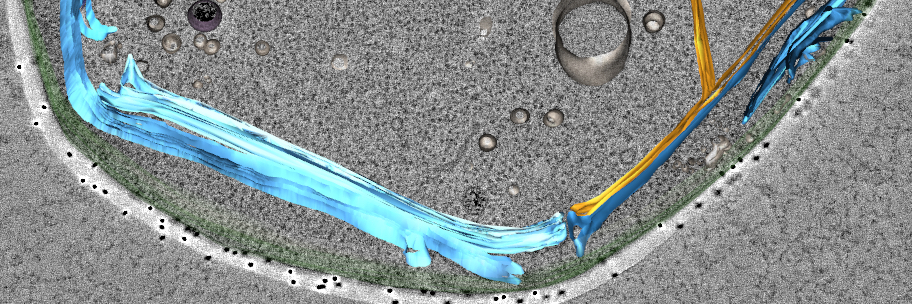
NOMIS researcher Alwin Köhler and colleague Anete Romanauska have successfully transformed cell nuclei, which are typically round, into cell nuclei with edges. This spectacular shape change was accomplished by genetic engineering and observed by advanced imaging. In doing so, the researchers discovered that lipid chemistry dictates both elasticity and robustness of the cell nucleus, making […]


June 8, 2021
Alwin Köhler elected as EMBO member
NOMIS researcher Alwin Köhler has been elected as a member of the European Molecular Biology Organization (EMBO). Every year EMBO selects distinguished scientists who have made outstanding contributions in the life sciences. New members are elected by peers based on individual recommendations by renowned researchers in their respective fields. Köhler studies the functional architecture of […]
