
Hybrid Semiconductor–Superconductor Quantum Devices
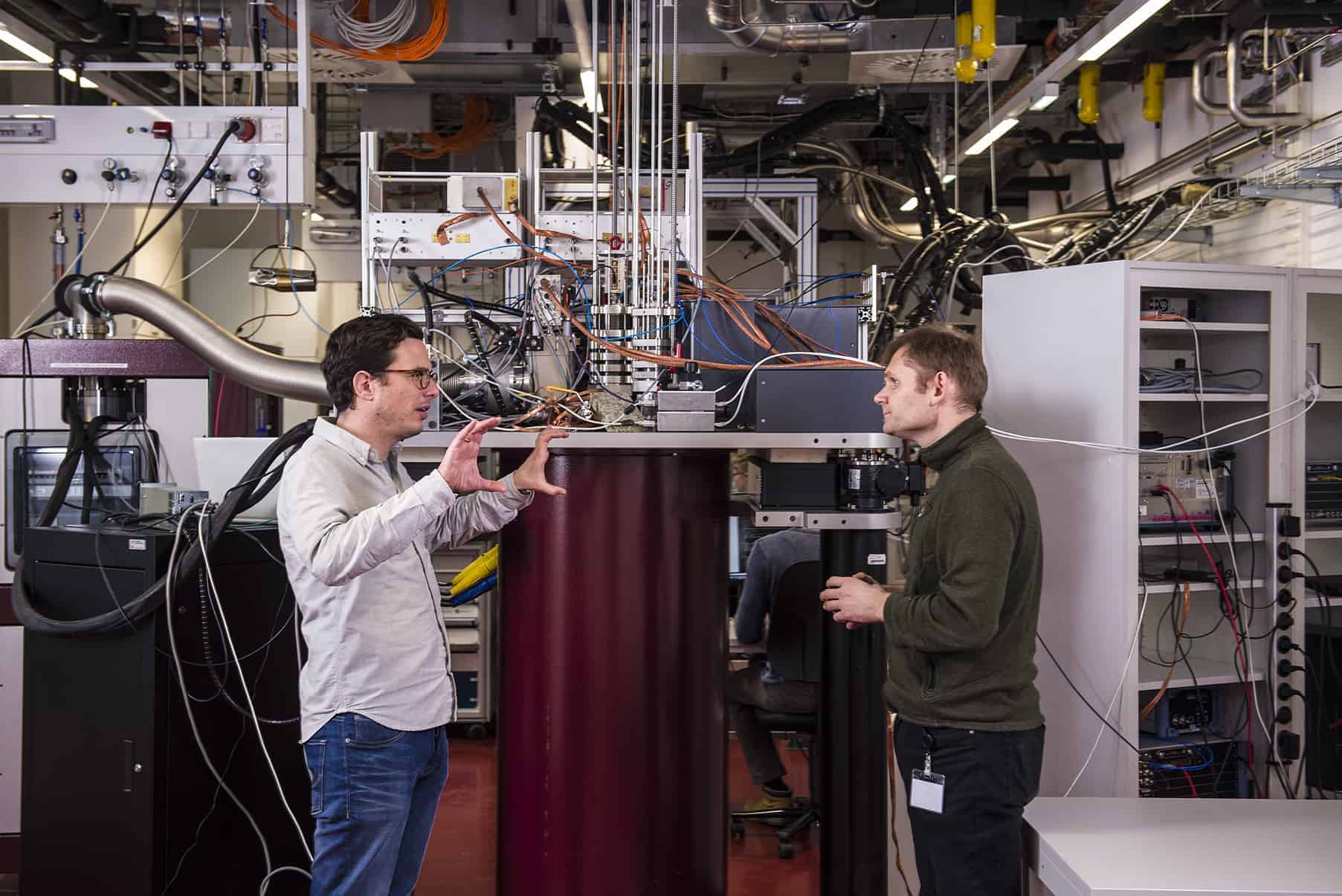

Embedded in the research infrastructure of the Institute of Science and Technology Austria (ISTA), the Hybrid Semiconductor–Superconductor Quantum Devices project aimed to answer some of the fundamental questions of quantum physics. Specifically, the research team investigated how to use the quantum state of microscopic nanofabricated physical systems as building blocks for the elusive vision of a quantum computer—a device that can address problems not solvable with classical computers. Important questions included how to improve the coherence time of superconducting qubits (the basic unit of information in a quantum computer), how to couple distant long-lived spin qubits, and to understand the character of Majorana fermions (quantum particles that are their own antiparticles).
While industry-funded research programs are tackling this frontier of quantum physics with an explicit application in mind, the ISTA research team launched a purely insight-driven, experimental investigation. It included the development of new types of devices consisting of a combination of semiconducting and superconducting elements while focusing on maximizing the quality of individual qubits, so that error correction—which usually requires significant resources—could be kept to a minimum. The project was structured along three research objectives, namely: the coupling of spin qubits to superconducting resonators, the integration of Majorana fermions into superconducting circuits, and the improvement of physical qubits for the hardware layer of a future error-corrected quantum processor.
The project was led by Georgios Katsaros and Johannes Fink at ISTA in Klosterneuburg, Austria.
NOMIS researchers
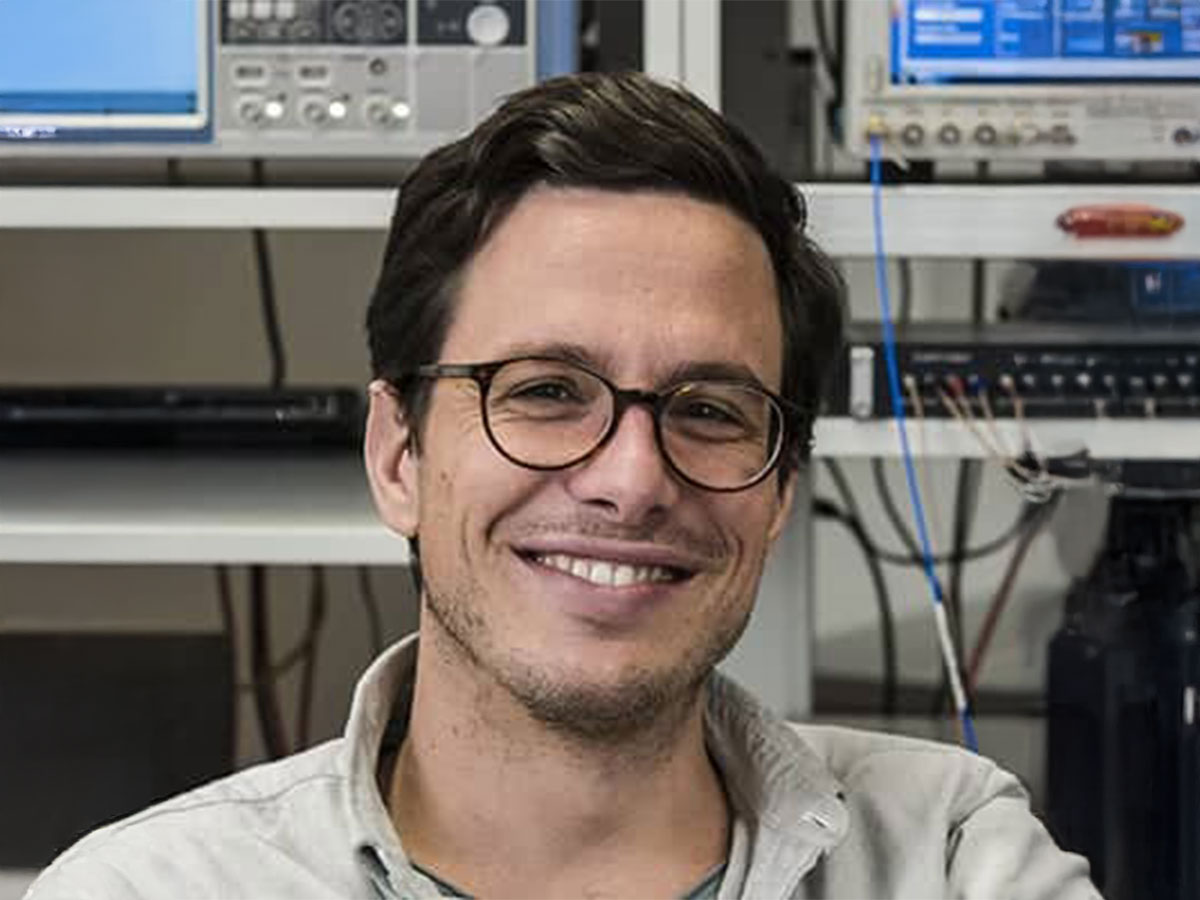
About Johannes Fink Johannes Fink is professor at the Institute of Science and Technology Austria (ISTA). He co-led the Hybrid Semiconductor—Superconductor Quantum Devices project and is currently co-leading the Protected States of Quantum Matter project. Born in Austria, Fink studied physics at the University of Vienna. At ETH Zurich (Switzerland) he conducted a PhD in […]
Professor
Institute of Science and Technology Austria (ISTA)
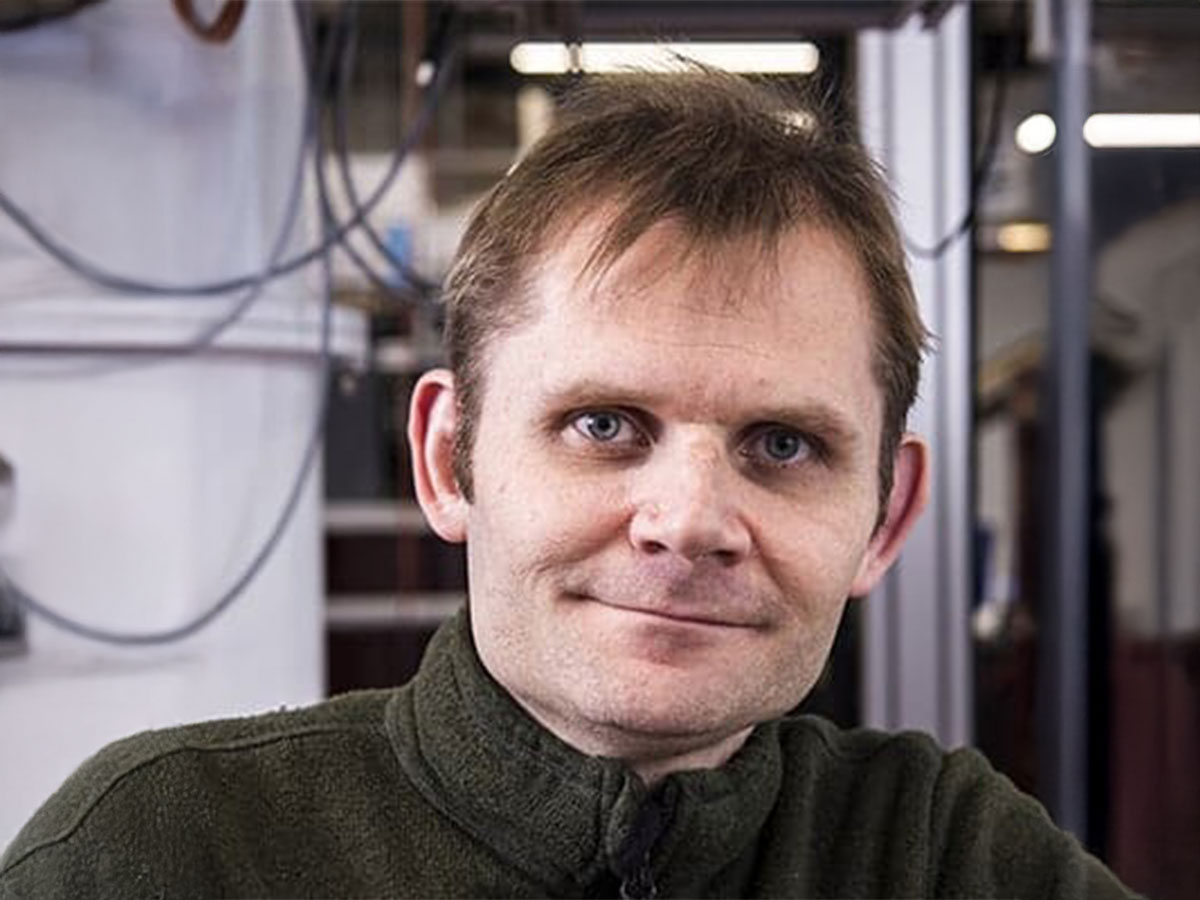
About Georgios Katsaros Georgios Katsaros is professor at the Institute of Science and Technology Austria (ISTA). He co-led the Hybrid Semiconductor—Superconductor Quantum Devices project and is currently co-leading the Protected States of Quantum Matter project. There is an intense effort in information technology to find solutions to the problems emerging from the miniaturization of conventional […]
Professor
Institute of Science and Technology Austria (ISTA)
Project publications

Majorana-like Coulomb spectroscopy in the absence of zero-bias peaks
Hybrid semiconductor–superconductor devices hold great promise for realizing topological quantum computing with Majorana zero modes1–5. However, multiple claims of Majorana detection, based on either tunnelling6–10 or Coulomb blockade (CB) spectroscopy11,12, remain disputed. Here we devise an experimental protocol that allows us to perform both types of measurement on the same hybrid island by adjusting its charging energy via tunable junctions to the normal leads. This method reduces ambiguities of Majorana detections by checking the consistency between CB spectroscopy and zero-bias peaks in non-blockaded transport. Specifically, we observe junction-dependent, even–odd modulated, single-electron CB peaks in InAs/Al hybrid nanowires without concomitant low-bias peaks in tunnelling spectroscopy. We provide a theoretical interpretation of the experimental observations in terms of low-energy, longitudinally confined island states rather than overlapping Majorana modes. Our results highlight the importance of combined measurements on the same device for the identification of topological Majorana zero modes.
Research Fields
Applied Physics, Natural Sciences, Physics & Astronomy
A singlet-triplet hole spin qubit in planar Ge
Spin qubits are considered to be among the most promising candidates for building a quantum processor. Group IV hole spin qubits are particularly interesting owing to their ease of operation and compatibility with Si technology. In addition, Ge offers the option for monolithic superconductor–semiconductor integration. Here, we demonstrate a hole spin qubit operating at fields below 10 mT, the critical field of Al, by exploiting the large out-of-plane hole g-factors in planar Ge and by encoding the qubit into the singlet-triplet states of a double quantum dot. We observe electrically controlled g-factor difference-driven and exchange-driven rotations with tunable frequencies exceeding 100 MHz and dephasing times of 1 μs, which we extend beyond 150 μs using echo techniques. These results demonstrate that Ge hole singlet-triplet qubits are competing with state-of-the-art GaAs and Si singlet-triplet qubits. In addition, their rotation frequencies and coherence are comparable with those of Ge single spin qubits, but singlet-triplet qubits can be operated at much lower fields, emphasizing their potential for on-chip integration with superconducting technologies.
Research Fields
Applied Sciences, Enabling & Strategic Technologies, Nanoscience & Nanotechnology
Converting microwave and telecom photons with a silicon photonic nanomechanical interface
Practical quantum networks require low-loss and noise-resilient optical interconnects as well as non-Gaussian resources for entanglement distillation and distributed quantum computation. The latter could be provided by superconducting circuits but existing solutions to interface the microwave and optical domains lack either scalability or efficiency, and in most cases the conversion noise is not known. In this work we utilize the unique opportunities of silicon photonics, cavity optomechanics and superconducting circuits to demonstrate a fully integrated, coherent transducer interfacing the microwave X and the telecom S bands with a total (internal) bidirectional transduction efficiency of 1.2% (135%) at millikelvin temperatures. The coupling relies solely on the radiation pressure interaction mediated by the femtometer-scale motion of two silicon nanobeams reaching a Vπ as low as 16 μV for sub-nanowatt pump powers. Without the associated optomechanical gain, we achieve a total (internal) pure conversion efficiency of up to 0.019% (1.6%), relevant for future noise-free operation on this qubit-compatible platform.
Research Fields
Natural Sciences, Optics, Physics & Astronomy
Project news

June 4, 2021
Quantum computing with holes: Scientists found a new and promising qubit at a place where there is nothing
In the world of quantum mechanics, researchers can even make empty space, the lack of something, do their bidding. Scientists from NOMIS researcher Georgios Katsaros‘ group at the Institute of Science and Technology (IST) Austria together with an international team of researchers have now created a new setup to control the absence of electrons in a […]

December 16, 2020
Johannes Fink and colleagues demonstrate how to transport microwave quantum information via optical fiber
NOMIS scientist Johannes Fink and colleagues William Hease and Georg Arnold present two transducers that could enable quantum communication between superconducting processors. Their work was published in Nature Communications and PRX Quantum. Johannes Fink Quantum computing could revolutionize the world with absolutely secure communication and more powerful calculations. Currently, exclusively scientists and tech-giants use quantum computers […]

October 29, 2020
Johannes Fink and colleagues build geometric superinductor that breaks resistance quantum “limit”
NOMIS researcher Johannes Fink and his team have built a geometric superinductor that surpasses the resistance quantum “limit.” October 29, 2020• Physics 13, s141 A geometric superinductor made of a tightly wound aluminum wire can achieve an impedance about 5 times larger than a hypothesized fundamental limit. A superinductor is an inductor with an electrical impedance that […]
