
Flashy bugs, hidden toxins: What matador bugs reveal about nature’s chemical defenses
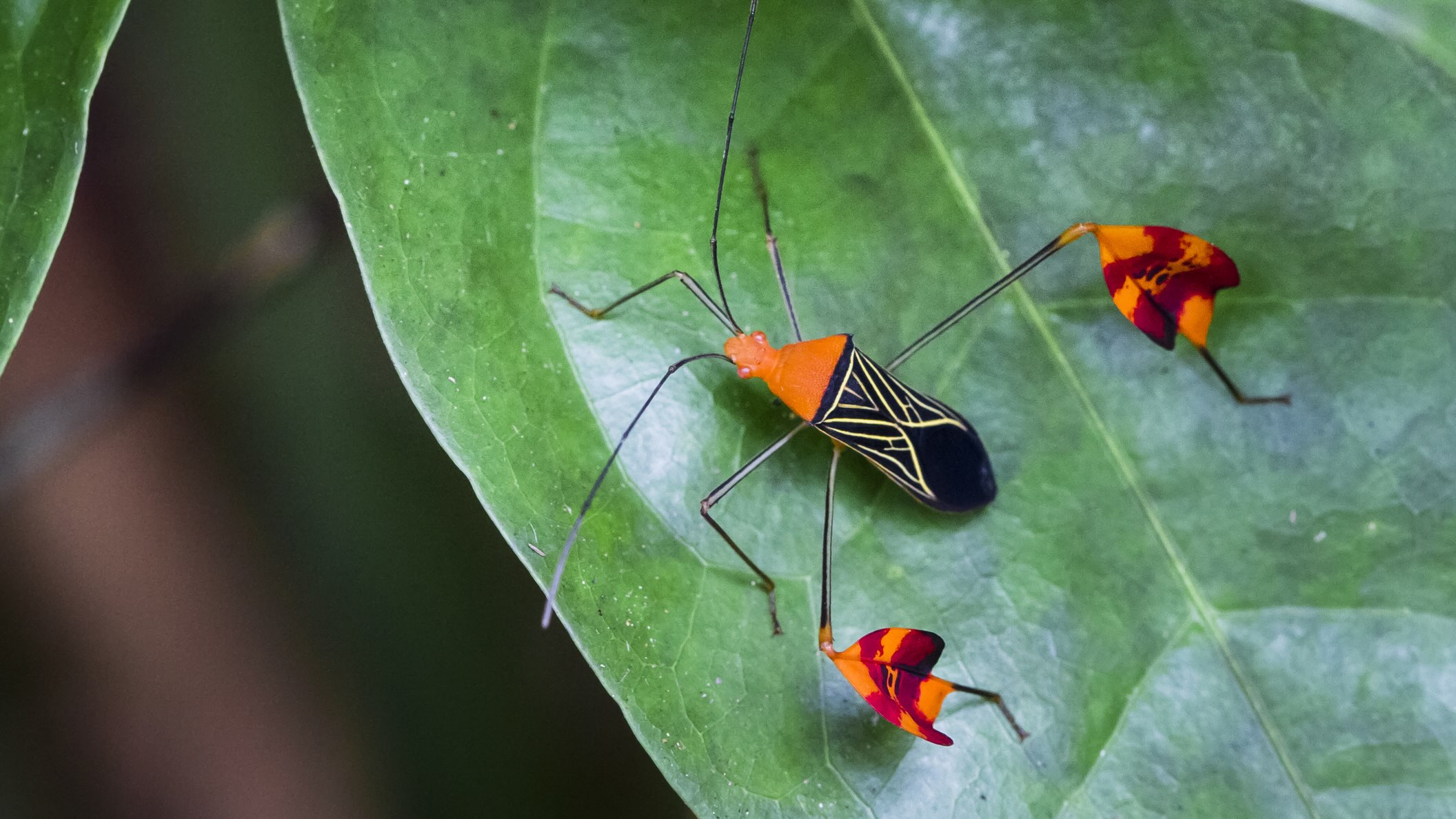
Do matador bugs — and some of their plainer-looking relatives — store poison from the plants they eat? Exploring this question, former NOMIS–STRI Fellow Ummat Somjee, together with collaborators from the Smithsonian Tropical Research Institute and the University of Texas at Austin, found the first evidence that the matador bug accumulates cyanide-producing compounds from eating passionflower plants, storing the toxins in their bodies to deter birds and other predators. The findings were published in the Journal of Chemical Ecology.
Matador bugs are easy to spot: These tropical insects have bright, flag-like legs that serve to deter avian predators. In a study published in the Journal of Chemical Ecology, former NOMIS–STRI Fellow Ummat Somjee and collaborators tested matador bugs (Bitta alipes) and three plainer-looking relatives. They found that matador bugs accumulate cyanide-related chemicals (cyanogens) from the Passiflora plants they eat, storing the toxins in their bodies to deter birds and other predators. Surprisingly, the less colorful cousin species carried even higher cyanogen levels, despite lacking obvious warning colors.
The work also uncovered cyanogens in the bugs’ host plants — prickly pear cactus and yaupon holly — marking the first evidence that these plant families produce cyanide-based defenses. Overall, the findings more than double the number of true bug groups known to stockpile cyanide.
The study suggests chemical defenses are more widespread and diverse than previously thought, and that toxicity doesn’t always come with bright warning signals. This reshapes how we understand predator–prey dynamics, the evolution of warning coloration and the hidden chemical battles playing out in everyday ecosystems.
Read the Journal of Chemical Ecology publication: The Matador Bug and Several Related Leaf-footed Bugs (Hemiptera: Coreidae) Accumulate Cyanogens From their Host Plants
NOMIS researchers

Ummat Somjee is a NOMIS–STRI Fellow at the Smithsonian Tropical Research Institute (STRI) in Panama.
NOMIS Fellow 2025-26
Smithsonian Tropical Research Institute (STRI)
