
Falling Walls Science Summit: Rethinking how we finance science
Published on
November 11, 2026
Organization
How do research institutions work together with philanthropic organizations and public funders to finance the scientific breakthroughs of tomorrow? NOMIS Foundation Managing Director Markus Reinhard addressed this question alongside fellow leaders in philanthropy, public funding and research at the Falling Walls Science Summit 2026 in Berlin, Germany, in a roundtable discussion about successful funding models that enable ambitious, independent science. In a conversation that touched on balancing research priorities, limitations and shared values, one idea kept returning: co-creation.
The session, Who Funds the Future? Rethinking How We Finance Science, which took place on Sunday, November 8, was supported by the Institute of Science and Technology Austria (ISTA) and was moderated by Caroline Montojo of the Dana Foundation. Alongside Reinhard, the panel included Stéphanie Debette of the Paris Brain Institute, Michael Hengartner of the ETH Board (board of the Swiss Federal Institutes of Technology), and Martin W. Hetzer of ISTA.
Possibility and new beginnings
Several panelists described what private funding can make possible. Debette pointed out that research institutions may not be able to pursue ambitious, large-scale global initiatives. “It is possible to access funding [in Europe], but across continents it is quite difficult,” she said. However, private funding partnerships have the ability to cross boundaries, fund for longer periods, and deliver discoveries that benefit all populations.
Hengartner described foundations as partners that can help launch new, risky initiatives. Then, once the research has matured and proven its value to taxpayers, it can then move to the public funding space.
This is where the NOMIS Foundation fits, explained Reinhard. “We enable research that otherwise would not happen,” he said. NOMIS is a foundation that supports and enables pioneering researchers to pursue bold, curiosity-driven science that transcends traditional scientific boundaries. This kind of model can help support academic freedom to pursue new ideas, and it highlights the long-term value of developing partnerships across institutions. A foundation can “step out of the traditional funding avenues, be creative and work collaboratively to co-create with respective research institutes,” said Reinhard.
Hetzer agreed, emphasizing that philanthropy can take on the burden of financing “something that is ‘too crazy’ to even consider for public funding because it is in this category where it will probably fail. But if it doesn’t fail, then it will change the course of science.”
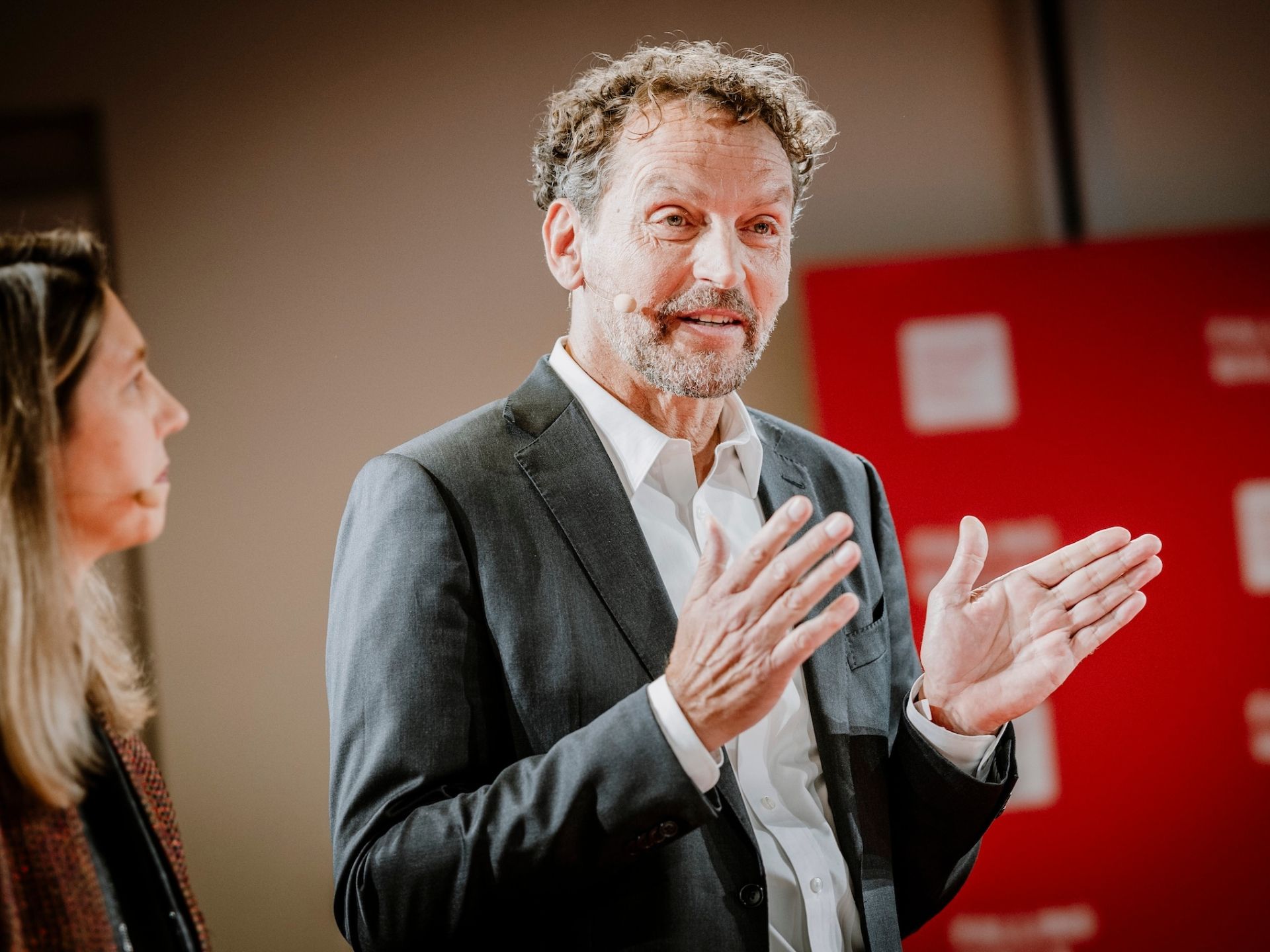
Markus Reinhard (center), managing director of NOMIS, speaks at the Who Funds the Future? Rethinking How We Finance Science session at the Falling Walls Science Summit 2026 in Berlin, Germany. (Photo © Sebastian Rau/photothek.de)
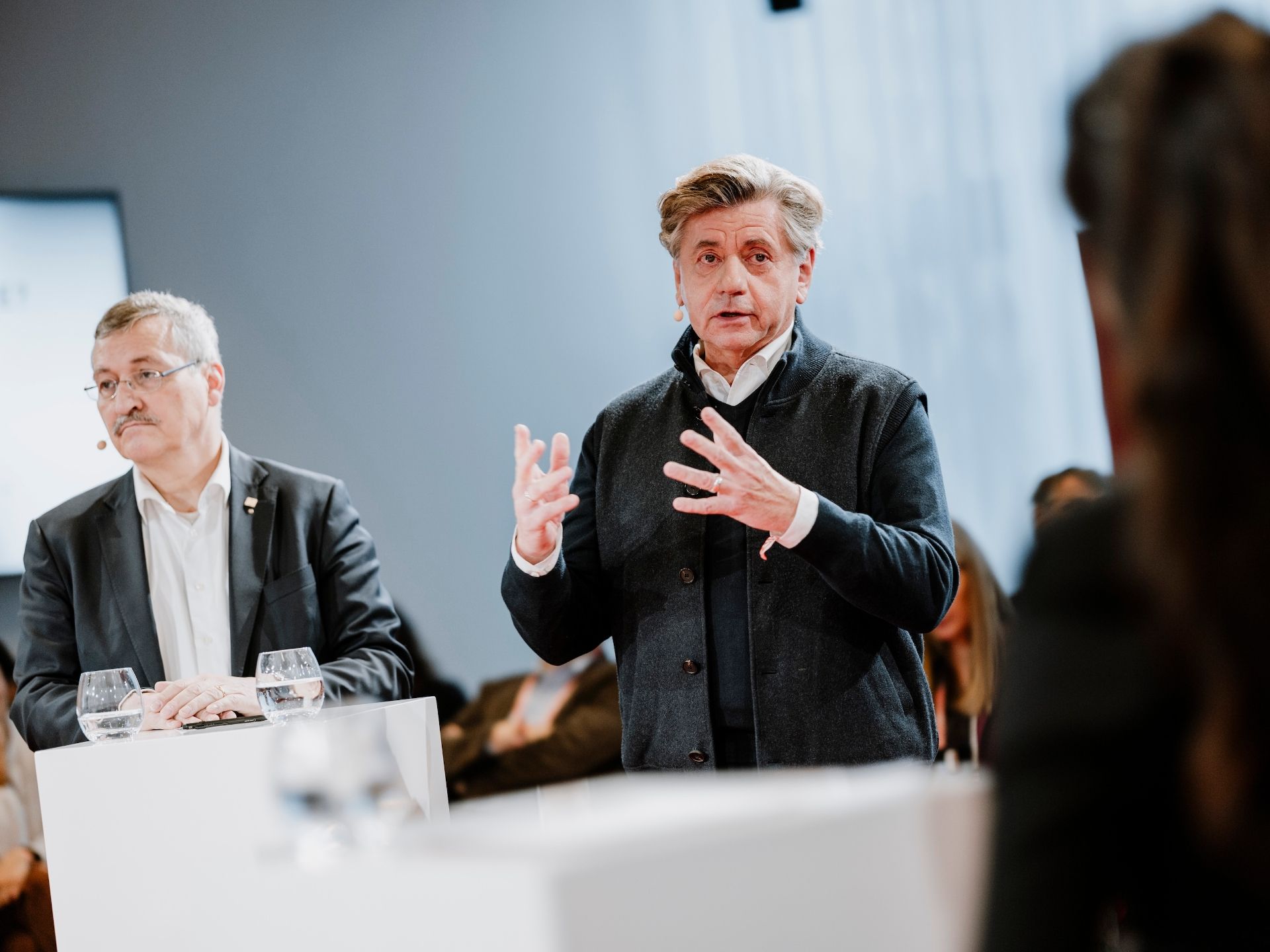
Martin Hetzer, president of ISTA and a NOMIS Board member, speaks at the Who Funds the Future? Rethinking How We Finance Science session at the Falling Walls Science Summit 2026 in Berlin, Germany. (Photo © Sebastian Rau/photothek.de)
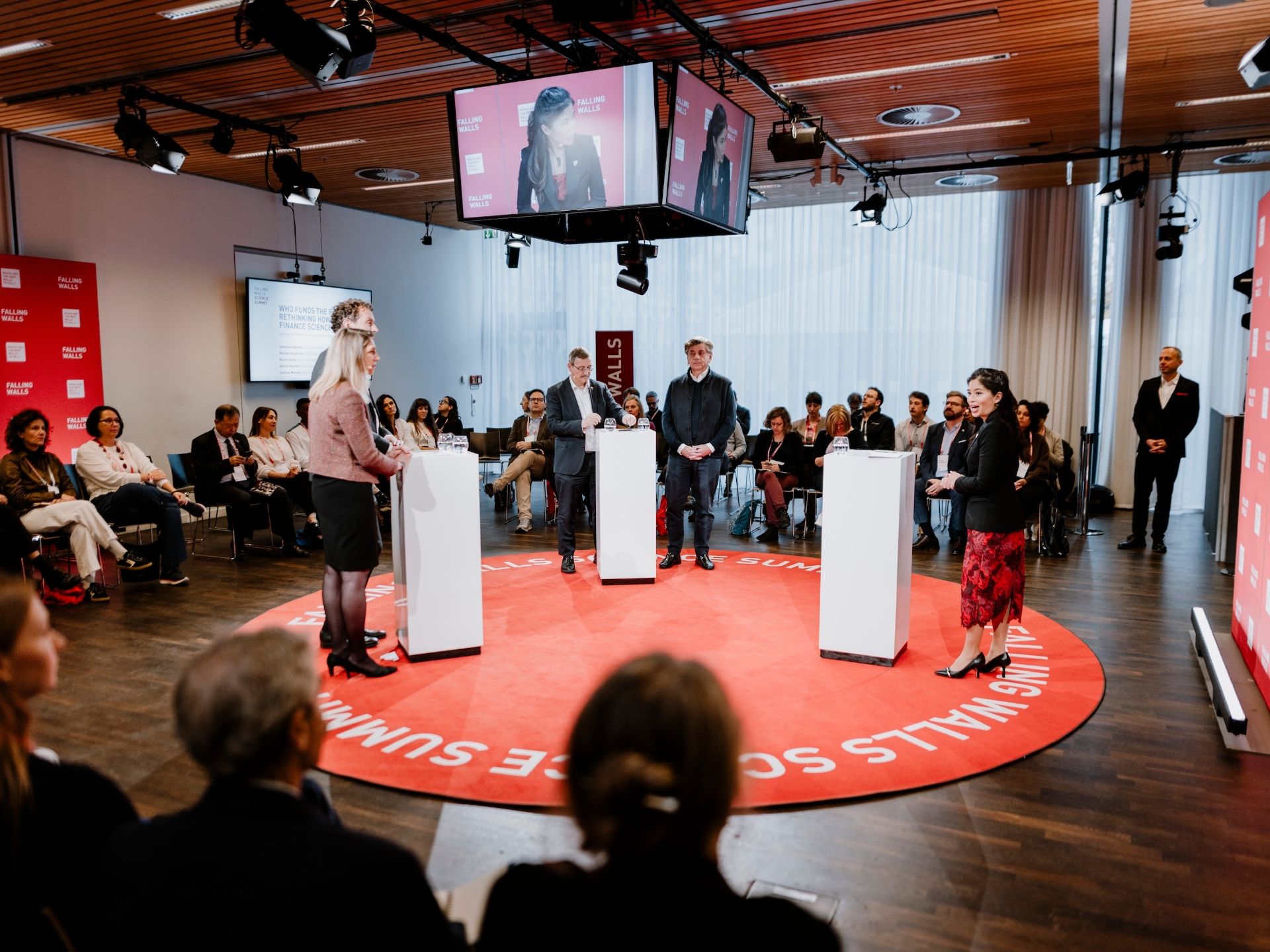
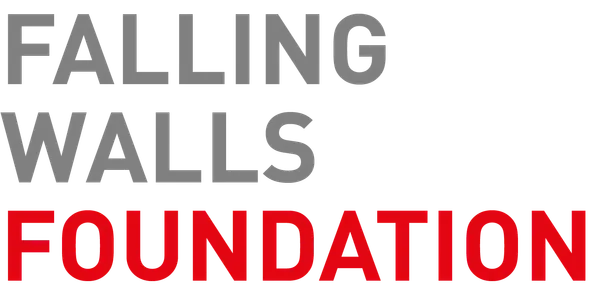
Who Funds the Future? Rethinking How We Finance Science session at the Falling Walls Science Summit 2026 in Berlin, Germany. (Photo © Sebastian Rau/photothek.de)
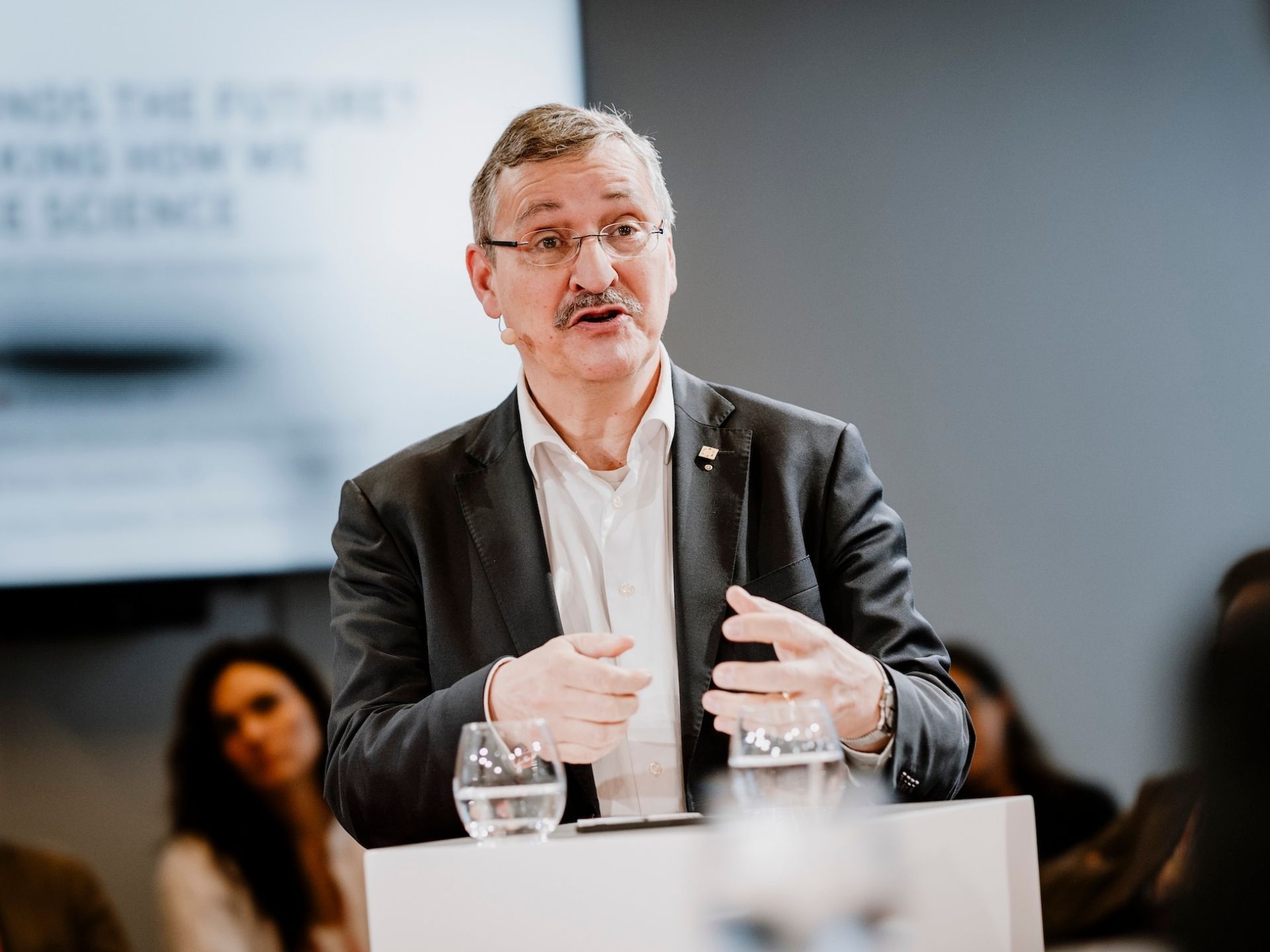
Michael Hengartner, president of the ETH Board and a member of the NOMIS Honorary Council, speaks at the Who Funds the Future? Rethinking How We Finance Science session at the Falling Walls Science Summit 2026 in Berlin, Germany. (Photo © Sebastian Rau/photothek.de)
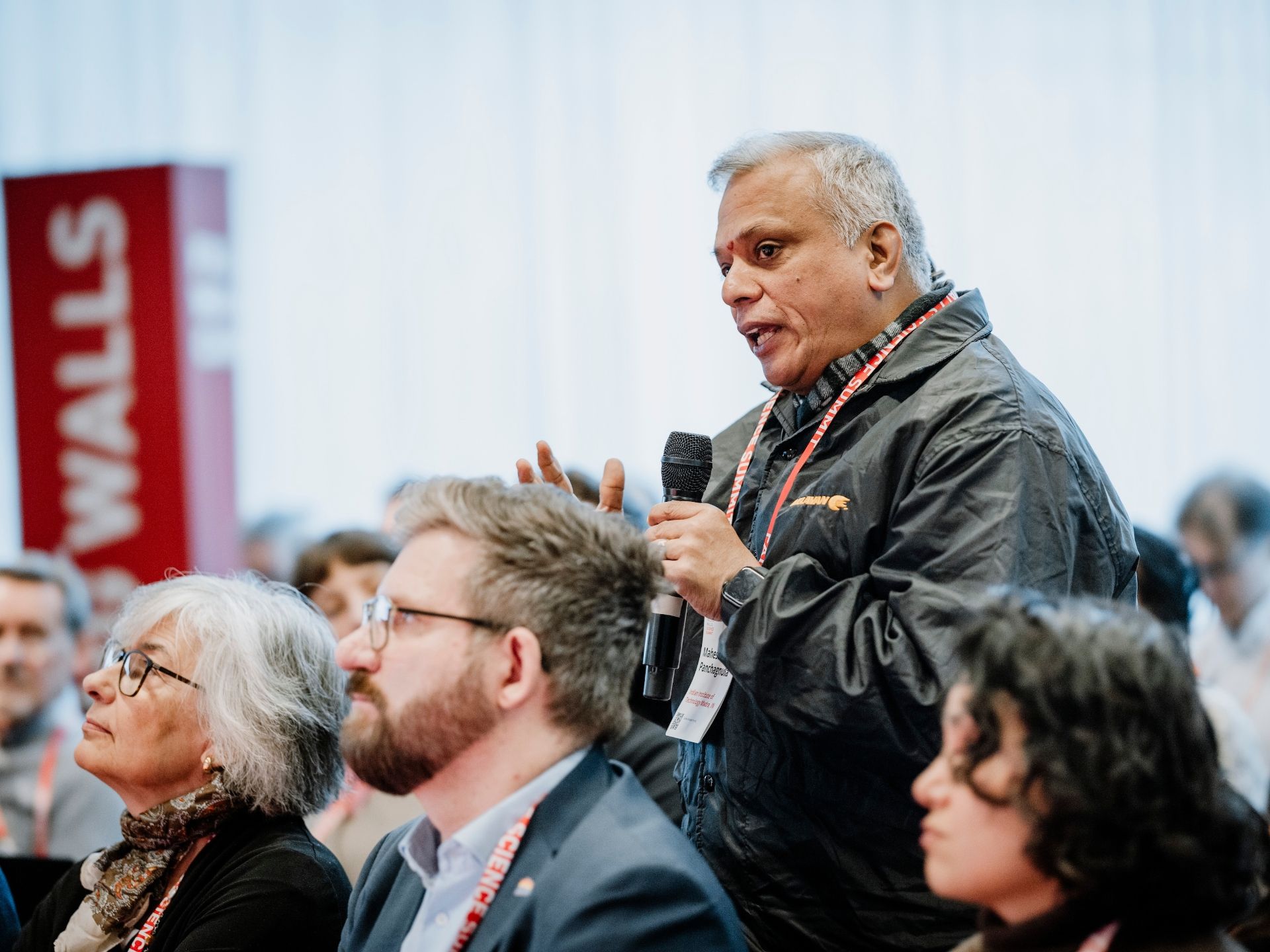
An opportunity for open dialogue: Who Funds the Future? Rethinking How We Finance Science session at the Falling Walls Science Summit 2026 in Berlin, Germany. (Photo © Sebastian Rau/photothek.de)
Markus Reinhard (center), managing director of NOMIS, speaks at the Who Funds the Future? Rethinking How We Finance Science session at the Falling Walls Science Summit 2026 in Berlin, Germany. (Photo © Sebastian Rau/photothek.de)
Martin Hetzer, president of ISTA and a NOMIS Board member, speaks at the Who Funds the Future? Rethinking How We Finance Science session at the Falling Walls Science Summit 2026 in Berlin, Germany. (Photo © Sebastian Rau/photothek.de)
Who Funds the Future? Rethinking How We Finance Science session at the Falling Walls Science Summit 2026 in Berlin, Germany. (Photo © Sebastian Rau/photothek.de)
Michael Hengartner, president of the ETH Board and a member of the NOMIS Honorary Council, speaks at the Who Funds the Future? Rethinking How We Finance Science session at the Falling Walls Science Summit 2026 in Berlin, Germany. (Photo © Sebastian Rau/photothek.de)
An opportunity for open dialogue: Who Funds the Future? Rethinking How We Finance Science session at the Falling Walls Science Summit 2026 in Berlin, Germany. (Photo © Sebastian Rau/photothek.de)
Co-creation begins with shared values
Reinhard returned to co-creation as a time investment to build lasting collaborations. The starting point, he said, is not money. “First and foremost we need to explore whether we have shared values.” For NOMIS, that means asking whether an institution, like current partners ETH Zurich or ISTA, provides a conducive environment for free, basic and fundamental research. The institution, in turn, needs to judge whether NOMIS is the right partner. It takes time, trust, energy, and willingness to learn to go on this journey together. “This is the foundation for everything for which you are going to build afterwards,” he said.
Going forward: Which walls come down?
Montojo closed the discussion with a question: What is the next step that we have to take to break down the wall to funding that would give exceptional ideas the freedom to thrive?
Hengartner pointed to geography: “Money is unevenly distributed; therefore foundations are unevenly distributed in this world, but ideas are not.” He encouraged foundations to look beyond their usual geographic or institutional boundaries for bold ideas. Hetzer proposed changing mindsets about the pathway basic research takes from discovery to commercialization. Rather than think of these steps as existing in silos, people should treat research development as a continuum, he said. Debette also called for breaking silos and building bridges across sectors and globally to co-create the funding models of the future.
Reinhard answered in two words. “It is courage—courage and confidence,” he said. “I think you just need to try it. One of the main tasks for our foundation is to take risks. Sometimes the wall isr fear, and you can tear it down with courage.”
NOMIS Foundation
NOMIS’ vision is to “create a spark” in the world of science by enabling and supporting pioneering research in the natural sciences, social sciences and the humanities that benefits humankind and our planet. Our mission is to support and enable insight-driven science across all disciplines, focusing on researchers who put forth bold new ideas, exhibit a pioneering spirit and seek to inspire the world around them.
Feature image: Who Funds the Future? Rethinking How We Finance Science session at the Falling Walls Science Summit 2026 in Berlin, Germany. (Photo © Sebastian Rau/photothek.de)
