Could a dietary supplement make the difference between life and death during illness?
Published on
January 23, 2026
Professor in the NOMIS Center for Immunobiology and Microbial Pathogenesis, director of the Molecular and Systems Physiology Laboratory, member of the Gene Expression Laboratory, and Helen McLoraine Developmental Chair
Organization

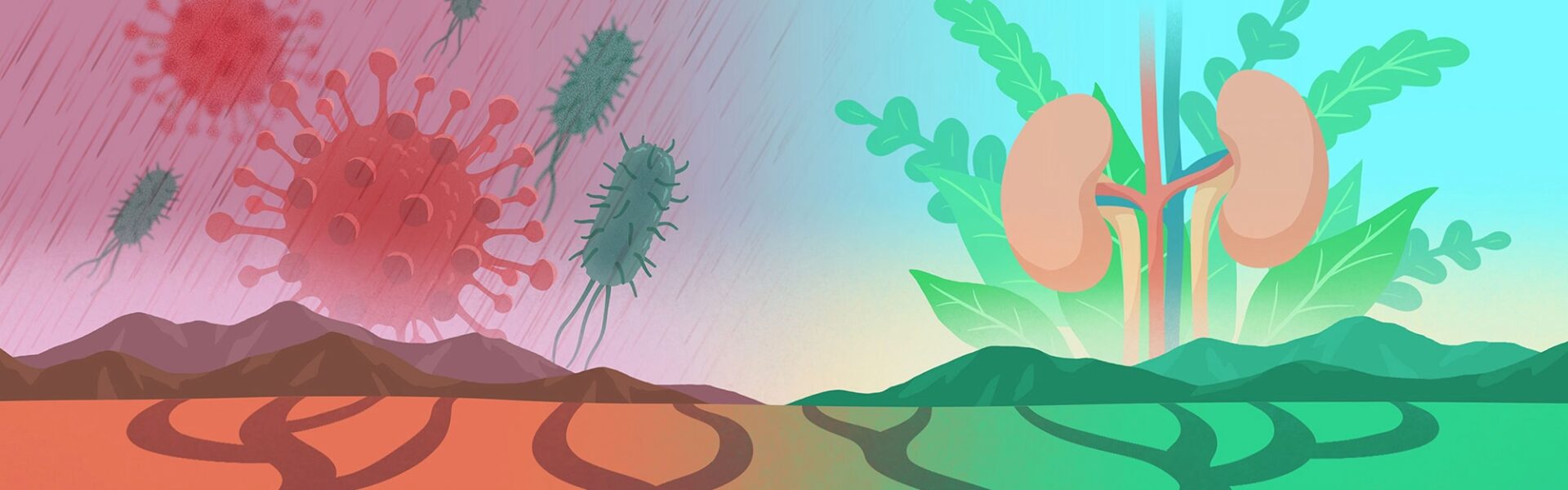
Inflammation is a critical aspect of the body’s immune response. However, some infections can provoke excessive inflammation, leading to tissue damage or even death. NOMIS researcher Janelle Ayres and Salk Institute scientists uncovered a key role the kidneys play in clearing inflammation from the body, showing that an amino acid supplement protects mice against inflammation-related injury and death. Their findings were published in Cell Metabolism.
As soon as you are wounded—whether from grabbing a hot pan or contracting the flu—you begin a unique journey through variable symptoms toward either recovery or death. This journey is called your disease trajectory, and it varies from person to person based on history, sex, age, and many other factors. Salk scientist Janelle Ayres, PhD, has spent decades unraveling the ways the body directs this journey—why some get sick and die while others go unscathed, and what sorts of methods could be used to shift trajectories of disease and death to ones of health and survival.
For many, across the spectrum of diverse infections and injuries, inflammation is the ultimate cause of a downward trajectory toward death. While inflammation serves an important protective purpose in sounding alarms and recruiting immune cells, too much inflammation can lead to tissue damage and even death. Inflammation is thus a double-edged sword—a powerful weapon against intruders but an equally powerful generator of bodily damage if not properly regulated.
Since infections are some of the strongest drivers of inflammation-induced damage, the Salk team used a mouse model of infection to find that dietary supplementation of the amino acid methionine protected infected mice against inflammation-related wasting, blood-brain barrier dysfunction, and death. Methionine was accomplishing all this by boosting kidney filtration, revealing an underappreciated role the kidneys play in a successful journey from infection back to health.
The findings, published in Cell Metabolism on January 22, 2026, reveal the big impact that small dietary tweaks can have on disease trajectory, lighting the way to therapeutic strategies that steer patients from death to recovery. Methionine supplementation may be a useful tool for a variety of inflammatory conditions, as well as for patients with kidney disease or failure, or those undergoing dialysis.
“Our study indicates that small biological differences, including dietary factors, can have large effects on disease outcomes,” says senior author Ayres, professor and holder of the Salk Institute Legacy Chair at Salk, as well as a Hughes Medical Institute Investigator. “Our discovery of a kidney-driven mechanism that limits inflammation, together with the protective effects of methionine supplementation in mice, points toward the potential of nutrition as a mechanistically informed medical intervention that can direct and optimize the paths people take in response to insults that cause disease.”
What is inflammation?
Inflammation is the immune system’s response to any invader. Whether that is a pathogen inside you or a splinter in your finger, immune cells rush to the scene to facilitate the healing process. As those immune cells arrive, they amplify the invader alarms using proteins called pro-inflammatory cytokines.
Striking a balance between too much and too little inflammation is a tricky task. Research on this balancing act has mainly focused on how the immune system switches its inflammatory responses on and off. Ayres’s team is shifting the focus from these binary on/off mechanisms to studying how the body toggles the immune response higher or lower through the release and accumulation of pro-inflammatory cytokines.
“Pro-inflammatory cytokines are ultimately what leads to sickness and death in a lot of cases,” says first author Katia Troha, PhD, a postdoctoral researcher in Ayres’s lab. “The immune system has to balance inflammation to attack the invader without harming healthy cells in the body. Our job is to find the mechanisms it uses to do that, so that we can target them to improve patient outcomes.”
NOMIS researchers

About Janelle Ayres Janelle Ayres is a professor in the NOMIS Center for Immunobiology and Microbial Pathogenesis, director of the Molecular and Systems Physiology Laboratory, a member of the Gene Expression Laboratory and holds the Helen McLoraine Developmental Chair at the Salk Institute for Biological Studies (La Jolla, US). She is leading the Harnessing Physiological […]
Professor in the NOMIS Center for Immunobiology and Microbial Pathogenesis, director of the Molecular and Systems Physiology Laboratory, member of the Gene Expression Laboratory, and Helen McLoraine Developmental Chair
Salk Institute for Biological Studies
NOMIS Project(s)
Harnessing Physiological Health to Treat Disease
Our methods for treating diseases are, unfortunately, detached from our understanding of the mechanisms that keep us healthy. This is in large part because health is believed to be a passive process and disease occurs when there is a break in the system. As a result, biological research has reduced organisms to their various parts […]
NOMIS researcher
Project period
2019 – 2022