
Understanding the Instinctive Drive for Social Interactions
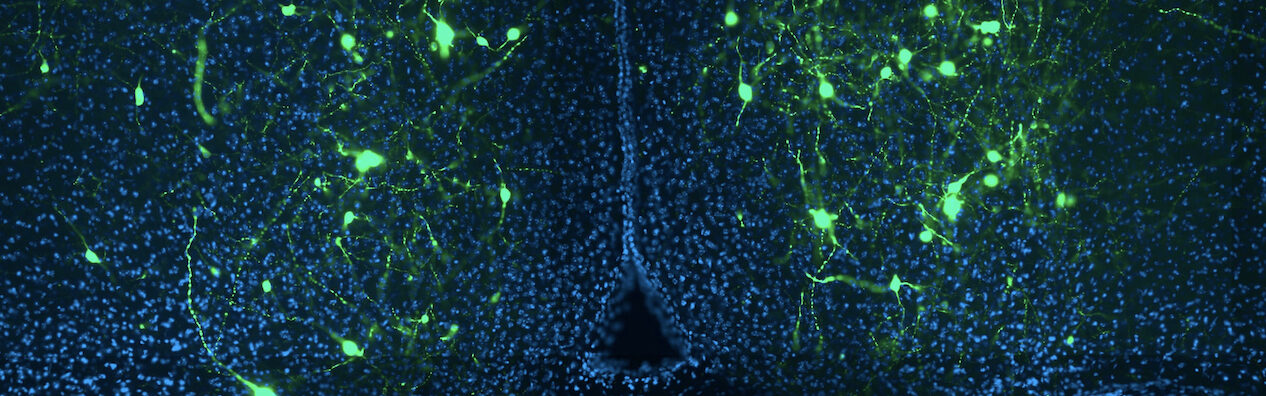

Central to the human experience, people crave social interactions and invest considerable amounts of time and energy fostering social bonds. By contrast, social isolation leads to a wide range of detrimental mental and physical outcomes. Strikingly, the inability to engage in fruitful social interactions is one of the most debilitating aspects of mental illness, such as autism, depression, and schizophrenia. Similarly, social isolation in animals leads to abnormal brain activity and behaviors, suggesting that social interaction is a fundamental need in animal and human lives. To date, how this need is generated and regulated by specific brain activity remains largely unknown.
Our project, Understanding the Instinctive Drive for Social Interactions, seeks to gain a brain-wide and mechanistic understanding of the neural control of social interactions at the molecular, cellular and circuit levels. We wish to identify the specific neuronal populations engaged in social behavior and define how discrete circuits are connected to each other to ensure proper behavior control. In recent efforts, we uncovered brain-wide circuit mechanisms underlying the control of parental behaviors in males and females and established the first spatially and functionally informed cell-type atlas of the preoptic hypothalamus, a key brain area underlying the control of social behaviors.
In this project, we hope to gain a mechanistic understanding of animal instinctive appetite for social interactions. For this purpose, we will combine molecular, genetic and functional approaches to gain a brain-wide understanding of circuits underlying social need and explore the neural mechanisms governing the emergence of social appetite during development and their interactions with circuits regulating other physiological needs.
The project is being led by Catherine Dulac at Harvard University in Cambridge, US.
NOMIS researchers

About Catherine Dulac Catherine Dulac is a 2021 NOMIS Awardee and has been a Howard Hughes Medical Institute Investigator since 1997, the Higgins Professor of Molecular and Cellular Biology at Harvard University since 2001 and the Lee and Ezpeleta Professor of Arts and Sciences at Harvard since 2018. She is leading the project Understanding the […]
Howard Hughes Medical Institute Investigator, the Higgins Professor of Molecular and Cellular Biology and the Lee and Ezpeleta Professor of Arts and Sciences
Harvard University
Project publications
The new frontier in understanding human and mammalian brain development
Neurodevelopmental disorders that cause cognitive, behavioural or motor impairments affect around 15% of children and adolescents worldwide1, with diagnoses of profound autism and attention deficit hyperactivity disorder increasing in the USA and contributing to a major economic burden2,3. Yet the origins and mechanisms of these conditions remain poorly understood, limiting progress in therapies. Comprehensive cell atlases of the developing human brain, alongside those of model organisms such as mice and non-human primates, are now providing high-resolution measures of gene expression, cell-type abundance and spatial distribution. In this Perspective, we highlight recent studies that have identified novel developmental cell populations, revealed conserved and divergent patterns of cell genesis, migration and maturation across species, and begun testing hypotheses that link them to processes ranging from transcriptional control of cell fate specification to the emergence of complex behaviours. We present remaining conceptual and technical challenges and provide an outlook on how further studies of human and mammalian brain development can empower a deeper understanding of neurodevelopmental and neuropsychiatric disorders. Future efforts expanding to additional developmental stages, including adolescence, as well as whole-brain, multimodal and cross-species integration, will yield new insights into how development shapes the brain. These atlases promise to serve as essential references for unravelling mechanisms of brain function and disease vulnerability, and for advancing precision medicine.
Research Fields
Biology, Biomedical Research, Developmental Biology, Health Sciences, Molecular Biology, Natural Sciences, Neuroscience
Sensory input, sex and function shape hypothalamic cell type development
Mammalian behaviour and physiology undergo major changes in early life. Young animals rely on conspecifics to meet their needs and start showing nutritional independence and sex-specific social interactions at weaning and puberty, respectively. How neuronal populations regulating homeostatic functions and social behaviours develop during these transitions remains unclear. We used paired transcriptomic and chromatin accessibility profiling to examine the developmental trajectories of neuronal populations in the hypothalamic preoptic region, where cell types with key roles in physiological and behavioural control have been identified1,2,3,4,5,6. These data show a marked diversity of developmental trajectories shaped by the sex of the animal, and the location and behavioural or physiological function of the corresponding cell types. We identify key stages of preoptic development, including early diversification, perinatal emergence of sex differences, postnatal maturation and refinement of signalling networks, and nonlinear transcriptional changes accelerating at the time of weaning and puberty. We assessed preoptic development in various sensory mutants and find a major role for vomeronasal sensing in the timing of preoptic cell type maturation. These results provide new insights into the development of neurons controlling homeostatic functions and social behaviours and lay ground for examining the dynamics of these functions in early life.
Research Fields
Biochemistry & Molecular Biology, Biology, Biomedical Research, Developmental Biology, Health Sciences, Microbiology, Molecular Biology, Natural Sciences, Neuroscience
A hypothalamic circuit underlying the dynamic control of social homeostasis
Social grouping increases survival in many species, including humans1,2. By contrast, social isolation generates an aversive state (‘loneliness’) that motivates social seeking and heightens social interaction upon reunion3,4,5. The observed rebound in social interaction triggered by isolation suggests a homeostatic process underlying the control of social need, similar to physiological drives such as hunger, thirst or sleep3,6. In this study, we assessed social responses in several mouse strains, among which FVB/NJ mice emerged as highly, and C57BL/6J mice as moderately, sensitive to social isolation. Using both strains, we uncovered two previously uncharacterized neuronal populations in the hypothalamic preoptic nucleus that are activated during either social isolation or social rebound and orchestrate the behaviour display of social need and social satiety, respectively. We identified direct connectivity between these two populations and with brain areas associated with social behaviour, emotional state, reward and physiological needs and showed that mice require touch to assess the presence of others and fulfil their social need. These data show a brain-wide neural system underlying social homeostasis and provide significant mechanistic insights into the nature and function of circuits controlling instinctive social need and for the understanding of healthy and diseased brain states associated with social context.
Research Fields
Behavioral Science & Comparative Psychology, Biochemistry & Molecular Biology, Biology, Biomedical Research, Health Sciences, Natural Sciences, Neuroscience, Psychology & Cognitive Sciences
Project news
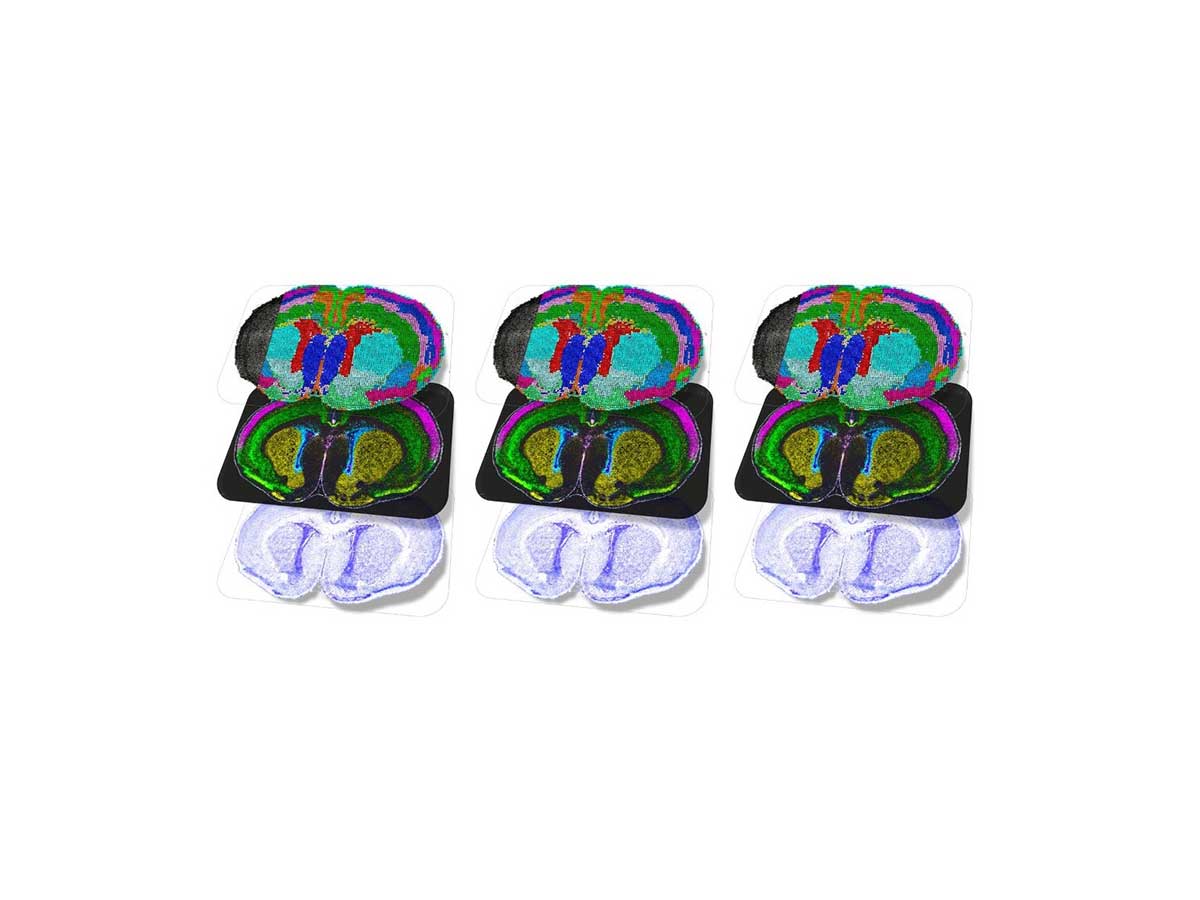

NOMIS Awardee Catherine Dulac is part of a global consortium of scientists that has created the first and most detailed “developmental maps” of the mammalian brain (from mouse to human) to date, taking the first critical steps in unraveling the mystery of early brain development and the vital role it plays in health and disease. Life-altering neurodevelopmental disorders […]


NOMIS Awardee Catherine Dulac and her research team have discovered that the brain processes social needs in a similar way to basic survival needs like food, water and sleep, illustrating how fundamental social interactions are to good health. Their findings were published in Nature. Food, water — and a friendly face Health professionals view social […]

November 8, 2021
NOMIS Award presented to four pioneering scientists
Recognizing their outstanding contributions to the advancement of science and human progress through their pioneering, collaborative research, the 2021 as well as the 2020 NOMIS Distinguished Scientist and Scholar Award was presented to Catherine Dulac, Robert Ewers, Ronald M. Evans and Anthony Hyman at a ceremony at the Kongresshaus in Zurich, Switzerland, on Oct. 7, […]
