

Richa Singh
NOMIS Fellow 2026-28
Organization
Smithsonian Tropical Research Institute (STRI)

About Richa Singh
Richa Singh is a NOMIS–STRI Fellow at the Smithsonian Tropical Research Institute (STRI) in Panama.
Originally from India, Singh earned her PhD at the Indian Institute of Science Education and Research (IISER) Mohali, where she studied acoustic communication in field crickets. As a Fulbright Visiting Scholar, she pursued postdoctoral research at Purdue University in the US, examining how frog-biting mosquitoes use their antennae as sophisticated auditory organs to detect frog calls and locate hosts in complex environments.
Research focus
A sensory biologist, Singh is fascinated by how animals — in particular insects — perceive, communicate and respond to the world around them. Her work centers on the concept of umwelt: the idea that each animal experiences its own unique sensory world. Drawing on this framework, she studies the structures, mechanisms, and functions of sensory systems that shape species-specific perception, communication, and responses to changing environments.
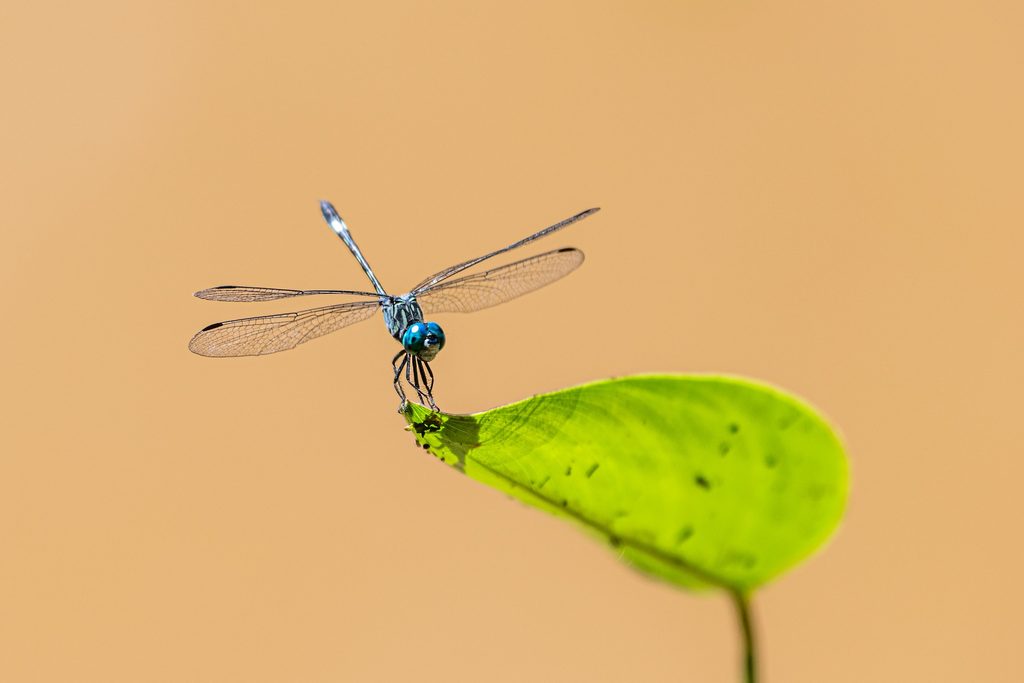
As a NOMIS Fellow, Singh is now extending her work to the sensory biology of predator–prey interactions in dragonflies, focusing on modalities beyond vision. While dragonflies are best known for their highly specialized visual and neural systems, vision is only one part of their sensory world. Her current research explores electrostatics as a novel sensory modality in predator–prey encounters, broadening our understanding of the dragonfly umwelt and how multiple senses shape interactions in complex environments. This work opens a fundamentally new dimension of insect sensory biology and is establishing a new research direction in the tropics, at the intersection of biophysics and behavioral ecology. Studying crickets, mosquitoes and dragonflies, her research is united by a single guiding question: How does an animal’s sensory world shape the way it communicates, makes decisions and interacts with other organisms?
