
Professorship of Cryo-Electron Microscopy, ETH Zurich
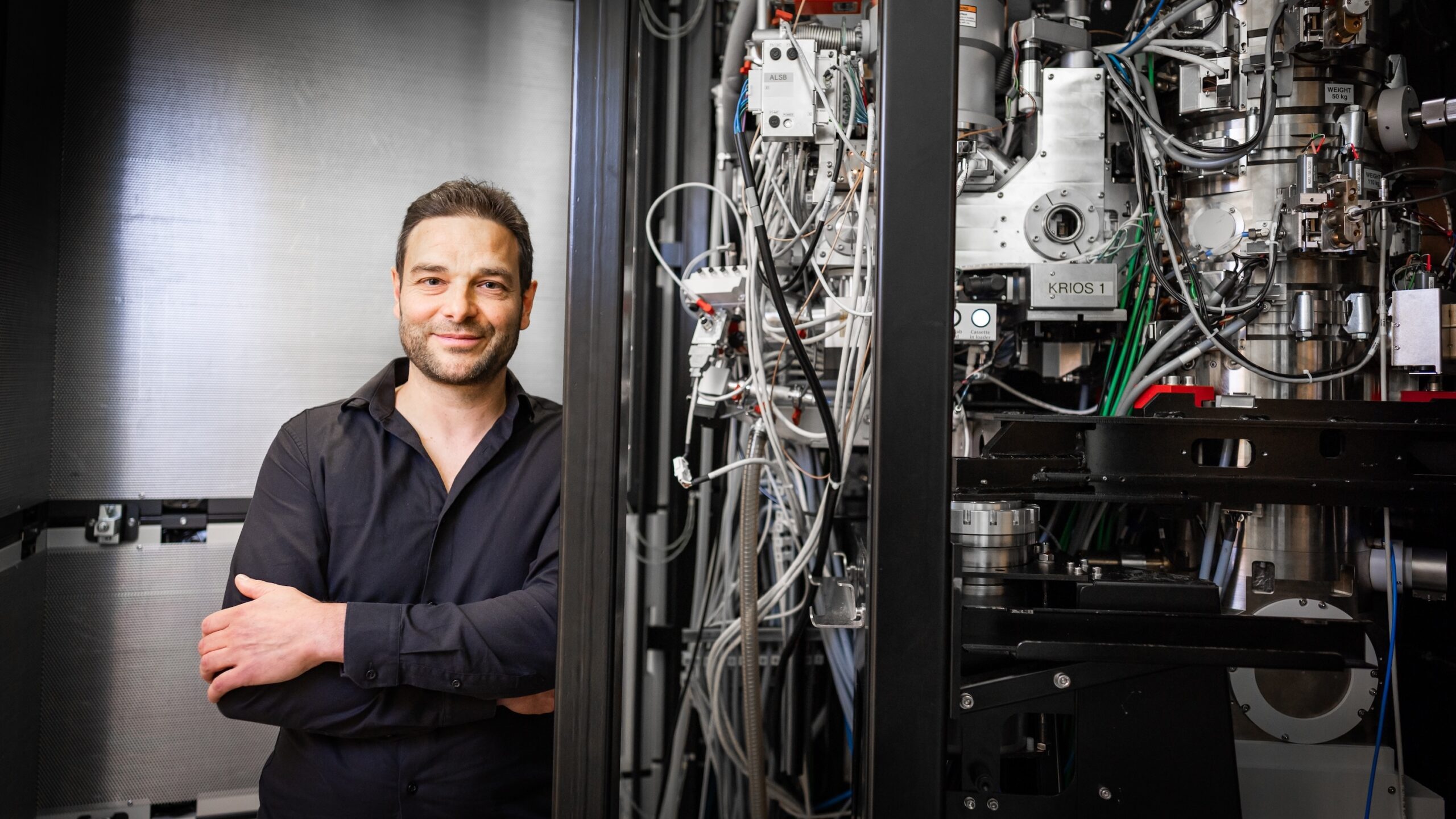

Visualizing biomolecules at atomic resolution is essential for understanding the complex biological processes that drive human disease. Unlike conventional electron microscopes, which can alter the very molecular structures they are trying to observe, cryo-electron microscopy (cryo-EM) rapidly freezes biomolecules mid-movement at cryogenic temperatures. This enables scientists to capture viruses and protein complexes with unprecedented resolution and without compromising their structural integrity.
To expand this frontier of structural biology, we established the Professorship of Cryo-Electron Microscopy at ETH Zurich, in cooperation with the Monique Dornonville de la Cour Foundation. Operating within the Department of Biology, the professorship leads an independent research group that utilizes advanced techniques like cryo-electron tomography to image macromolecular machines in their natural cellular context. By investigating how these molecules mediate cell-cell interactions, the team advances the foundational understanding required to pioneer new antibiotic and drug delivery strategies. By integrating this critical work into the department’s broader research ecosystem, the professorship actively catalyzes the interdisciplinary projects that bridge structural biology and personalized medicine.
People
About Martin Pilhofer Martin Pilhofer is Professor of Cryo-Electron Microscopy at ETH Zurich (Switzerland). Born in Germany, Pilhofer studied biology at the University of Bayreuth (Germany) and at the Technical University of Munich (TUM; Germany). He completed his PhD in microbiology with Karl-Heinz Schleifer at the TUM. From 2008 to 2013, he joined Grant Jensen’s […]
Professor of Cryo-Electron Microscopy
ETH Zurich
1 of 1 People
Publications

Microtubules in Asgard archaea
Research Fields
Biology, Biomedical Research, Evolutionary Biology, Microbiology, Molecular Biology, Natural Sciences

Archaeal type six secretion system mediates contact-dependent antagonism
Microbial communities are shaped by cell-cell interactions. Although archaea are often found in associations with other microorganisms, the mechanisms structuring these communities are poorly understood. Here, we report on the structure and function of haloarchaeal contractile injection systems (CISs). Using a combination of functional assays and time-lapse imaging, we show that Halogeometricum borinquense exhibits antagonism toward Haloferax volcanii by inducing cell lysis and inhibiting proliferation. This antagonism is contact-dependent and requires a functional CIS, which is encoded by a gene cluster that is associated with toxin-immunity pairs. Cryo–focused ion beam milling and imaging by cryo–electron tomography revealed that these CISs are bound to the cytoplasmic membrane, resembling the bacterial type six secretion systems (T6SSs). We show that related T6SS gene clusters are conserved and expressed in other haloarchaeal strains, which exhibit antagonistic behavior. Our data provide a mechanistic framework for understanding how archaea may shape microbial communities and affect the food webs they inhabit.
Research Fields
Microbiology

Mechanism of bacterial predation via ixotrophy
Ixotrophy is a contact-dependent predatory strategy of filamentous bacteria in aquatic environments for which the molecular mechanism remains unknown. We show that predator-prey contact can be established by gliding motility or extracellular assemblages we call “grappling hooks.” Cryo–electron microscopy identified the grappling hooks as heptamers of a type IX secretion system substrate. After close predator-prey contact is established, cryo–electron tomography and functional assays showed that puncturing by a type VI secretion system mediated killing. Single-cell analyses with stable isotope–labeled prey revealed that prey components are taken up by the attacker. Depending on nutrient availability, insertion sequence elements toggle the activity of ixotrophy. A marine metagenomic time series shows coupled dynamics of ixotrophic bacteria and prey. We found that the mechanism of ixotrophy involves multiple cellular machineries, is conserved, and may shape microbial populations in the environment.
Research Fields
Microbiology
FilamentID reveals the composition and function of metabolic enzyme polymers during gametogenesis
Gamete formation and subsequent offspring development often involve extended phases of suspended cellular development or even dormancy. How cells adapt to recover and resume growth remains poorly understood. Here, we visualized budding yeast cells undergoing meiosis by cryo-electron tomography (cryoET) and discovered elaborate filamentous assemblies decorating the nucleus, cytoplasm, and mitochondria. To determine filament composition, we developed a “filament identification” (FilamentID) workflow that combines multiscale cryoET/cryo-electron microscopy (cryoEM) analyses of partially lysed cells or organelles. FilamentID identified the mitochondrial filaments as being composed of the conserved aldehyde dehydrogenase Ald4ALDH2 and the nucleoplasmic/cytoplasmic filaments as consisting of acetyl-coenzyme A (CoA) synthetase Acs1ACSS2. Structural characterization further revealed the mechanism underlying polymerization and enabled us to genetically perturb filament formation. Acs1 polymerization facilitates the recovery of chronologically aged spores and, more generally, the cell cycle re-entry of starved cells. FilamentID is broadly applicable to characterize filaments of unknown identity in diverse cellular contexts.
Research Fields
Biology, Microbiology

Waves of regulated protein expression and phosphorylation rewire the proteome to drive gametogenesis in budding yeast
Sexually reproducing eukaryotes employ a developmentally regulated cell division program—meiosis—to generate haploid gametes from diploid germ cells. To understand how gametes arise, we generated a proteomic census encompassing the entire meiotic program of budding yeast. We found that concerted waves of protein expression and phosphorylation modify nearly all cellular pathways to support meiotic entry, meiotic progression, and gamete morphogenesis. Leveraging this comprehensive resource, we pinpointed dynamic changes in mitochondrial components and showed that phosphorylation of the FoF1-ATP synthase complex is required for efficient gametogenesis. Furthermore, using cryoET as an orthogonal approach to visualize mitochondria, we uncovered highly ordered filament arrays of Ald4ALDH2, a conserved aldehyde dehydrogenase that is highly expressed and phosphorylated during meiosis. Notably, phosphorylation-resistant mutants failed to accumulate filaments, suggesting that phosphorylation regulates context-specific Ald4ALDH2 polymerization. Overall, this proteomic census constitutes a broad resource to guide the exploration of the unique sequence of events underpinning gametogenesis.
Research Fields
Biology

The large GTPase Sey1/atlastin mediates lipid droplet-and FadL-dependent intracellular fatty acid metabolism of Legionella pneumophila
The amoeba-resistant bacterium Legionella pneumophila causes Legionnaires’ disease and employs a type IV secretion system (T4SS) to replicate in the unique, ER-associated Legionella-containing vacuole (LCV). The large fusion GTPase Sey1/atlastin is implicated in ER dynamics, ER-de-rived lipid droplet (LD) formation, and LCV maturation. Here, we employ cryo-electron tomography, confocal microscopy, proteomics, and isotopologue profiling to analyze LCV-LD interactions in the genetically tractable amoeba Dictyostelium discoideum. Dually fluorescence-labeled D. discoideum producing LCV and LD markers revealed that Sey1 as well as the L. pneumophila T4SS and the Ran GTPase activator LegG1 promote LCV-LD interactions. In vitro reconstitution using purified LCVs and LDs from parental or Δsey1 mutant D. discoideum indicated that Sey1 and GTP promote this process. Sey1 and the L. pneumophila fatty acid transporter FadL were implicated in palmi-tate catabolism and palmitate-dependent intracellular growth. Taken together, our results reveal that Sey1 and LegG1 mediate LD-and FadL-dependent fatty acid metabolism of intracellular L. pneumophila. © Hüsler et al.
Research Fields
Biomedical Research, Developmental Biology, Health Sciences

Cytoplasmic contractile injection systems mediate cell death in Streptomyces
Contractile injection systems (CIS) are bacteriophage tail-like structures that mediate bacterial cell–cell interactions. While CIS are highly abundant across diverse bacterial phyla, representative gene clusters in Gram-positive organisms remain poorly studied. Here we characterize a CIS in the Gram-positive multicellular model organism Streptomyces coelicolor and show that, in contrast to most other CIS, S. coelicolor CIS (CISSc) mediate cell death in response to stress and impact cellular development. CISSc are expressed in the cytoplasm of vegetative hyphae and are not released into the medium. Our cryo-electron microscopy structure enabled the engineering of non-contractile and fluorescently tagged CISSc assemblies. Cryo-electron tomography showed that CISSc contraction is linked to reduced cellular integrity. Fluorescence light microscopy furthermore revealed that functional CISSc mediate cell death upon encountering different types of stress. The absence of functional CISSc had an impact on hyphal differentiation and secondary metabolite production. Finally, we identified three putative effector proteins, which when absent, phenocopied other CISSc mutants. Our results provide new functional insights into CIS in Gram-positive organisms and a framework for studying novel intracellular roles, including regulated cell death and life-cycle progression in multicellular bacteria. © 2023, The Author(s).
Research Fields
Biomedical Research, Health Sciences, Microbiology

Actin cytoskeleton and complex cell architecture in an Asgard archaeon
Asgard archaea are considered to be the closest known relatives of eukaryotes. Their genomes contain hundreds of eukaryotic signature proteins (ESPs), which inspired hypotheses on the evolution of the eukaryotic cell1–3. A role of ESPs in the formation of an elaborate cytoskeleton and complex cellular structures has been postulated4–6, but never visualized. Here we describe a highly enriched culture of ‘Candidatus Lokiarchaeum ossiferum’, a member of the Asgard phylum, which thrives anaerobically at 20 °C on organic carbon sources. It divides every 7–14 days, reaches cell densities of up to 5 × 10⁷ cells per ml and has a significantly larger genome compared with the single previously cultivated Asgard strain7. ESPs represent 5% of its protein-coding genes, including four actin homologues. We imaged the enrichment culture using cryo-electron tomography, identifying ‘Ca. L. ossiferum’ cells on the basis of characteristic expansion segments of their ribosomes. Cells exhibited coccoid cell bodies and a network of branched protrusions with frequent constrictions. The cell envelope consists of a single membrane and complex surface structures. A long-range cytoskeleton extends throughout the cell bodies, protrusions and constrictions. The twisted double-stranded architecture of the filaments is consistent with F-actin. Immunostaining indicates that the filaments comprise Lokiactin—one of the most highly conserved ESPs in Asgard archaea. We propose that a complex actin-based cytoskeleton predated the emergence of the first eukaryotes and was a crucial feature in the evolution of the Asgard phylum by scaffolding elaborate cellular structures. © 2022, The Author(s).
Research Fields
Biomedical Research, Developmental Biology, Health Sciences
8 of 20 Publications
News
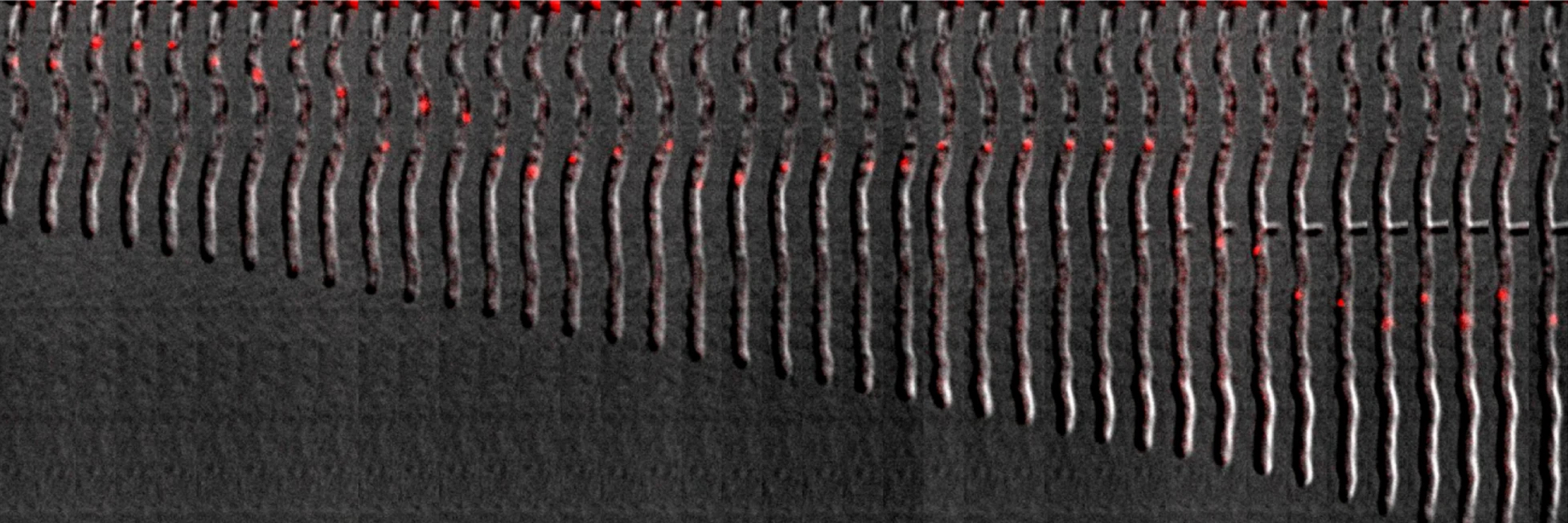
In a collaborative paper published in Nature Microbiology, NOMIS researcher Martin Pilhofer and his group (IMBB, ETH Zurich), along with the Schlimpert research group (John Innes Centre, UK), show that a cytoplasmic contractile injection system in the Gram-positive multicellular model organism Streptomyces coelicolor mediates cell death. by Dominic Dähler Contractile injection systems (CIS) are bacteriophage […]
February 16, 2022
Identification and structure of an extracellular contractile injection system from a marine bacterium
In their study of a putative CIS gene cluster in the marine bacterium Algoriphagus machipongonensis, NOMIS researcher Martin Pilhofer and colleagues have revealed several features that are required for assembly, cargo loading and function. Their findings were published in Nature Microbiology. Abstract Contractile injection systems (CISs) are phage tail-like nanomachines, mediating bacterial cell–cell interactions as […]

December 9, 2020
Martin Pilhofer awarded ERC Consolidator Grant
NOMIS researcher Martin Pilhofer, Professor of Cryo-Electron Microscopy at ETH Zurich, has been awarded a European Research Council (ERC) Consolidator Grant. The Consolidator Grants are intended to help outstanding researchers to consolidate their position in basic research. Pilhofer studies cell-cell interactions by imaging techniques and was awarded an ERC Starting Grant in 2015. With the […]

July 14, 2019
How multicellular cyanobacteria transport molecules
Researchers from ETH Zurich and the University of Tübingen have taken a high-resolution look at the structure and function of cell-to-cell connections in filamentous, multicellular cyanobacteria. This enables them to explain how these microorganisms regulate the transport of various substances between the individual cells. Also known as blue-green algae, cyanobacteria are a special class of […]
