
NOMIS–STRI Fellowship Program


Tropical forests and reefs represent only a small portion of the Earth’s surface but contain most of the planet’s biodiversity. How do inhabitants of the tropics evolve and learn to coexist? What lessons does nature offer humans as we seek to build sustainable societies?
Research at the Smithsonian Tropical Research Institute (STRI) in Panama seeks to answer these questions and more, bringing advanced instrumentation and controlled experiments from the laboratory into the field to study animals under natural conditions. Doing this work in some of the most diverse habitats on the planet enables STRI to leverage the power of comparative biology to explore and test behavior in an exceptionally wide range of species living in the complex, natural situations for which those behaviors evolved. These efforts provide unique insights into the evolution of fundamental biological processes—from the evolution of perception to the consequences of sociality.
The NOMIS–STRI Fellowship Program supports exceptional scholars in a deliberate, multilayered collaborative setting designed to promote the interdisciplinary, synthetic study of animal behavior. NOMIS–STRI Fellows propose and carry out independent studies with advisors from STRI and partner institutions.
At the same time, the program’s cohort model approach is a mechanism to build a critical mass of early-career scientists and a strong peer-to-peer support network. Fellows are self-directed with the freedom to be innovative, while collaborating with and having the support and resources of the institute’s intersecting working groups.
People

Richa Singh is a NOMIS–STRI Fellow at the Smithsonian Tropical Research Institute (STRI) in Panama. Studying crickets, mosquitoes and dragonflies, her research is united by a single guiding question: How does an animal's sensory world shape the way it communicates, makes decisions and interacts with other organisms?
NOMIS Fellow 2026-28
Smithsonian Tropical Research Institute (STRI)

Amalia Victoria Ceballos González
Amalia Victoria Ceballos González is a NOMIS–STRI Fellow at the Smithsonian Tropical Research Institute (STRI) in Panama. She is a Colombian biologist who earned her Licenciatura in Biology from Universidad Pedagógica Nacional.
NOMIS Fellow 2026-29
Smithsonian Tropical Research Institute (STRI)

Christian Perez-Martinez is a NOMIS–STRI Fellow at the Smithsonian Tropical Research Institute (STRI) in Gamboa, Panama.
NOMIS Fellow 2026-29
Smithsonian Tropical Research Institute (STRI)

Ummat Somjee is a NOMIS–STRI Fellow at the Smithsonian Tropical Research Institute (STRI) in Panama.
NOMIS Fellow 2025-26
Smithsonian Tropical Research Institute (STRI)

Laura Segura Hernández is a NOMIS–STRI Fellow at the Smithsonian Tropical Research Institute (STRI) in Panama.
NOMIS Fellow 2025-28
Smithsonian Tropical Research Institute (STRI)

Betzi Pérez-Ortega is a NOMIS–STRI Fellow at the Smithsonian Tropical Research Institute (STRI) in Panama.
NOMIS Fellow 2025-28
Smithsonian Tropical Research Institute (STRI)

Judith Smit is a NOMIS–STRI Fellow at the Smithsonian Tropical Research Institute (STRI) in Gamboa, Panama.
NOMIS Fellow 2025-27
Smithsonian Tropical Research Institute (STRI)

Jenna Kohles is a NOMIS–STRI Fellow at the Smithsonian Tropical Research Institute (STRI) in Panama. She is conducting her postdoctoral research at STRI under the mentorship of Rachel Page at the Smithsonian Bat Lab, Meg Crofoot at the Max Planck Institute of Animal Behavior (MPIAB) in Germany, and Dina Dechmann, also at the MPIAB.
NOMIS Fellow 2025-27
Smithsonian Tropical Research Institute (STRI)

Ricardo Cossio is a NOMIS–STRI Fellow at the Smithsonian Tropical Research Institute (Panama City, Panama). He is conducting his research under the mentorship of William Wcislo and Rachel Page in the Laboratory for Animal Behavior.
NOMIS Fellow 2025-27
Smithsonian Tropical Research Institute (STRI)
9 of 9 People
Publications
The Matador Bug and Several Related Leaf-footed Bugs (Hemiptera: Coreidae) Accumulate Cyanogens From their Host Plants
Cyanogenic compounds provide potent defenses to herbivorous insects, yet few species are known to acquire them from their food. Matador bugs, Bitta alipes (Hemiptera: Coreidae), have brightly colored signals that deter avian predators and are specialists of cyanogenic Passiflora plants. It is unknown whether these insects accumulate cyanogenic compounds. We document the first evidence of cyanogen accumulation in matador bugs. However, the presence and concentration of cyanogens depended on the Passiflora species from which insects were feeding. Further, three related species of inconspicuous Coreidae, and their Cactaceae and Aquifoliaceae host plants, also contained cyanogenic compounds. In all coreid species, cyanogen concentrations detected would make them unpalatable, or even lethal, to vertebrate predators. We report the first evidence of cyanogenic compounds in the Coreidae, doubling the number of species known to accumulate cyanide in the Hemiptera. Cyanogen accumulation may be more common amongst hemipterans than previously thought, prompting studies to examine the mechanisms of secondary chemical accumulation and evolution of aposematism.
Research Fields
Biology, Entomology, Natural Sciences
1 of 1 Publications
News

August 13, 2026
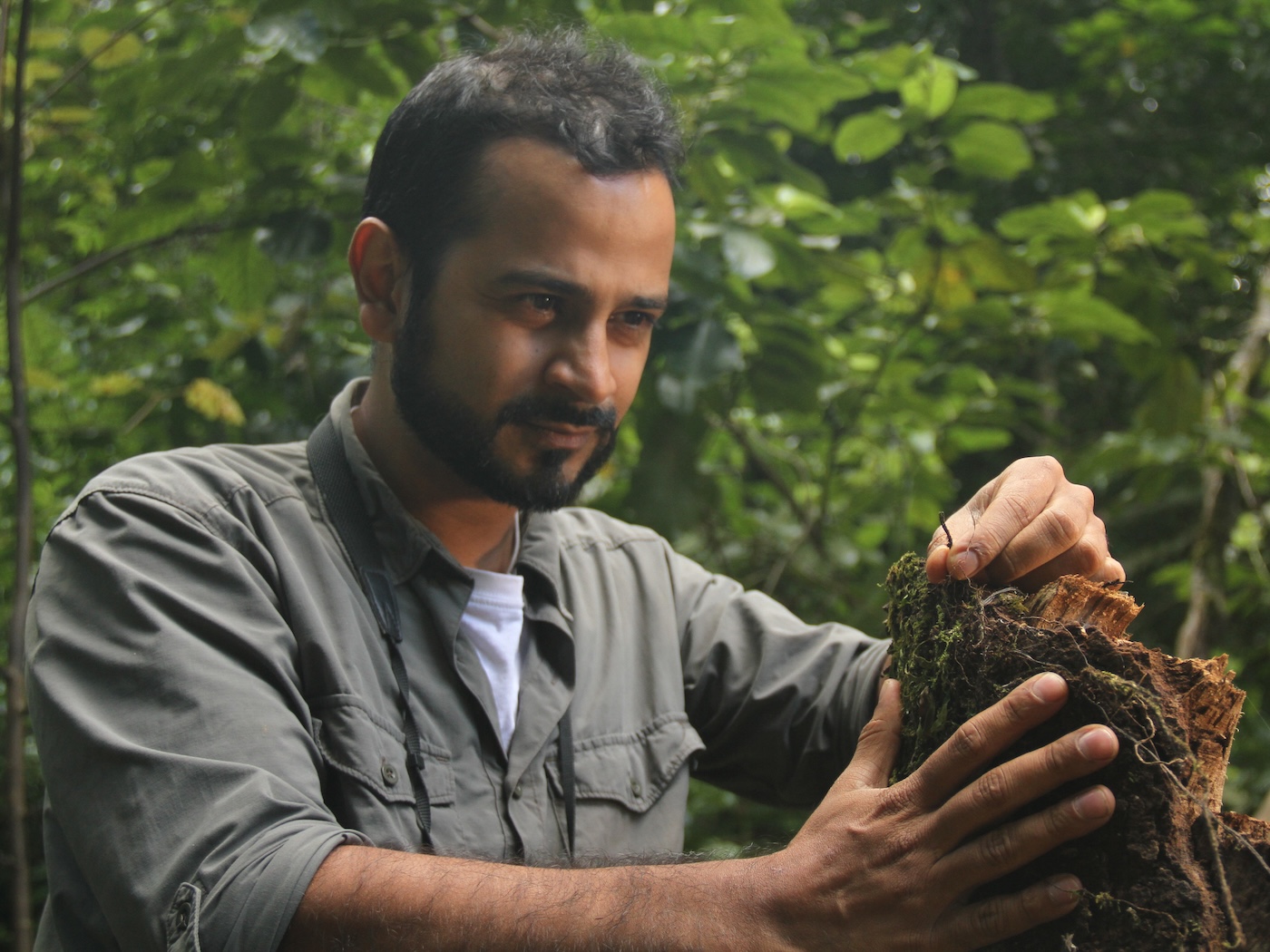
Ummat Somjee receives 2026 Award in Field Biology
Former NOMIS–STRI Fellow Ummat Somjee has been recognized with a 2026 Award in Field Biology from the Maxwell/Hanrahan Foundation for his innovative, field-based experiments focusing on the evolution, function and costs of elaborated insect traits. Launched in 2020, the awards provide scientists with unrestricted funding, attention and support at critical junctures in their careers so they can focus on commitment and creativity, elevate often underrepresented perspectives to problem-solving, and promote progress in the biological sciences through research focused on our natural world.
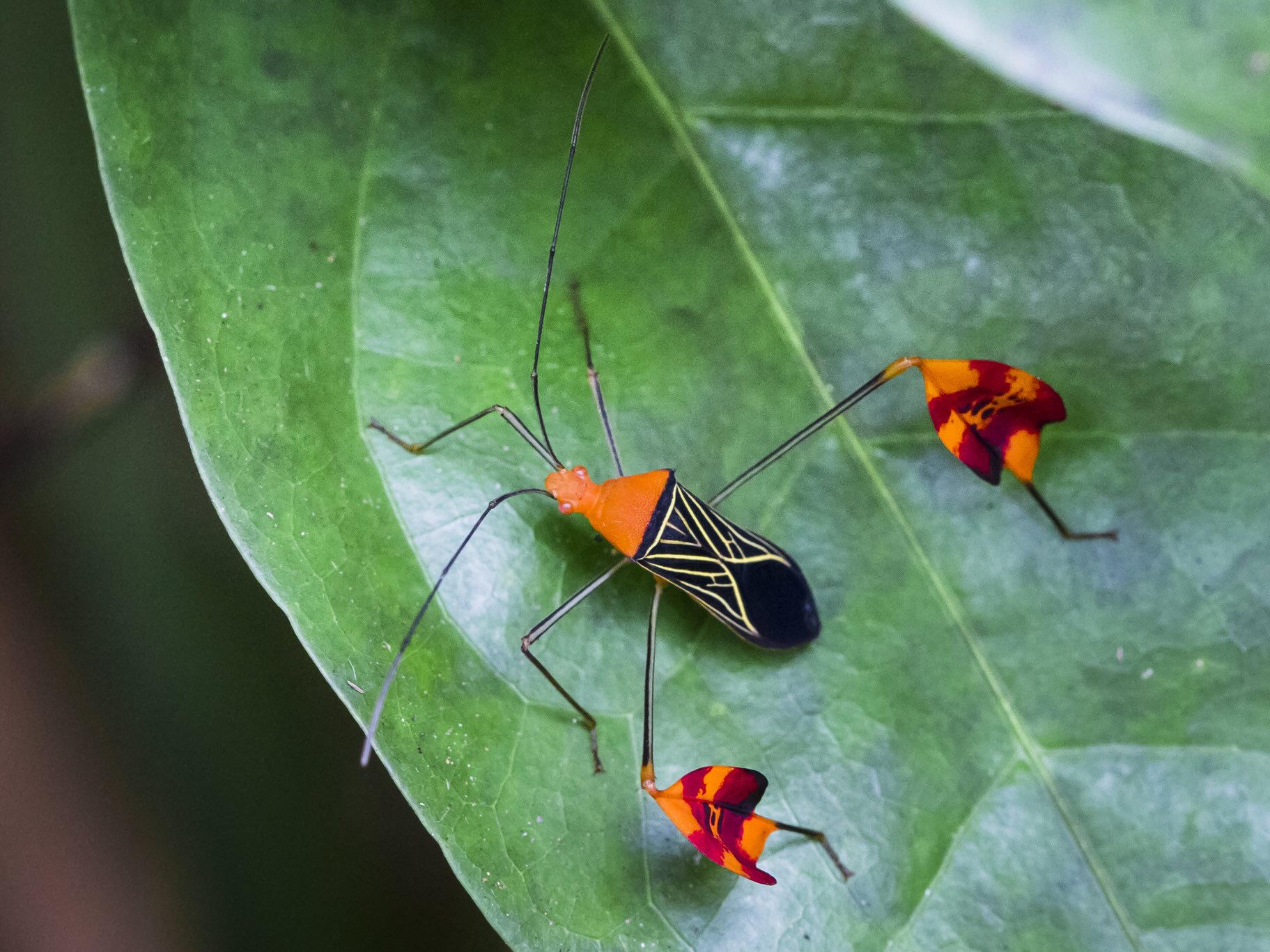
Do matador bugs — and some of their plainer-looking relatives — store poison from the plants they eat? Exploring this question, former NOMIS–STRI Fellow Ummat Somjee, together with collaborators from the Smithsonian Tropical Research Institute and the University of Texas at Austin, found the first evidence that the matador bug accumulates cyanide-producing compounds from eating passionflower plants, storing the toxins in their bodies to deter birds and other predators. The findings were published in the Journal of Chemical Ecology.
Enabling early-career researchers to study animal behavior in one of the most diverse ecosystems in the world, the NOMIS Foundation and the Smithsonian Tropical Research Institute (STRI) have launched the NOMIS–STRI Fellowship Program. Although tropical forests and reefs represent only a small portion of the Earth’s surface, they contain the vast majority of the planet’s […]
