
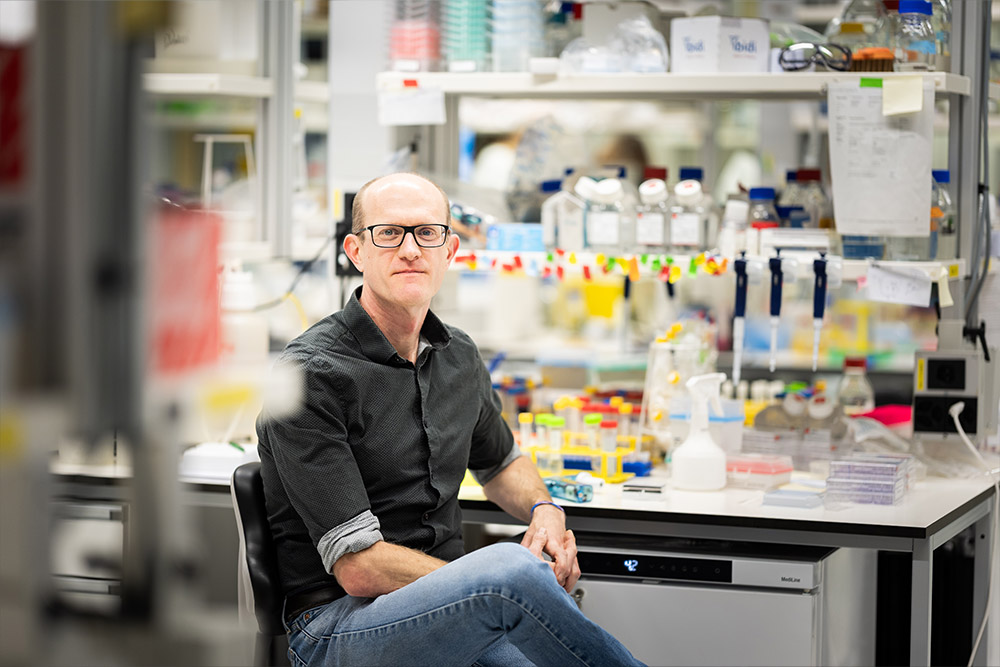
Jacob Corn
Professor of Genome Biology
Organization
ETH Zurich

About Jacob Corn
Jacob Corn is the Professor of Genome Biology at ETH Zurich (Zurich, Switzerland). In addition to the professorship, he is leading the Unbiased Discovery of Heterogeneous DNA Repair Preferences project.
Corn earned a BS in biology from the University of Puget Sound (Tacoma, US) in 2001 and a PhD in molecular and cell biology from the University of California, Berkeley (UC Berkeley; US) in 2007. His career has bridged academia and industry, working in therapeutic areas that include infectious disease, neurobiology, and oncology. Corn’s graduate studies at UC Berkeley with James Berger redefined our understanding of the geometry of DNA replication and was recognized with several honors, including the Nicholas Cozzarelli and Harold Weintraub awards. His work as a Jane Coffin Childs postdoctoral fellow at the University of Washington culminated in the world’s first computationally designed de novo protein interaction and a protein-based inhibitor to treat flu. Corn began his independent research career as a group leader at Genentech, where his lab discovered biological mechanisms for challenging therapeutic targets. He then moved back to academia as the founding scientific director of the Innovative Genomics Institute and faculty at UC Berkeley.
Corn’s research aims to better understand and treat disease through next-generation genome editing technologies. His research takes a multidisciplinary approach, combining cellular biochemistry, functional genomics, computational biology, bioengineering, and biophysics. His lab’s current focus is the development of genome editing, the mechanisms by which cells repair their DNA, and the maintenance of healthy organelles.
‘s projects
Unbiased Discovery of Heterogeneous DNA Repair Preferences
The DNA in our cells is damaged every time we go out in the sun, drink a glass of wine or even just sit perfectly still while our cells divide. To combat this threat, eukaryotes have evolved a dizzying number of ways to fix DNA damage, called the DNA-damage response (DDR). This complex, collective set […]
NOMIS researcher
Project period
2021 – 2026

‘s publications

Chemogenomic maps reveal a PRDX1-dependent iron–damage axis in the DNA damage response
The DNA damage response (DDR) is a sophisticated network of cellular pathways whose perturbation leads to genome instability and is a key hallmark of oncogenesis. Here, we present data from 32 genome-scale loss-of-function CRISPR interference chemical–genetic screens with inhibitors targeting core constituents of the DDR machinery (PARP, ATR, ATM, DNAPK and WEE1), as both single agents and in combination with poly(ADP-ribose) polymerase inhibitors. These experiments identify >1,000 genes whose perturbation modifies the DDR and provides a rich resource to the DDR community. In addition, this compendium of functional genomics data reveals key principles governing the DDR and highlights a strong chemical–genetic interaction between loss of activity of the peroxiredoxin PRDX1 and all tested DDR inhibitors through a mechanism involving iron availability mediated by an MRGBP–PAX7–IREB2 axis. Our data position PRDX1 as a key suppressor of DNA damage accumulation and potential druggable target in combination with DDR inhibitors. (Figure presented.)
Research Fields
Biochemistry & Molecular Biology, Biomedical Research, Health Sciences

RAD51 proximity mapping reveals spatial constraints on homology search during DNA double-stranded break repair
DNA double-stranded breaks (DSBs) are toxic events that can be reversed without genetic information loss by homology-directed repair (HDR), wherein information is copied from an intact template molecule. Finding a correct template within millions to billions of other DNA bases is termed homology search and is mediated by the protein RAD51. To monitor transient search in cellulo, we develop RAD51 proximity identification sequencing (RaPID-seq), a highly sensitive method marking all DNA searched regardless of whether it is chosen as the final template. We find that HDR in human cells is hierarchical with DSB proximity constraining the search space from which sequence homology determines the chosen template. Exogenously introduced DNA templates, such as those used during genome editing, are unconstrained and efficiently searched by the DSB, thereby competing with endogenous template search. Our data reveal the invisible process of homology search and shed new light on fundamental mechanisms underlying genome editing.
Research Fields
Biomedical Research, Developmental Biology, Health Sciences

Directed evolution of compact RNA-guided nucleases for enhanced activity in mammalian cells
Background: RNA-guided nucleases enable DNA editing and offer promise for treating genetic diseases, particularly when used for precise sequence replacement. However, many of the most effective enzymes, such as Streptococcus pyogenes Cas9, are too large for delivery using vectors like adeno-associated virus. This has prompted interest in smaller alternatives from the Cas12f and TnpB families. Yet, these nucleases often show low activity in mammalian cells, limiting their utility. Results: We use directed evolution in human cells to select variants with greatly improved activity. The resulting variants, Cas12f1Super and TnpBSuper, exhibit up to 11-fold increase in editing efficiency without increased off-target effects. When tested as a base editor, Cas12f1Super shows up to tenfold improvement relative to the previously engineered CasMINI, suggesting utility beyond nuclease-related activities. Conclusions: These compact and efficient genome editors expand the current toolkit and hold promise for both research and therapeutic use in mammalian systems.
Research Fields
Applied Sciences, Bioinformatics, Enabling & Strategic Technologies
‘s news


April 11, 2025
How human cells repair damaged DNA
NOMIS Professor of Genome Biology Jacob Corn and fellow researchers at ETH Zurich have unravelled the complex network that cells use to repair their genetic material. By examining thousands upon thousands of genetic interactions, the team has discovered new vulnerabilities in cancer cells that could be exploited therapeutically in the future. Their findings were published […]

August 12, 2024
Method blocking TREX1 enzyme boosts CRISPR gene editing efficiency in hard-to-edit cells
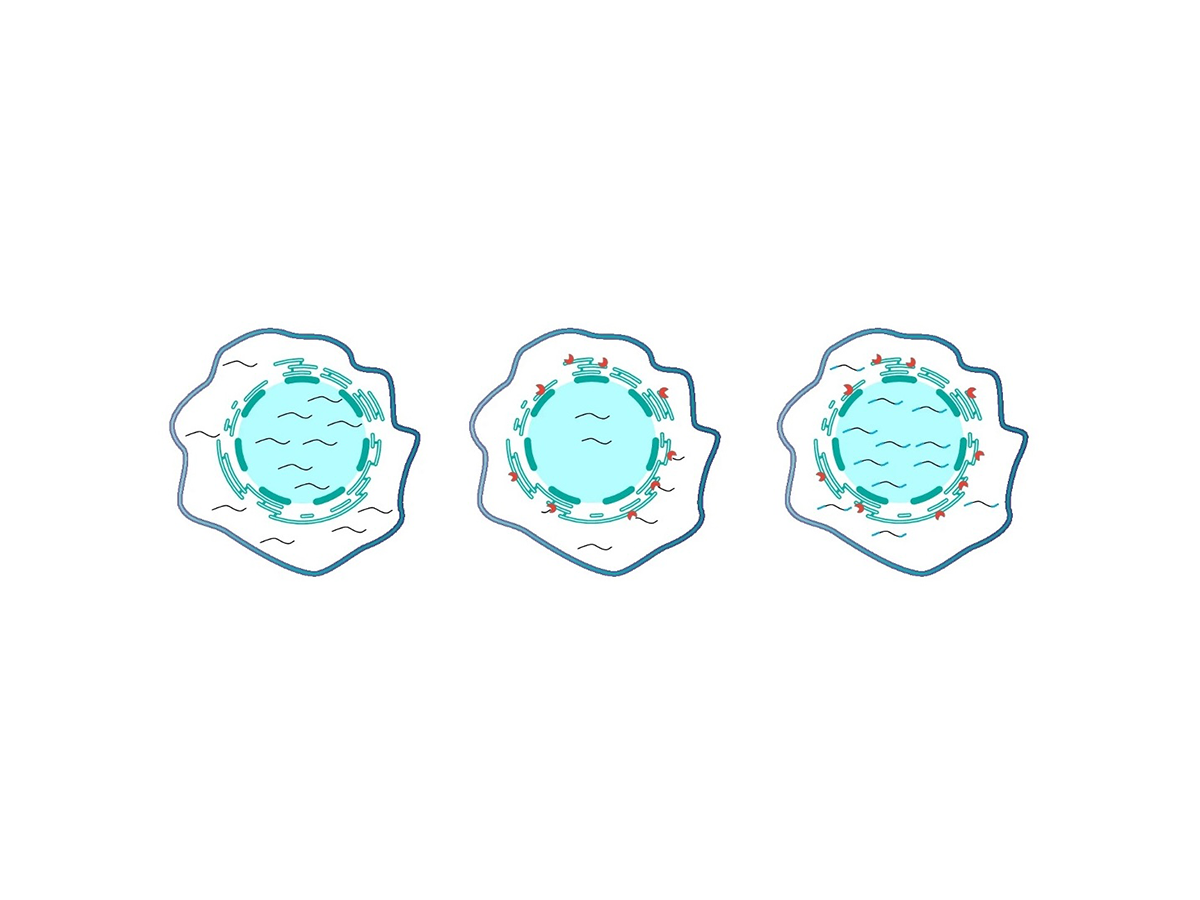
NOMIS researcher Jacob Corn and colleagues have discovered that the enzyme TREX1 hinders the efficiency of CRISPR gene editing in certain cells. By blocking TREX1 or using protected DNA templates, the researchers were able to significantly improve gene editing, offering new strategies to enhance genome editing in challenging contexts. Their findings were published in Nature […]

NOMIS scientist Jacob Corn has published a study in the journal Cell: “A Genome-wide ER-phagy Screen Highlights Key Roles of Mitochondrial Metabolism and ER-Resident UFMylation.” A summary follows. Selective autophagy of organelles is critical for cellular differentiation, homeostasis, and organismal health. Autophagy of the endoplasmic reticulum (ER-phagy) is implicated in human neuropathy but is poorly […]
